Tomato Paste To Tomato Sauce Conversion

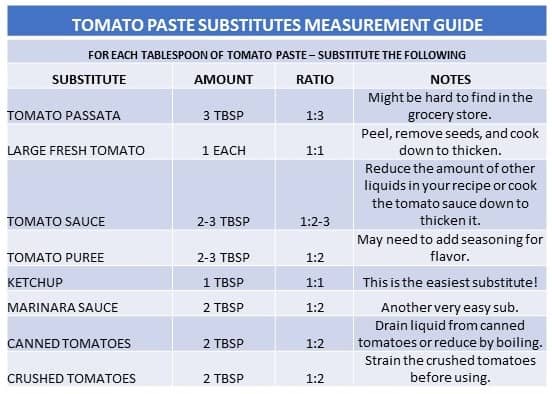
Welcome to the magical world of kitchen alchemy, where a humble tube or can of tomato paste transforms into a luscious, versatile tomato sauce! If you’ve ever stared at a half...
Welcome to the magical world of kitchen alchemy, where a humble tube or can of tomato paste transforms into a luscious, versatile tomato sauce! If you’ve ever stared at a half-used jar of paste and wondered what to do with it, you’re in for a treat. This isn’t just a recipe hack—it’s a superpower that saves you money, reduces food waste, and puts you in control of your meals. Why buy bland, sugary jarred sauce when you can whip up a restaurant-quality version in minutes? The advantages are endless: fresher flavor, no hidden preservatives, and the ability to tweak every herb and spice to your liking. Plus, you’ll feel like a culinary genius every time you pull it off. Ready to dive in? Let’s turn that concentrated paste into a sauce that sings.
First, let’s get the science straight. Tomato paste is cooked-down, concentrated tomatoes with most of the water removed, giving it an intense, deep flavor. Tomato sauce, on the other hand, is a thinner, seasoned liquid. So, the conversion is really about rehydrating and seasoning that paste. The golden rule? For every 1 tablespoon of tomato paste, you’ll need about 1 cup of water (or broth for extra flavor) to approximate the consistency of standard tomato sauce. But don’t just dump and stir—that’s boring! The real fun begins when you treat this as a blank canvas. Imagine starting with a dollop of paste, then sautéing garlic and onions, adding a splash of olive oil, and letting the paste “fry” for a minute to unlock its sweetness. That’s the first secret to a sauce that tastes like it simmered all day.
Now, let’s get creative with real-life examples. Picture this: you’re making a quick weeknight pasta, but all you have is a tube of paste and some pantry staples. Voilà! In 10 minutes, you’ve got a marinara. Just whisk 3 tablespoons of paste into 1½ cups of water, add a pinch of sugar (to cut acidity), dried oregano, basil, and a drizzle of olive oil. Simmer for a few minutes, and you’re a hero. Or try a creamy vodka sauce: sauté 2 tablespoons of paste with a shallot, deglaze with a splash of vodka, then stir in heavy cream and parmesan—instant indulgence. Even better, use the conversion to rescue a bland soup or stew. A tablespoon of paste mixed into a cup of beef broth becomes a robust base for chili or minestrone. The beauty is in the improvisation—no recipe required.
Must Read
Here’s a fun twist: think of tomato paste as a concentrated flavor bomb for dishes beyond Italian cuisine. For a Mexican-inspired sauce, mix 2 tablespoons of paste with 1 cup of chicken broth, a dash of cumin, chili powder, and a squeeze of lime. Simmer and use it as a base for enchiladas or tacos. Or, for an Indian curry, blend the paste with coconut milk, ginger, garlic, and garam masala—it creates a rich, tangy gravy. The key takeaway? Don’t limit yourself to “sauce” in the Western sense. That little can of paste is a passport to global flavors, and converting it with different liquids (broths, milks, even wine) and spices lets you travel the world from your kitchen. Plus, it’s cheaper than buying multiple specialty sauces, and you get to avoid the mystery ingredients in store-bought jars.
Ready to try it yourself? Here are practical tips for a flawless conversion every time. First, always bloom the paste in hot oil before adding liquid. This caramelizes the natural sugars and removes the tinned taste, giving your sauce a deep, roasted character. Second, taste as you go—start with a 1:6 ratio of paste to liquid (e.g., 1 tablespoon paste to 6 tablespoons water) and adjust based on your dish. Want a thicker sauce for pizza? Use less liquid. Want a thinner one for soups? Add more. Third, don’t skip the seasoning—salt is a must, but also consider a pinch of baking soda if the sauce is too acidic. It neutralizes the acidity without changing flavor. Finally, remember that converted sauce freezes beautifully. Make a big batch, pour it into ice cube trays, and you’ll have ready-to-use sauce portions for weeks. Talk about meal prep made easy!
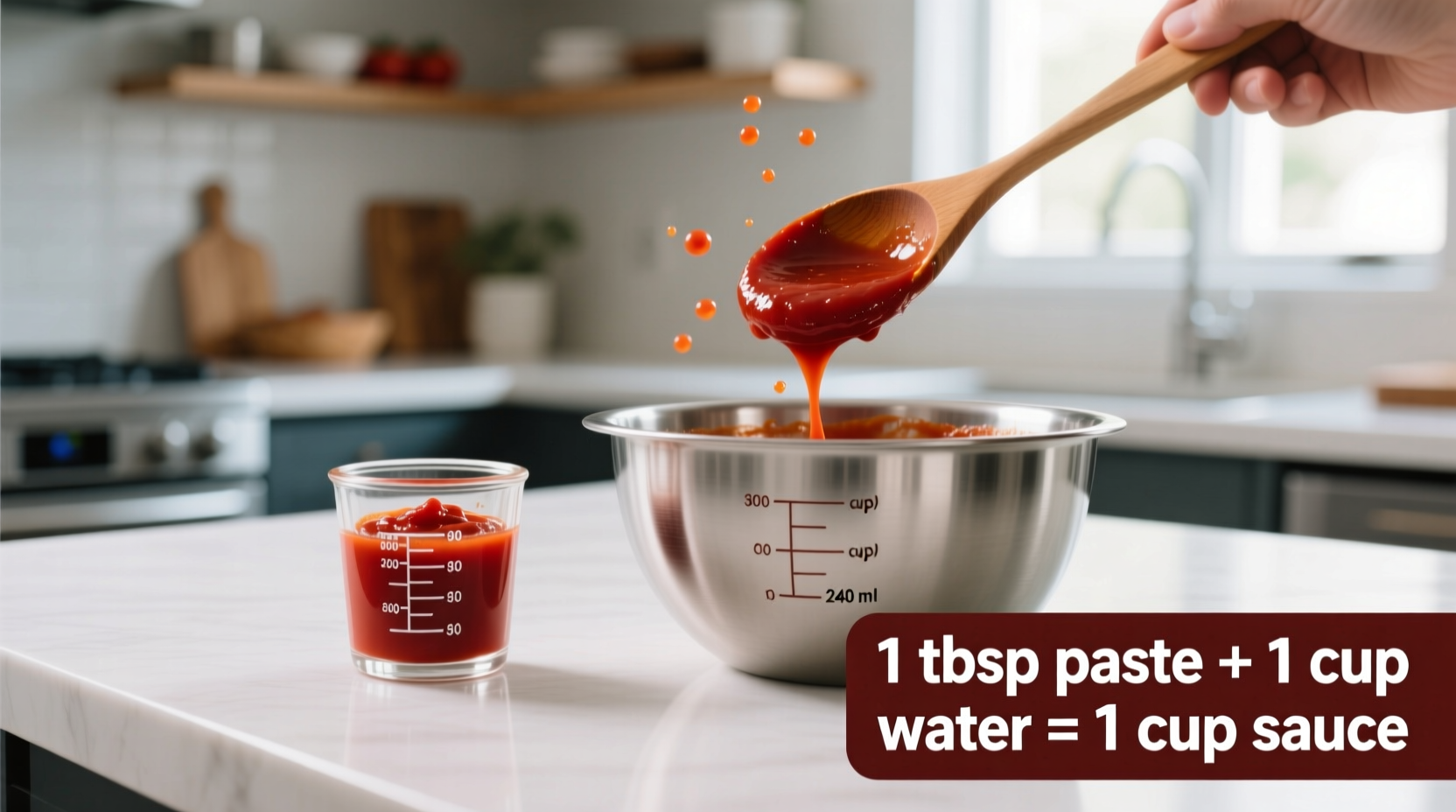 Tomato Paste to Sauce Conversion: Exact Ratio Guide
One common pitfall: overcomplicating it. You don’t need a dozen ingredients to make stellar sauce. A simple conversion—paste, water, salt, and a bit of olive oil—can be the foundation for endless variations. For instance, a pizza sauce is just as simple: mix 3 tablespoons of paste with ¼ cup water, a pinch of dried oregano, garlic powder, and a drizzle of oil. Spread it raw on your dough, and it cooks perfectly in the oven. Another tip: if you’re using a whole can of paste (6 ounces), convert it with 3 cups of water for a basic sauce that works for a large batch of pasta or as a base for lasagna. The biggest advantage of this method is control—you can adjust the thickness, salt, and herbs to match your craving, whether it’s a chunky arrabbiata or a smooth, mild marinara.
In the end, the tomato paste-to-sauce conversion is more than a recipe—it’s a mindset shift. Instead of seeing paste as a one-note ingredient, you now recognize it as a powerful building block for quick, flavorful meals. It saves you from last-minute grocery runs, uses up that forgotten tube in your fridge, and transforms your cooking from “good enough” to deliciously personal. So next time you reach for a jar of sauce, pause. Grab that paste, a bit of water, and your favorite spices. Within minutes, you’ll have something far better—a sauce that tastes like you. Happy cooking, and remember: in the world of kitchen shortcuts, this one’s a gold star.

