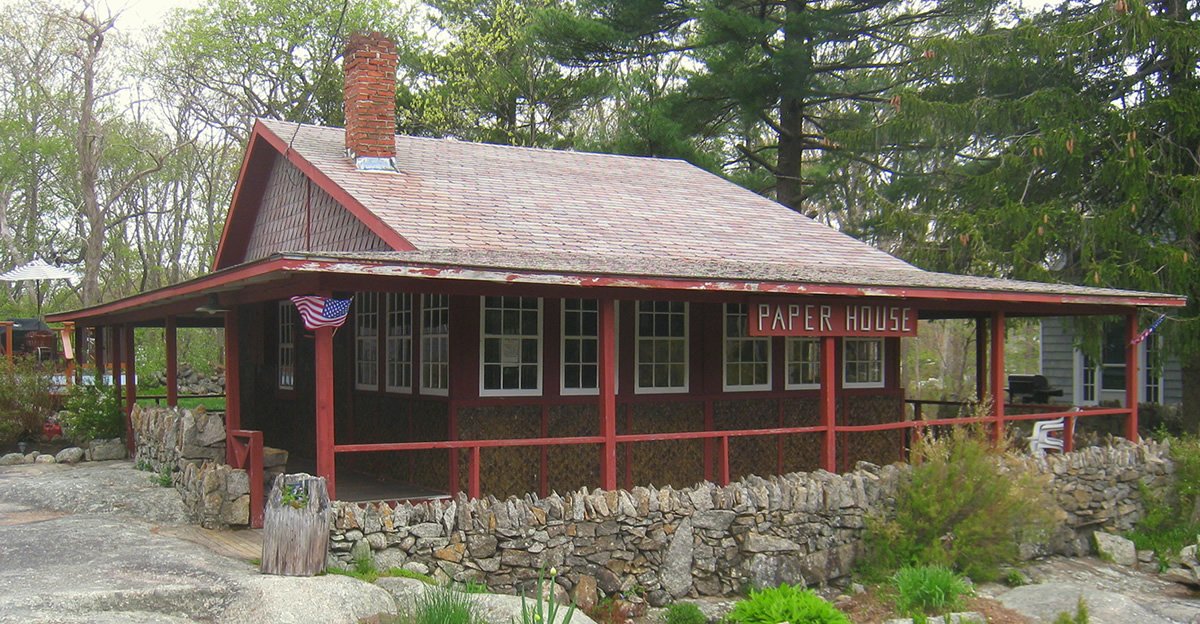
The Paper House Massachusetts

There is a quiet, almost secret thrill in stumbling upon a place that feels like a forgotten story whispered by the wind. Residents of Massachusetts, as well as savvy traveler...

There is a quiet, almost secret thrill in stumbling upon a place that feels like a forgotten story whispered by the wind. Residents of Massachusetts, as well as savvy travelers, cherish the state’s knack for hiding architectural marvels within its wooded hills and historic towns. Among these hidden gems, the Paper House in Rockport stands as a singular testament to human ingenuity and eccentric passion. It is valued not as a palace of wealth, but as a sanctuary of playful determination—a structure that proves the most ordinary materials, like newspaper, can be woven into something extraordinary. People visit not just to see a house, but to experience the joy of a well-told, tangible joke that has lasted for nearly a century.
The key purpose of the Paper House is deceptively simple: it is a fully habitable cottage, constructed almost entirely from recycled newspaper and glue. Built in 1922 by mechanical engineer Elis F. Stenman, the house was designed as a summer retreat to demonstrate the durability and versatility of paper when treated with care. Stenman used layers of newspapers, tightly rolled and laminated with a paste made of flour and water, to form the walls, the furniture, and even the decorative elements. The floor, the tables, the chairs, a desk, and even the clock on the mantelpiece are all composed of stacked, folded, and shaped newsprint. Its primary benefit for daily life, from Stenman’s perspective, was frugal creativity: he proved that a sturdy, comfortable home could be built without costly lumber or skilled masonry, using only two common commodities—old newspapers and patience.
This house offers surprising benefits for the everyday mindset beyond its novelty. It serves as a living lesson in resourcefulness, reminding us that waste is often just a resource in the wrong place. Imagine the modern challenge of reducing clutter or repurposing old magazines; the Paper House transforms this dilemma into a virtue. Walking through its rooms, you see a roll-top desk made from pressed paper, a reading lamp crafted from newspaper strips, and even a grand piano that looks like it could play a tune if its keys were pressed, though it is purely decorative. For a family struggling with the high cost of living in New England, this house whispers a different possibility: that a comfortable, charming home can be built from what you already have. It is a quiet rebellion against consumerism, showing that imagination can be a far more valuable building material than money.
Must Read
To give context, consider a typical rainy afternoon in coastal Massachusetts. Instead of scrolling through screens, a visitor to the Paper House can trace the headlines of the Boston Globe from 1922, the New York Times covering the discovery of King Tut’s tomb, or the coverage of Babe Ruth’s home run records. The house is a time capsule of news that was once urgent but now feels like a gentle echo. You might sit in a paper chair—surprisingly solid, insulated from the cold—and read a strip from a 1930s cartoon. This tactile connection to history makes the experience deeply personal; it turns a passive tour into an active exploration of everyday life from a century ago. The roofline, the windows, the chimney—all are paper, yet they have withstood New England’s brutal winters and salty sea air, a silent hero of preservation.
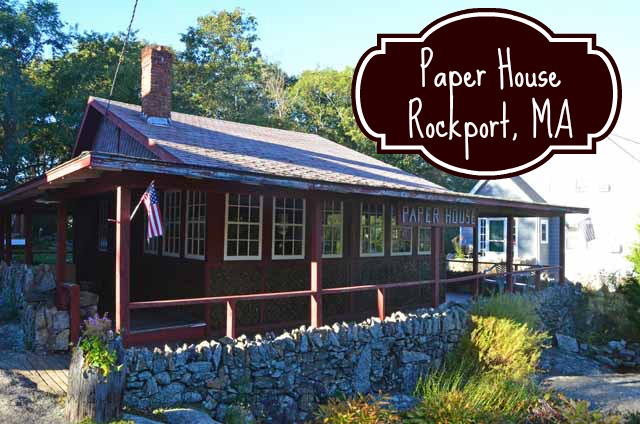 The Paper House in Rockport MA - test
For those who wish to explore this wonder on their own, a few simple tips can deepen the experience. First, visit in the off-season. The Paper House is open only from May to October, but going in early May or late September avoids crowds and lets you linger over the details without rush. Second, bring a magnifying glass. While the house is filled with visible headlines, a closer look reveals intricate patterns, hidden phrases, and the names of people who wrote letters to the editor a hundred years ago. Third, respect the silence. The house is fragile; no one is allowed to touch the walls or furniture, as oil from fingers can damage the paper. Instead, simply stand still and let your eyes wander. The magic is in the noticing—the way light filters through a paper window frame, or how a newspaper column becomes a table leg.
Finally, consider that the Paper House is more than a tourist attraction; it is a metaphor for resilience. In an era of disposable everything, it stands as a monument to the idea that nothing is truly worthless. Every sheet of newsprint that once reported scandal, joy, or war has been repurposed into a home that shelters laughter and wonder. It encourages us to look at our own lives—at the stacks of old mail, the piles of forgotten magazines—and imagine new shapes they might take. Whether you are a history buff, an architecture lover, or simply someone who needs a reminder that the ordinary can be extraordinary, the Paper House in Rockport, Massachusetts, offers a quiet, papery hug to your soul. Go with an open mind, and leave with a newfound appreciation for the hidden art in the everyday.