The Difference Between Chicken Broth And Chicken Stock

Welcome, culinary adventurers! Have you ever stood in the supermarket aisle, staring at two nearly identical cartons—one labeled "broth" and the other "stock"—and felt a pang...
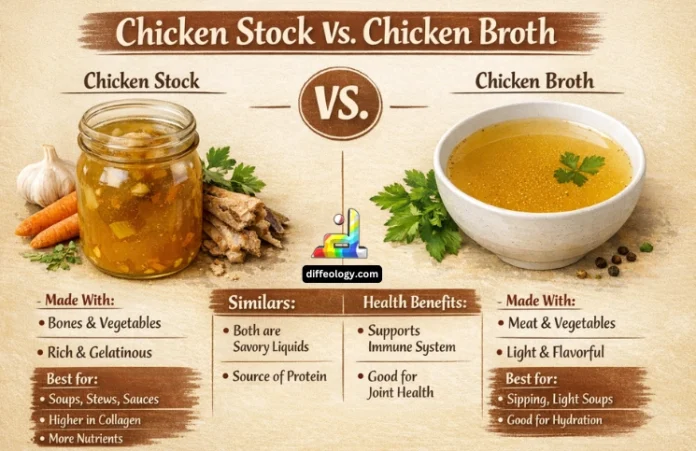
Welcome, culinary adventurers! Have you ever stood in the supermarket aisle, staring at two nearly identical cartons—one labeled "broth" and the other "stock"—and felt a pang of confusion? You are not alone. This friendly rivalry between chicken broth and chicken stock is one of the kitchen's most useful secrets. Understanding the difference isn't just for professional chefs; it’s a superpower that can elevate your soups, stews, and sauces from good to absolutely incredible. The purpose here is simple: to arm you with knowledge so you can confidently choose the right liquid for any dish, saving money, time, and flavor. The advantage? You’ll become the person friends ask for cooking advice!
Let’s cut straight to the sizzling core of the matter: the main difference is what goes into the pot and how long it cooks. Chicken stock is a bone-focused affair. Think of it as the sturdy backbone of your cooking. You roast chicken carcasses—or even just bones—with vegetables, then simmer them for hours (often 4 to 6) to extract the precious collagen and gelatin from the bones. This long simmering creates a thick, almost wobbly liquid when cold, packed with body and depth. Chicken broth, on the other hand, is a meat-focused creation. It relies on chicken meat (like legs or breasts) along with vegetables, and is simmered for a shorter time, usually 1 to 2 hours. The result is a lighter, more delicate liquid that is ready to drink on its own and carries a cleaner, more upfront chicken flavor.
Imagine you’re building a culinary house. Stock is the framework—strong, structured, and meant to hold everything together. You wouldn’t sip plain stock from a mug (though some do), because its rich, savory, gelatinous nature is designed to be a foundation. Broth, however, is the furnished living room—ready, inviting, and perfect for immediate enjoyment. This distinction matters in your recipes. For a hearty chicken noodle soup where you want a luxurious mouthfeel and a deep, rounded flavor that clings to the noodles, reach for stock. Its gelatin gives the soup a silky "slurpability." But for a light Asian-inspired broth with ginger, soy, and bok choy, you want broth so the delicate aromatics aren’t overwhelmed. Creative idea? Use stock to cook your risotto—it adds body without overpowering the rice. Use broth to poach chicken for a salad—it seasons the meat gently without turning it into a pasty mess.
Must Read
Now, let’s talk about salt, because this is where the grocery store trick lies. Commercially sold broth is almost always seasoned with salt and sometimes spices. It’s designed to be a finished product you can heat and drink. Stock (especially in cartons) is typically unsalted or very lightly salted, because it’s meant to be a blank canvas. Why does this matter for you? If you use salted broth in a recipe that calls for additional salt, you risk turning your meal into a salt lick. A pro tip: always check the label. If you’re reducing a liquid for a sauce, use unsalted stock to control the seasoning from start to finish. If you’re making a quick weeknight soup, salted broth saves you a step. Also, don’t fear the fat—stock often has a beautiful layer of fat (called schmaltz) that can be skimmed and used to roast potatoes for a golden, crispy treat. Broth usually has far less fat, making it a leaner choice.
Here is where you can get hands-on and try making your own—it’s surprisingly easy and free after a roast chicken dinner. For a simple stock, save the carcass from a rotisserie chicken. Throw it into a pot with an onion (halved, skin on for color), two carrots, two celery stalks, a bay leaf, and some peppercorns. Cover with cold water by two inches. Bring to a gentle simmer (never a rolling boil—that makes it cloudy), and let it bubble softly for 4 to 6 hours. Strain it, cool it, and you’ll have a golden, jiggly treasure. For quick broth, do the same but use chicken legs or a breast with the skin on, and simmer for just 1 to 1.5 hours. The broth will be clear and drinkable. Want a fun hybrid? Add a few chicken wings (rich in collagen) to your broth pot—you’ll get the body of stock with the clean taste of broth.
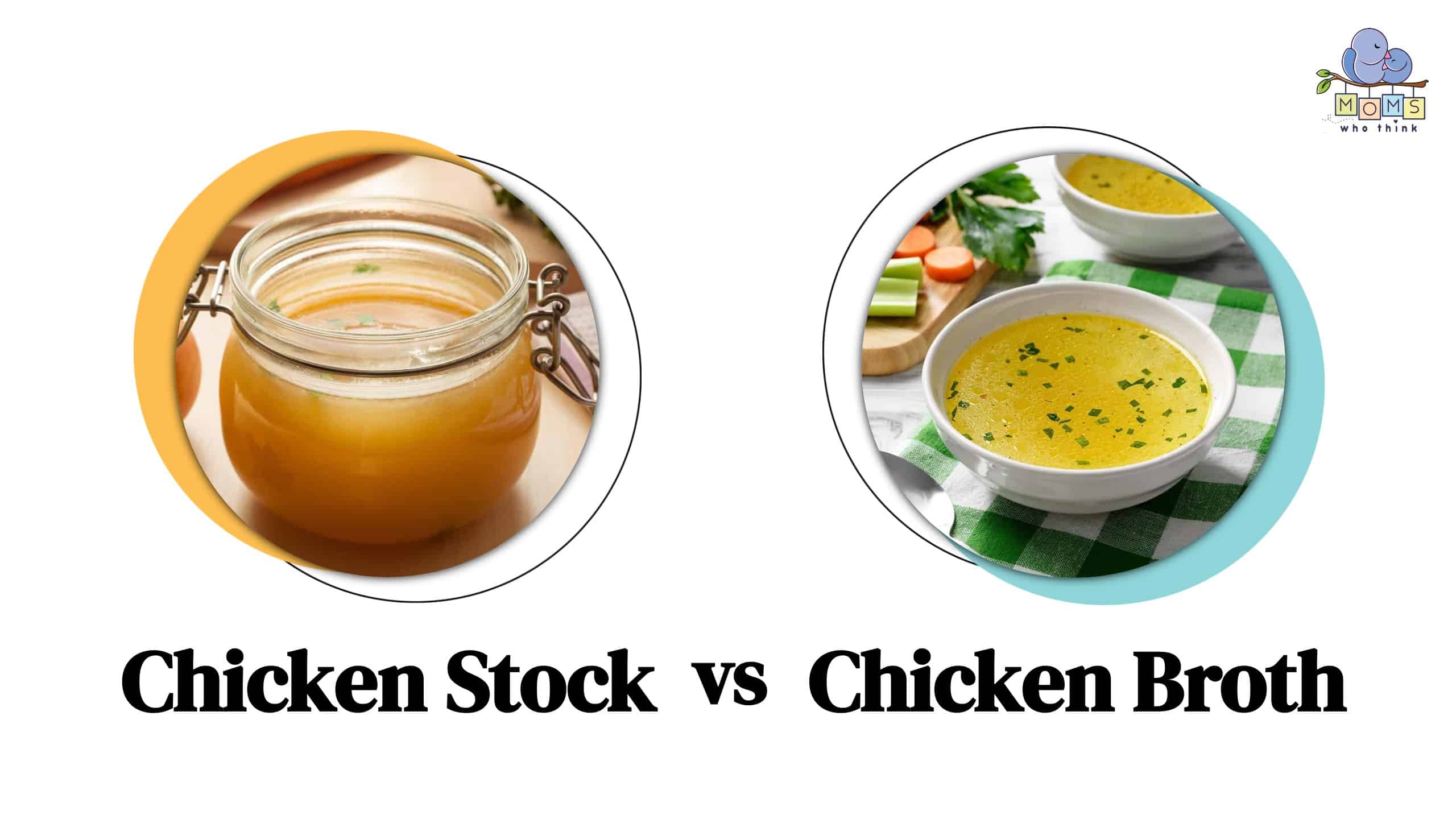 Understanding the Difference Between Chicken Broth and Stock
A practical secret: you don’t always have to choose one over the other. Use them interchangeably in a pinch, but adjust your expectations. If a recipe calls for stock and you only have broth, expect a thinner final dish. To fix that, you can simmer the broth with a knob of butter or a splash of heavy cream to mimic the richness of stock. Conversely, if you only have stock and need broth for a light soup, dilute the stock with a little water (about ¼ cup water per cup of stock) and add a pinch more salt to brighten the flavor. The best tip for beginners? Keep both on hand: a box of unsalted chicken stock for long-cooking soups and risottos, and a box of low-sodium chicken broth for quick meals, poaching, and sipping. Your pantry becomes a power tool.
In the end, the difference between chicken broth and chicken stock isn’t a culinary fence—it’s a creative playground. Stock gives you that deep, silky, sturdy hug from the bones; broth offers a light, clean, immediate kiss of flavor. Both are beautiful. So next time you’re in that aisle, you’ll remember: bones build body (stock), meat brings melody (broth). Now go forth, simmer something delicious, and impress yourself and everyone at your table. Your soups await their perfect partner!
