Should You Peel Eggplant Before Roasting

Let’s be honest for a second: the eggplant can be a little intimidating. You stare at that glossy, deep-purple globe in your grocery bag and wonder, “What is your deal?” Speci...
Let’s be honest for a second: the eggplant can be a little intimidating. You stare at that glossy, deep-purple globe in your grocery bag and wonder, “What is your deal?” Specifically, when roasting it, you face a great culinary debate: to peel or not to peel? It’s a question that has divided kitchens for generations. But guess what? We’re going to settle it right now, and make your life a whole lot more fun in the process.
The Case for Keeping the Skin On
First, let’s talk about texture and convenience. When you roast an eggplant with the skin on, it becomes a magical self-contained vessel. The skin holds everything together, preventing the tender flesh from turning into a soupy mess on your baking sheet.
Plus, if you roast it whole, you can just scoop out the golden insides with a spoon—no chopping or peeling required! That deep purple skin, when roasted, can become deliciously charred and smoky. Many people find that subtle, slightly bitter character adds a complex, savory depth you just can’t get any other way.
Must Read
For dishes like baba ghanoush or a rustic ratatouille, the skin is your friend. It provides structure and that unmistakable “I-cooked-this-over-a-fire” vibe. So, for these applications, I say: keep it on. It’s a lazy cook’s dream come true.
The Case for Peeling the Eggplant
Now, let’s flip the script. Why would you ever want to peel this beautiful vegetable? Because sometimes, you want a silken, melt-in-your-mouth texture. The skin, especially on larger, older eggplants, can be tough and chewy. It’s like wearing a leather jacket to a beach party—a bit too much.
If you’re making a creamy dip like a smooth eggplant parmesan, or a luscious pasta sauce, that chewy skin can be a real buzzkill. Nobody wants a tough, stringy bit ruining an otherwise velvety spoonful. Peeling solves that problem instantly. It guarantees every bite is uniformly tender and luxurious.
And here’s a fun little life hack: if you’re worried about bitterness (which is rare in modern eggplants, but still), peeling removes a lot of the compounds that cause it. You get sweeter, cleaner flavor, no fuss. It’s the easy button for a perfect, silky texture.
 11 Foolproof Ways To Make Eggplant Taste Better
The “You Aren’t Really That Picky” Middle Ground
Here’s the delightful secret: you don’t have to pick a side forever. You can have it both ways, and it’s ridiculously easy. Try this: cut your eggplant into cubes for roasting, but leave the skin on half the pieces. You’ll get a mix of textures in every dish—some soft, some with a bit of bite and char.
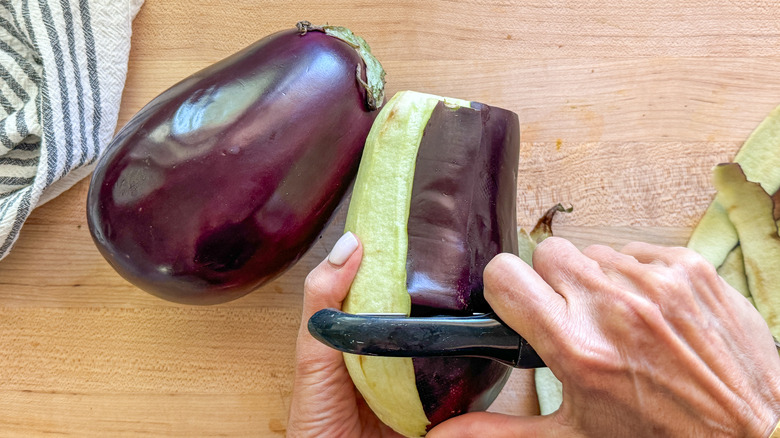
It’s like a surprise party for your taste buds! Or, take a vegetable peeler and remove the skin in strips, like you’re giving the eggplant a zebra pattern. This gives you the best of both worlds: some exposed flesh for tenderness, and some skin for visual appeal and smoky flavor. It’s the most fun you’ll ever have prepping a vegetable, I swear.
The truth is, the “right” answer changes based on your mood, the recipe, and how much time you have. And that is totally okay! Cooking isn’t about rigid rules; it’s about joyful experimentation.
A Little Practical Magic (And a Warning)
Before we wrap up, let’s talk about technique—because this is where the real magic lives. If you decide to roast a whole, unpeeled eggplant, pierce it a few times with a fork first. Otherwise, it might explode in your oven like a tiny, purple volcano. I’ve done it, and the cleanup is not inspiring—it’s just depressing.
 Mutabbal Recipe Middle Eastern Eggplant Dip • Welcome2Jordan
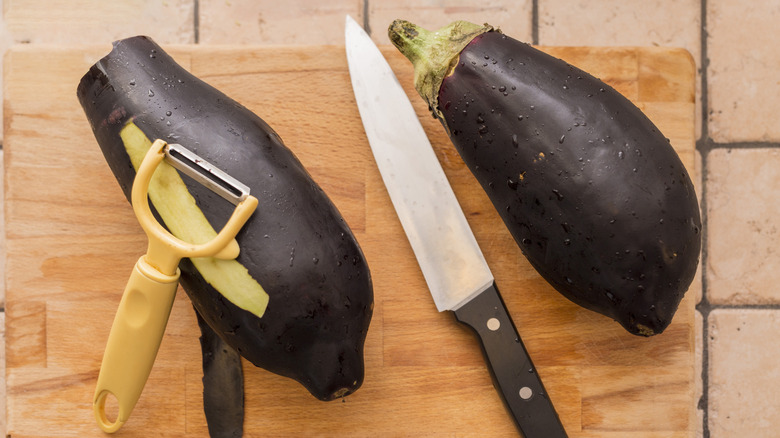
If you’re peeling, use a vegetable peeler, not a knife, unless you’re feeling very brave and have good insurance. And always roast at a high temperature—400°F to 450°F (200°C to 230°C)—until the skin is wrinkled and the flesh is soft. That’s the sweet spot where flavor happens.
One more thing: salt your peeled eggplant before roasting. It draws out excess moisture and prevents sogginess. Just 15 minutes with a sprinkle of salt, then pat it dry. You’ll thank me later.
The Inspiring, Uplifting Takeaway
So, should you peel eggplant before roasting? The answer is: whatever makes you happy right now. Choose the path that makes you excited to cook. Some days, you’ll want the rustic, smoky chew of the skin. Other days, you’ll crave the pure, silky decadence of a peeled version.
And that’s the beautiful thing about cooking—it’s never about being “right.” It’s about discovering what you love. Every time you make a choice in the kitchen, you’re writing your own little recipe for joy. So peel, don’t peel, zebra-stripe it, or just toss the whole thing in whole and hope for the best. You are the artist, and the eggplant is your canvas.
This tiny, silly debate is just a doorway to a bigger truth: life is more fun when you play with your food. You don’t need perfection; you need curiosity. So go ahead, grab that eggplant, make a decision, and roast it with confidence. The world is full of adventurous eaters, and you are about to become one of them. Now, go make something delicious and tell me how it turned out!
