Should You Cover Chicken Thighs When Baking

When it comes to baking chicken thighs at home, the decision of whether to cover them with foil or leave them uncovered might seem minor — but it can dramatically change the o...
When it comes to baking chicken thighs at home, the decision of whether to cover them with foil or leave them uncovered might seem minor — but it can dramatically change the outcome. Chicken thighs are beloved for their rich flavor, natural juiciness, and forgiving texture compared to breast meat. They are a staple in countless households because they are affordable, versatile, and easy to prepare. Understanding when and why to cover or uncover them while baking is a small kitchen skill that can elevate your everyday cooking from average to impressively delicious.
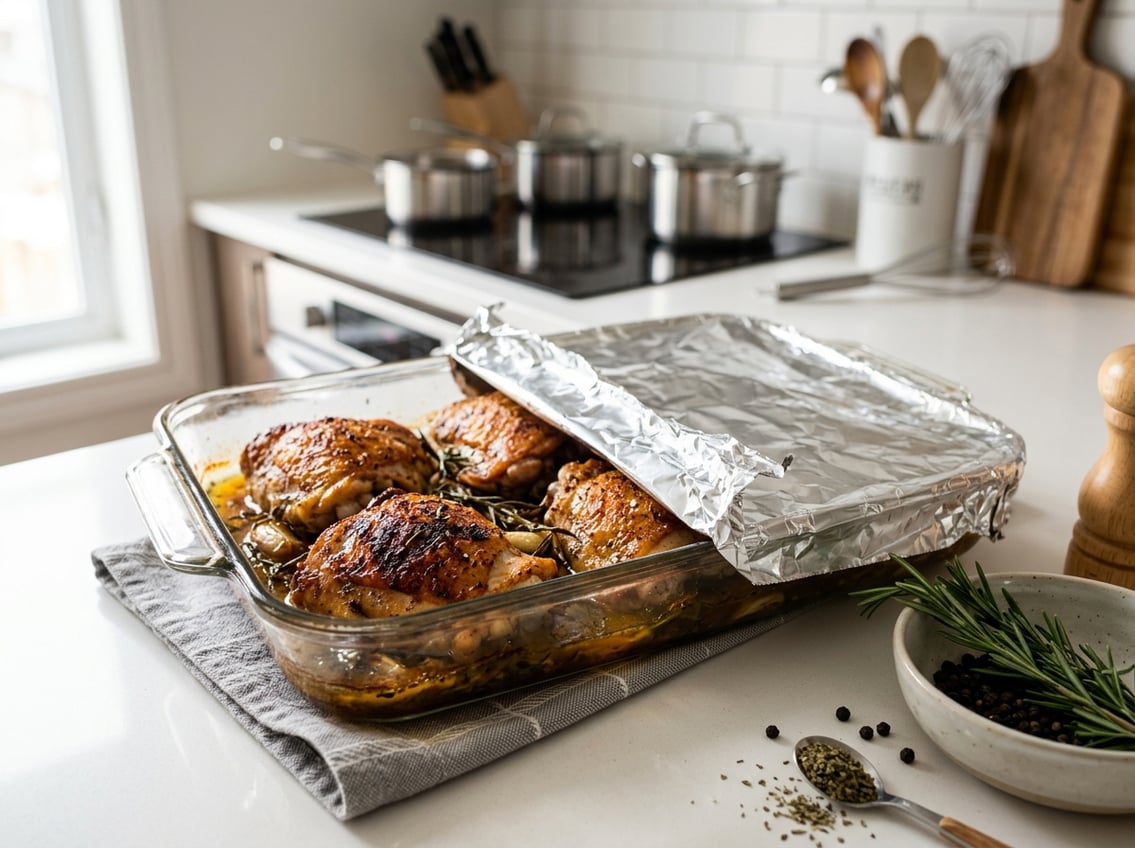
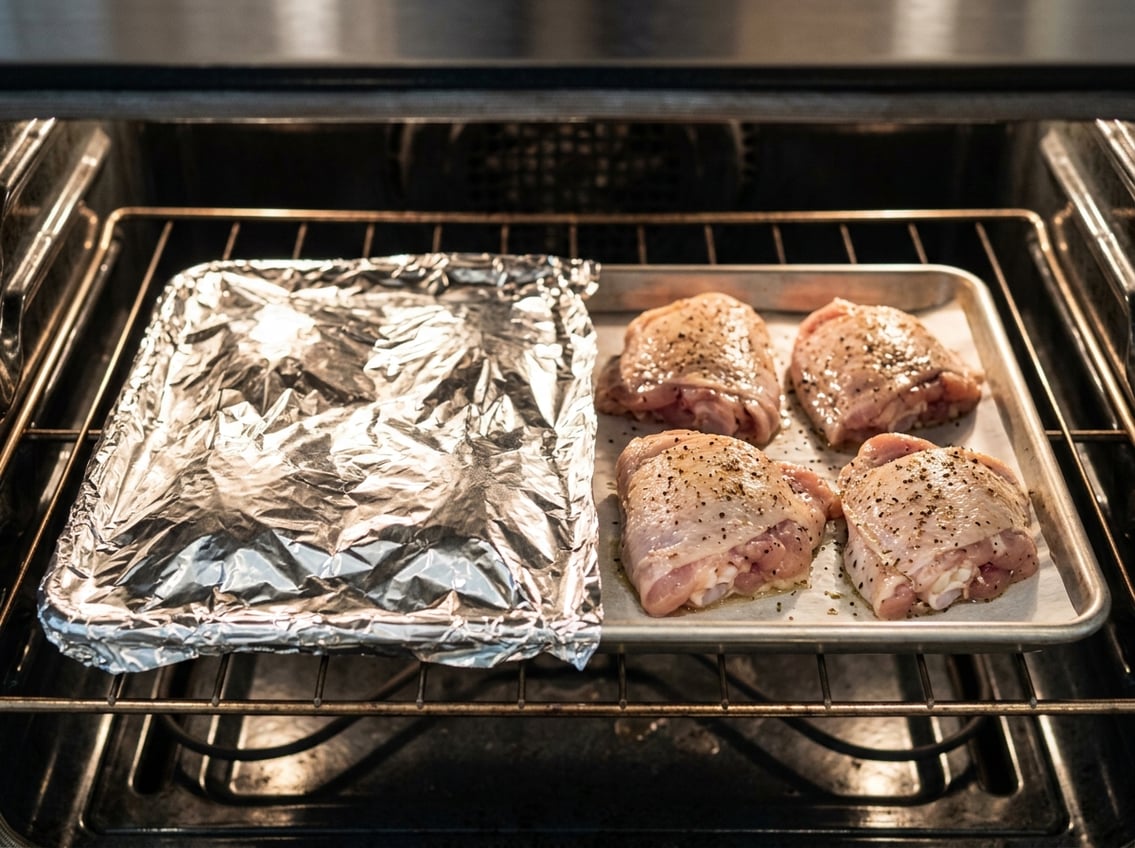
The primary purpose of covering chicken thighs while baking is to retain moisture. When you place foil or a lid over the pan, it traps steam and heat around the meat, creating a gentle, almost braising-like environment. This prevents the surface from drying out during the initial stages of cooking. For example, if you are baking thighs at a lower temperature for a longer time — say, 350°F for 45 minutes — covering them ensures the interior stays tender and succulent without the exterior scorching. Without a cover, the heat can wick away moisture from the surface faster than the inside can stay hydrated, leading to drier results in some situations.
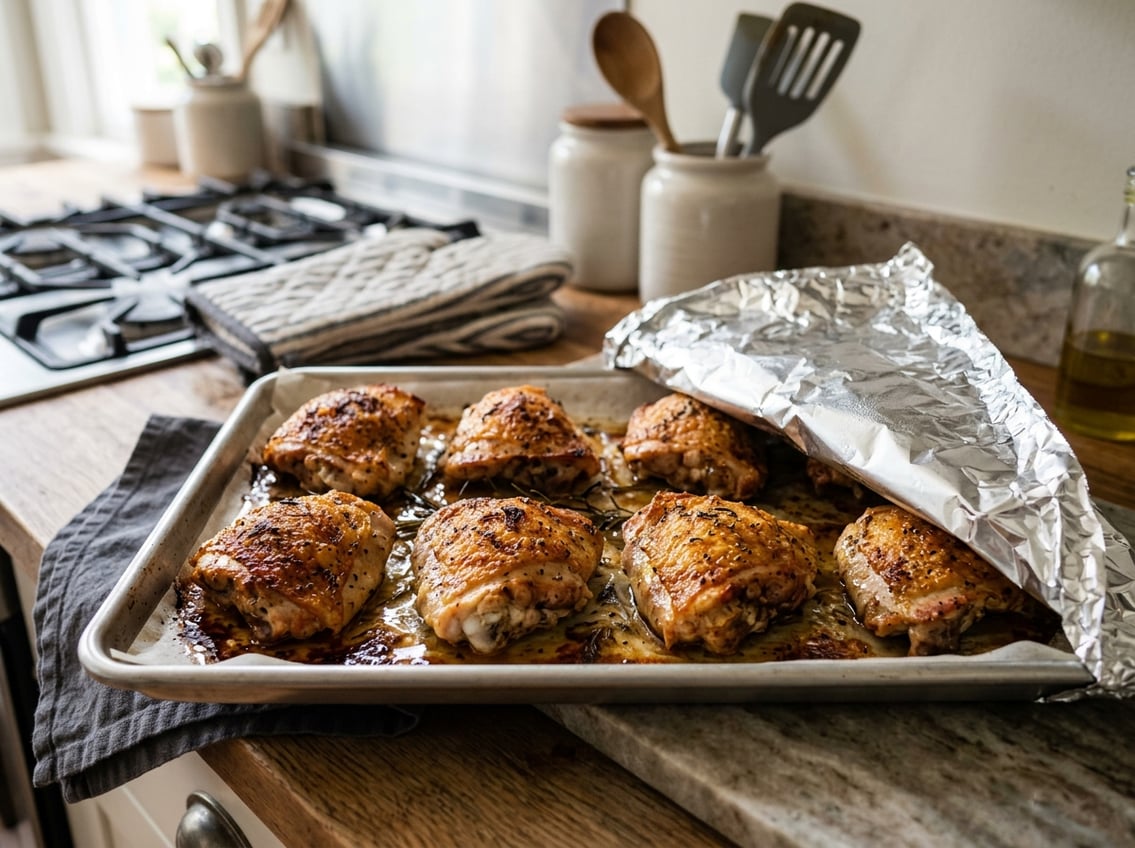
On the other hand, leaving chicken thighs uncovered during baking serves an equally important purpose: achieving crispy, golden-brown skin. The direct exposure to dry heat allows the Maillard reaction to develop on the surface, creating that satisfying crunch that makes baked chicken thighs irresistible. This method works best when you want the skin to be a highlight of the dish. Imagine preparing a Sunday dinner where presentation matters — the uncovered thighs will present a visually appealing, deeply textured finish that makes people want to dig in immediately.
Must Read
The most common and effective approach is a combination method. Most experienced home cooks recommend starting with the chicken thighs covered in foil for the first half of the cooking time and then removing the foil for the final 15 to 20 minutes. This strategy gives you the best of both worlds — the meat stays juicy from the trapped steam early on, while the final stretch uncovered phase allows excess moisture to evaporate and the skin to brown beautifully. Think of it as a two-act process: the cover acts as a safety net first, and then the open-air finish delivers the textural contrast every good meal needs.
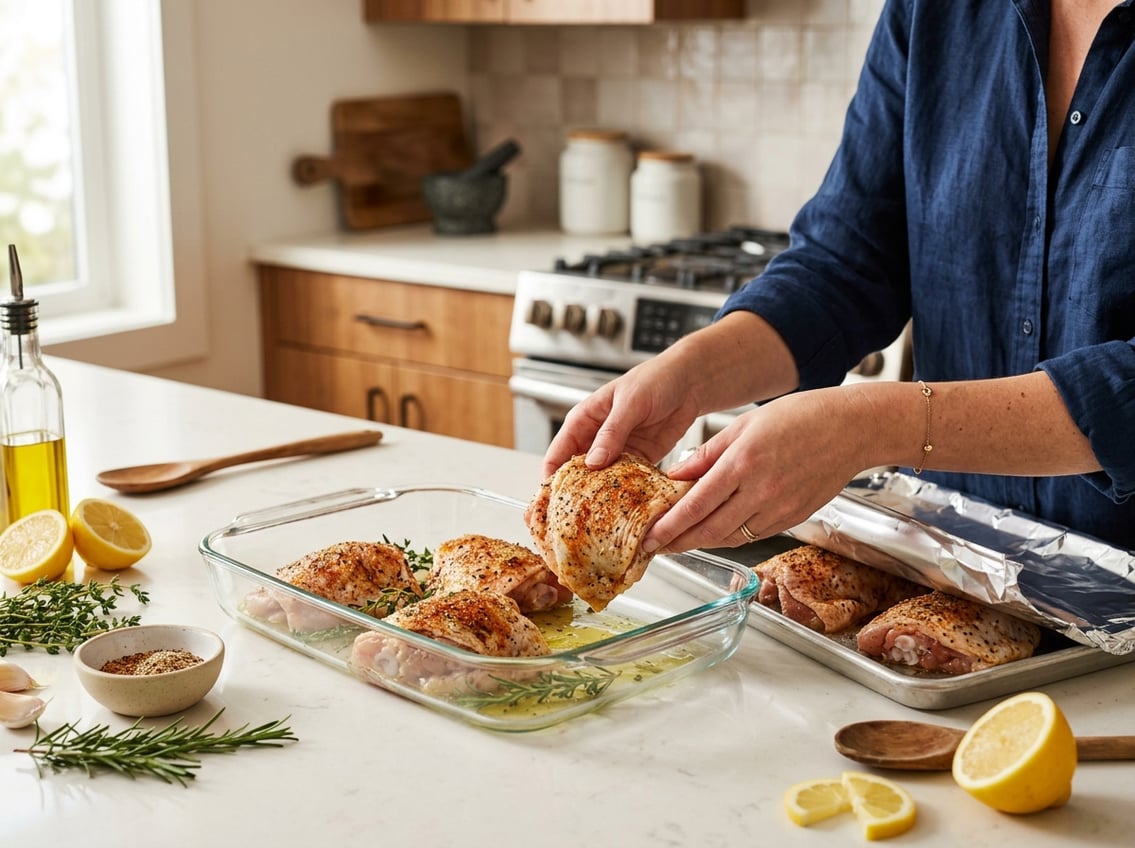
It is also worth considering the type of preparation when deciding. If you have marinated the thighs in a sauce-heavy glaze or a dry spice rub that you want to stay intact, covering them at the start can prevent those flavorful coatings from burning too quickly. Conversely, if you have pat-dried the skin and used a dry rub, brief early covering can still lock in juices without softening the skin too much. The context of your recipe — whether it is Asian-inspired soy-glazed thighs, classic lemon-herb seasoned cuts, or Mediterranean-spiced versions — should guide your decision on covering and uncovering.
 When Baking Chicken Thighs: Should You Cover or Leave Uncovered? - Cook
To explore this technique on your own, try a few simple experiments. Bake one batch fully covered and another fully uncovered using identical seasoning and temperature, then compare flavor and juiciness. Next attempt the hybrid method — covered first, uncovered second — and note the difference. Use a meat thermometer to ensure your thighs reach an internal temperature of 165°F regardless of your chosen method. Finally, don't hesitate to adjust your cooking temperature; a slightly higher heat during the final uncovered phase can accelerate browning without compromising interior moisture.
Ultimately, the decision to cover chicken thighs when baking comes down to your desired outcome. If juiciness is your top priority, keep them covered. If crispy skin matters most, leave them exposed. And if you want a balanced, restaurant-quality result, use both approaches in sequence. Whichever method you choose, this simple awareness gives you greater control over your cooking and helps you consistently serve chicken thighs that are moist, flavorful, and far from boring.