Should I Cook Chili With Lid On Or Off

There’s something wonderfully simple and satisfying about a pot of chili bubbling away on the stove. It’s the kind of meal that brings people together, whether it’s for a game...
There’s something wonderfully simple and satisfying about a pot of chili bubbling away on the stove. It’s the kind of meal that brings people together, whether it’s for a game day gathering, a cozy weeknight dinner, or a meal prep staple that gets better each day. The main purpose of chili is to deliver deep, layered flavors from browned meat, aromatic spices, and slow-simmered beans or vegetables. But a question that often sparks friendly debate in kitchens everywhere is: should you cook chili with the lid on or off? It might seem small, but this choice actually shapes the texture and taste of your final dish, making it a surprisingly practical and rewarding topic to explore.
At its heart, the lid decision comes down to one thing: moisture control. Cooking with the lid on traps steam, which keeps the chili soupy and prevents it from reducing too quickly. This is great if you want a looser, more broth-like chili—perfect for dipping cornbread or ladling over rice. On the flip side, leaving the lid off allows steam to escape, which lets the liquid evaporate and concentrates the flavors. That’s how you get a thick, hearty chili that clings to a spoon and stands up to toppings like shredded cheese or sour cream. Think of it this way: if you’re aiming for a chili con carne style that’s almost stew-like, go lid-off. If you prefer a more traditional, saucy version, the lid stays on.
Timing, of course, makes all the difference. A common variation among chili enthusiasts is to start with the lid off for the first hour, letting the liquid reduce and the spices bloom. Then, you might cover it for the last thirty minutes to gently meld the flavors without drying out the meat. Another approach is to keep the lid off for the entire simmer to achieve a deep, roasted quality, then add a splash of broth or tomato juice at the end if it gets too thick. For those using a slow cooker, the lid is usually on by design, but you can crack it open in the last hour to let some steam escape and thicken things up. It’s all about flexibility—you can adjust as you go.
Must Read
One of the simplest ways to decide is to watch the liquid level in your pot. If you notice the chili is bubbling vigorously and seems to be getting too watery, take the lid off to let evaporation do its job. If it looks like it’s reducing too much and risks burning on the bottom, clamp the lid on to keep it moist. A good rule of thumb is to start with the lid off for the first 30 minutes of simmering, then check the consistency. This gives you control without guessing. And remember, chili is forgiving—you can always add a little water or broth if it gets too thick, or simmer longer if it’s too thin.
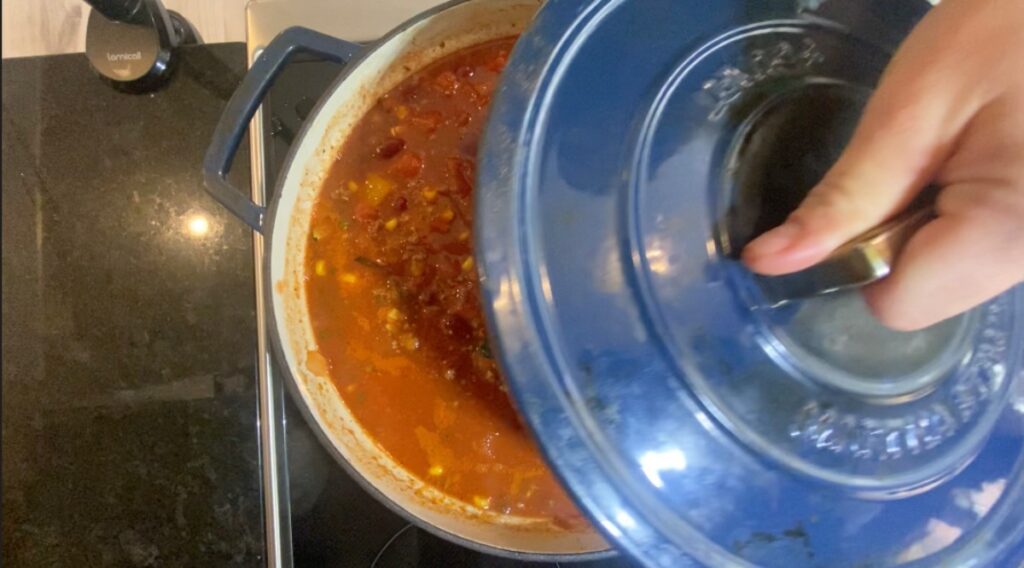 Hearty Bison Chili Recipe with Roasted Vegetables - The Sweet, Simple
Another tip for making the most of this lid debate is to layer your heat. When you cook chili with the lid off, the surface evaporates quickly, which can actually deepen the Maillard reaction on the exposed bits of meat and vegetables, adding a subtle smoky flavor. For a truly rich result, brown your meat and aromatics in the pot first, then add your liquids and spices. Let it simmer uncovered until the sauce coats the back of a spoon, then cover it for a final 15-minute rest off the heat. That resting period allows the flavors to marry without further evaporation—a move that seasoned cooks swear by.
Finally, don’t forget that personal preference is the ultimate judge. Some people love a chili that you can almost chew, with chunks of beef and beans swimming in a velvety, reduced sauce—that’s a lid-off victory. Others enjoy a lighter, more tomato-forward version that’s perfect for sopping up with bread—that’s the lid-on approach. The beauty is that you can experiment with both methods in the same batch: start with the lid off for flavor concentration, then cover it during the last 20 minutes to ensure everything stays tender. So next time you’re stirring that pot, remember: the lid isn’t a rule, it’s a tool. Use it to craft the chili that makes you smile, and enjoy the delicious process along the way.
