Safe Internal Cooking Temperature For Chicken

Let’s be real for a second: cooking chicken can be a little bit terrifying. One minute you’re feeling like a Top Chef, sprinkling herbs and patting yourself on the back. The n...

Let’s be real for a second: cooking chicken can be a little bit terrifying. One minute you’re feeling like a Top Chef, sprinkling herbs and patting yourself on the back. The next, you’re staring at a pale, wobbly breast wondering, “Is this… safe? Or am I about to gift my dinner guests a one-way ticket to Food Poisoning Town?” We’ve all been there. But here’s the good news: you don’t need a culinary degree or a hazmat suit. You just need to know one magic number: 165°F (or 74°C for our metric-minded friends).
That’s it. That’s the whole secret. The USDA has spoken, and they say that when the thickest part of your chicken—whether it’s a majestic whole bird, a humble thigh, or a lonely breast—hits 165°F, all the nasty little bacteria (like Salmonella and Campylobacter) throw in the towel and die. Think of it as the final boss in your chicken’s video game. Beat that temperature, and you win.
Now, I know what you’re thinking: “But my grandmother always said the juices must run clear, and that feels a bit like a witch trial.” Listen to Grandma, but also trust your thermometer. Juices can lie (especially if the bird is young). A digital instant-read thermometer is your BFF here. Don’t rely on touch, don’t rely on looks—unless you’re an avian surgeon, you’re probably guessing. Stick the probe into the thickest part of the meat, avoiding bone, and wait for that satisfying beep at 165°F.
Must Read
But wait—there’s a plot twist! Did you know that dark meat (thighs, drumsticks, wings) actually tastes better if you take it a little higher? Shh, it’s a well-kept secret. Because dark meat has more fat and connective tissue, it stays juicy and tender even up to 175–185°F—making it chef’s kiss perfection. White meat (breasts and tenders) is diva-ish and dries out quickly, so pull it exactly at 165°F. Let it rest for five minutes, and it’ll carry over a few degrees without drying out. See? You’re already a pro.
One more thing: never, ever wash your raw chicken. I know, I know—your great-aunt Theresa insists on rinsing it like it’s a dusty houseplant. But washing chicken sprays bacteria all over your sink, your towel, your cat… it’s a horror movie. The heat will kill the germs, not a cold bath. So skip the rinse, pat it dry with paper towels (toss those immediately), and get to seasoning.
Here’s a little checklist for you to keep on your fridge (or mentally, if you’re fancy): whole chicken and chicken parts—165°F. Ground chicken (burgers, meatballs)—165°F (since grinding spreads bacteria everywhere). Leftovers? Reheat to 165°F. Stuffed chicken? The stuffing itself must hit 165°F too, so don’t skimp.
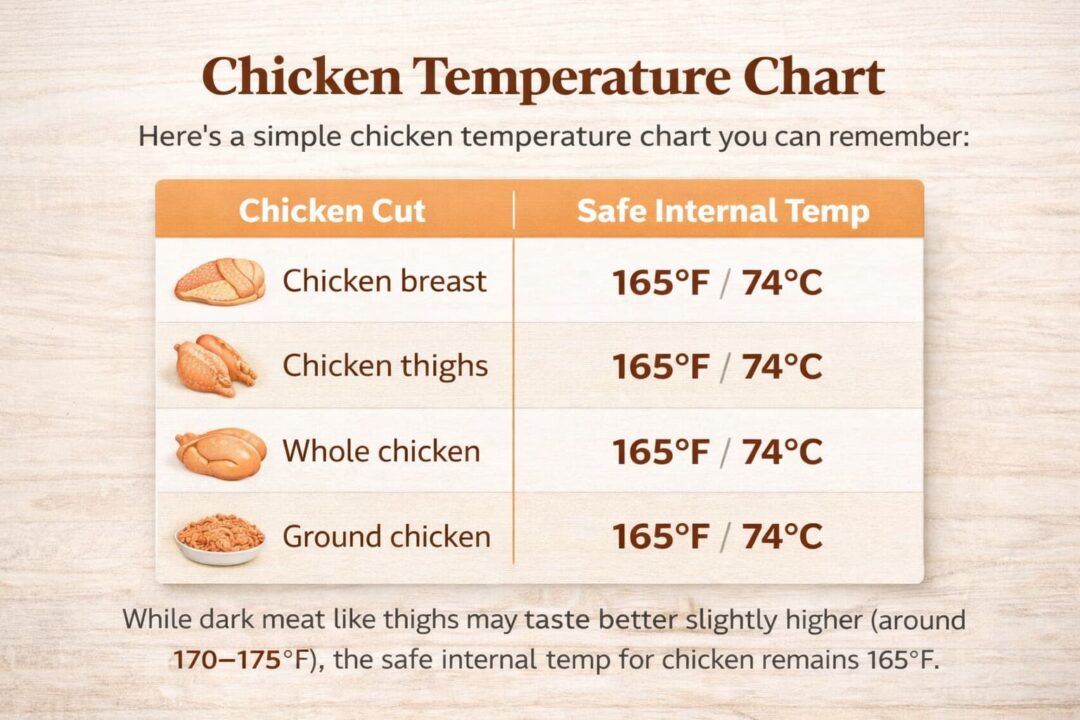 Chicken Internal Temp: The Secret to Safe, Perfect Chicken - Foodiosity
And if you’re worried about over-cooking? Relax. A good thermometer and a little practice will turn you into a chicken-temp whisperer. You’ll be slicing into perfectly juicy, golden-brown chicken that makes people close their eyes and say, “Mmm, this is safe AND delicious.”
So here’s to you, brave home cook. You’ve got the knowledge. You’ve got the tool. Next time you pull a gorgeous bird from the oven, you won’t be sweating bullets—you’ll be beaming with pride. Because now you know that 165°F isn’t just a number; it’s your permission slip to enjoy a wonderful, worry-free meal. And if anyone asks how you did it? Just wink, tap your thermometer, and say, “Science, darling. Pure science.”
Now go forth, cook confidently, and remember: you are the master of your cluckin’ destiny. 🐔✨
