Pinto Vs Black Beans Nutrition

There is something deeply satisfying about a steaming bowl of beans. Whether nestled in a warm tortilla, simmering in a hearty soup, or served as a simple side, beans are a co...
There is something deeply satisfying about a steaming bowl of beans. Whether nestled in a warm tortilla, simmering in a hearty soup, or served as a simple side, beans are a cornerstone of comfort food around the world. Beyond their flavor and texture, they offer a quiet, everyday kind of magic: they are affordable, versatile, and packed with nutrients that fuel your body for hours. For anyone looking to eat healthier without sacrificing taste, choosing between pinto and black beans becomes a delightful, non-stressful decision. Both are nutritional powerhouses, yet each brings its own subtle strengths to your plate.
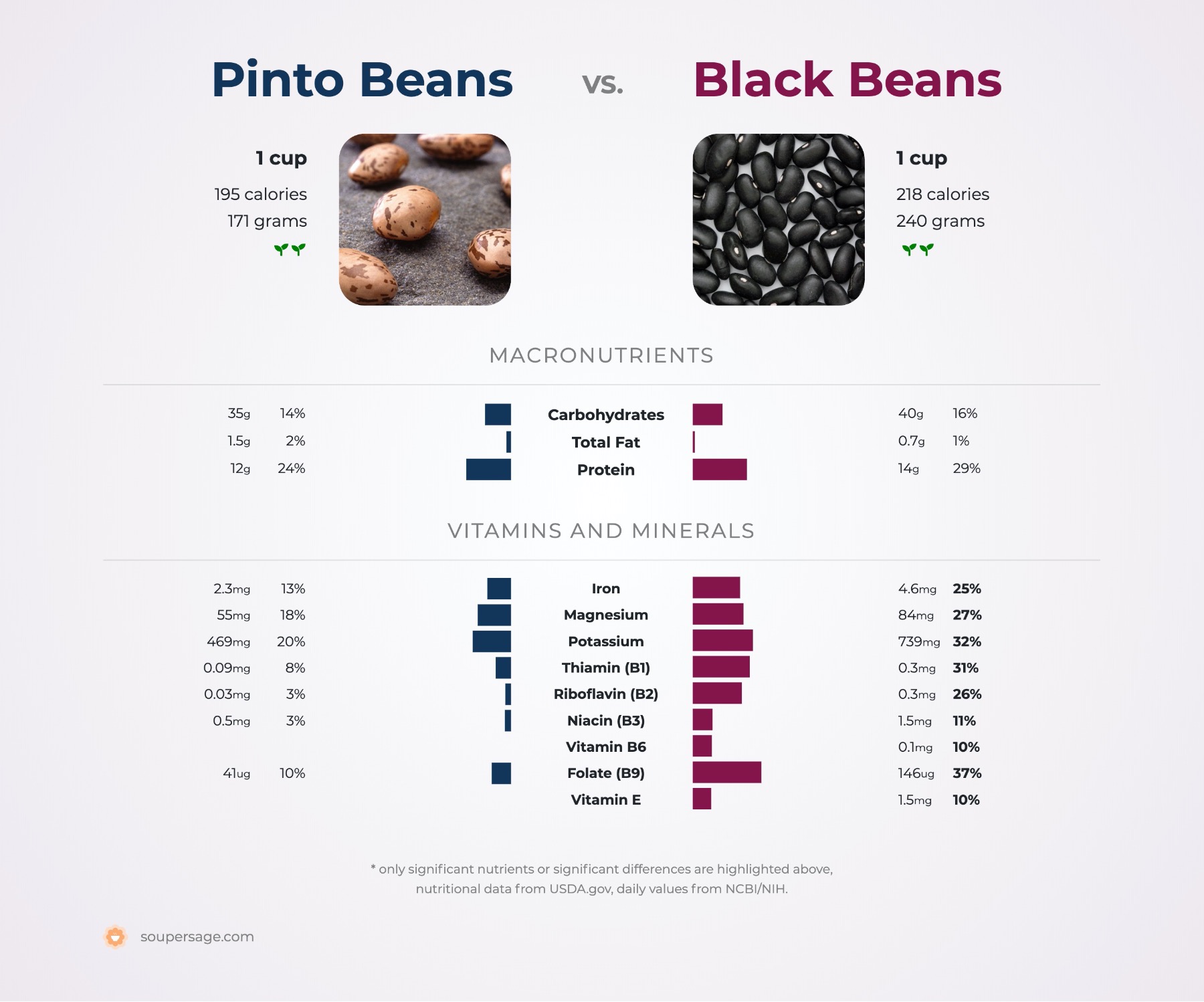
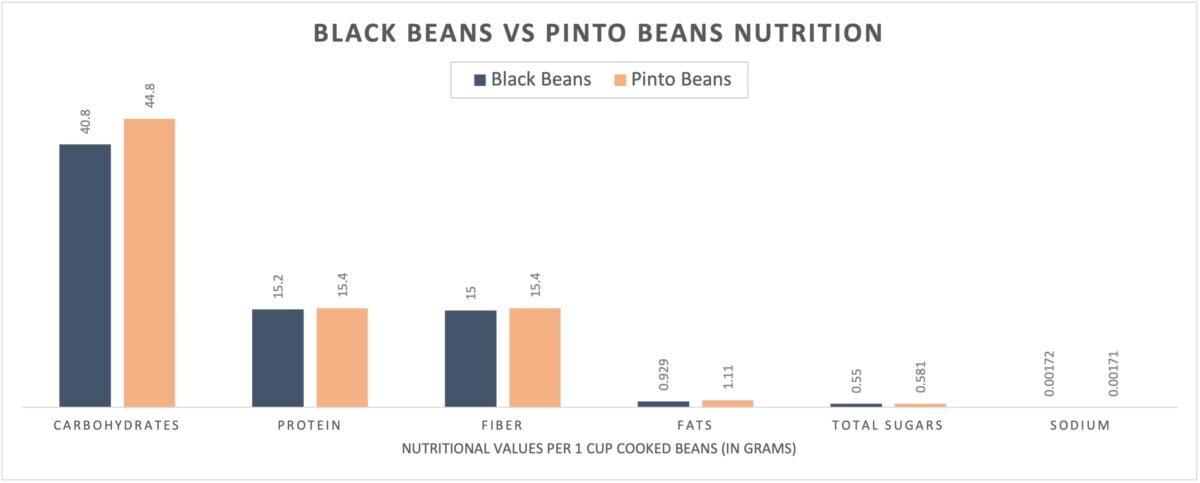
At their core, both pinto and black beans are excellent sources of plant-based protein and fiber. A single cup of cooked beans provides roughly 15 grams of protein and 15 grams of fiber, making them a fantastic option for building muscle, stabilizing blood sugar, and keeping you full between meals. For a busy parent packing lunch for a child, or for a student on a budget, this means sustained energy without the crash. The key difference lies in their mineral content: while both are rich in iron, magnesium, and potassium, black beans edge ahead with a slightly higher concentration of these nutrients, especially iron—critical for oxygen transport in your blood.
When it comes to antioxidants, black beans take a notable lead. Their deep, dark color comes from anthocyanins—the same compounds found in blueberries and purple cabbage—which help fight inflammation and oxidative stress. This makes black beans a particularly smart choice for anyone focused on long-term heart health or aging well. On the other hand, pinto beans, with their lighter, creamy hue, are richer in folate (vitamin B9). Folate is essential for cell division and is especially important for pregnant women or those planning a family. So, if you’re looking to support your cardiovascular system, choose black beans; if you're prioritizing cellular repair and reproductive health, pinto beans are your friend.
Must Read
The culinary versatility of these beans is where they truly shine. Think of a scenario: you are preparing a quick weeknight dinner. For a Mexican-inspired dish like burrito bowls or nachos, pinto beans are the classic choice—they are creamy, mild, and mash beautifully into a refried texture. They absorb flavors like cumin and garlic wonderfully. For contrast, black beans hold their shape better and have a firmer, earthier bite. They are perfect for Cuban black bean soup, grain bowls with avocado and lime, or simply tossed into a salad. If you have a chili lover in the house, note that black beans are often preferred for their dense, meaty texture, while pinto beans break down to thicken the broth.
One practical tip is to choose canned beans for speed, but with a crucial step: always rinse them. Rinsing canned black or pinto beans under cold water can reduce their sodium content by up to 40%. For home cooks wanting to save money and control ingredients, consider buying dried beans and cooking a large batch over the weekend. Simply soak them overnight, then simmer with a bay leaf and a clove of garlic. You can then portion them into freezer-safe bags—they’ll keep for months and be ready to thaw for quick meals. This is a game-changer for meal prep because you can then season them differently each time: cumin and chili flakes for black beans, or smoked paprika and oregano for pintos.
 Are Black Beans or Pinto Beans Healthier? | Lifelong Metabolic
If you are trying to improve your digestive health, pinto beans might offer a slight edge due to their higher resistant starch content, especially when cooked and then cooled (as in bean salads). Resistant starch feeds beneficial gut bacteria. But for managing blood sugar, black beans typically have a lower glycemic index, making them a better choice for individuals with insulin resistance or type 2 diabetes. A simple swap in your lunch bowl—replacing half your rice with black beans—can lead to a more stable energy level throughout the afternoon. This is a small adjustment with outsized impact on how you feel.
To explore these beans on your own, start with a side-by-side taste test. Cook one cup each of dried pinto and black beans from scratch (or use two cans, rinsed). Prepare a neutral base—plain rice or a simple tortilla—and taste each bean with just a pinch of salt. Notice the texture: the pinto is buttery; the black is dense and earthy. Then, try them in your favorite recipe. For a Southwestern twist, mix black beans with corn, diced jalapeño, and lime. For a more traditional comfort dish, simmer pinto beans with bacon, onion, and a touch of tomato. Both beans are budget-friendly and forgiving, so don’t be afraid to experiment. Your body and your taste buds will thank you for adding either—or both—to your weekly rotation.