Obesity Rates Of The World

Hey there, curious minds! Ever wondered how the world's waistlines compare? Buckle up, 'cause we're about to dive into a fascinating journey around the globe, one belt notch a...
Hey there, curious minds! Ever wondered how the world's waistlines compare? Buckle up, 'cause we're about to dive into a fascinating journey around the globe, one belt notch at a time.
Let's Start with the Basics
First things first, what are we talking about when we say 'obesity'? It's basically when a person's weight is way above what's healthy for their height. Doctors use something called Body Mass Index (BMI) to figure this out. It's a simple ratio of your weight to your height squared. Pretty neat, huh?
Now, why is this important? Well, being overweight or obese can lead to all sorts of health issues, like heart disease, diabetes, and even certain cancers. So, it's not just about how we look in the mirror, it's about how we feel on the inside too.
Must Read
So, Who's Packing on the Pounds?
Alright, let's get to the juicy bits. According to the World Health Organization (WHO), more than 1.9 billion adults worldwide are overweight, and over 650 million of them are obese. That's a lot of people, right?
But here's where it gets interesting. It's not just about the numbers, it's about where these numbers are coming from. Some countries are packing on the pounds faster than others. Let's take a look at the top three.
Number One: Nauru
Ever heard of Nauru? It's a tiny island nation in the South Pacific. You might want to sit down for this - over 60% of its adults are obese. That's right, more than half! It's like the whole country is on a never-ending cheesecake binge. But why?
Well, it's a mix of things. Nauru's economy relies heavily on phosphate mining, which has led to a lot of wealth. And with wealth comes access to more food, including high-calorie, low-nutrient stuff. Plus, physical activity levels have dropped as jobs have become more sedentary.
Number Two: Cook Islands
Next up, we've got the Cook Islands, a group of 15 tiny islands in the South Pacific. Here, around 55% of adults are obese. It's a similar story to Nauru - wealth has brought in more food, and traditional physical activities like fishing and farming have taken a backseat.
Number Three: Palau
Rounding out our top three is Palau, another Pacific island nation. About 50% of its adults are obese. Again, it's a mix of wealth, access to food, and changes in physical activity levels.
And the Rest?
So, what about the rest of the world? Well, the WHO says that in 2016, more than 1.9 billion adults were overweight, with over 650 million of them being obese. That's about 13% of the world's adult population.
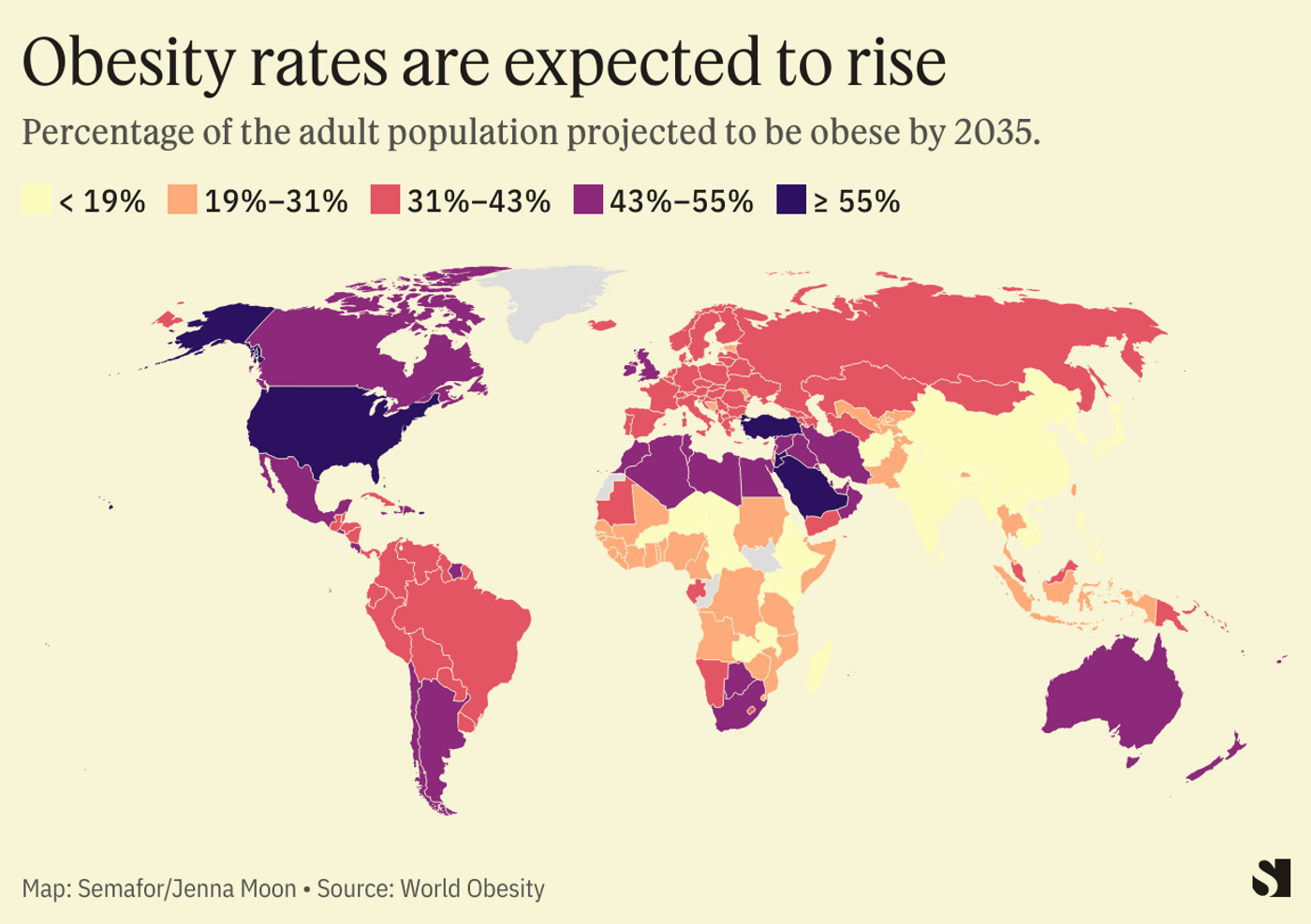 The global obesity crisis explained in three maps | Semafor
But here's where it gets a bit more nuanced. In some countries, like the U.S., obesity rates have been stabilizing or even decreasing a bit. In others, like China and India, they're on the rise. It's like a global game of obesity whack-a-mole, and it's changing all the time.
Why Does It Matter?
You might be thinking, 'Okay, that's interesting, but why should I care?' Well, here's why. Obesity isn't just a personal health issue, it's a global one. It puts a strain on healthcare systems, affects economies, and can even impact national security.
Plus, it's not just about adults. Childhood obesity is on the rise too. According to the WHO, in 2019, 38.2 million children under the age of 5 were overweight or obese. That's a lot of little bellies that need protecting.
So, What Can We Do?
Alright, enough about the problem. Let's talk solutions. Governments, communities, and individuals all have a role to play here. It's about promoting healthy diets, encouraging physical activity, and making sure everyone has access to the care they need.
And hey, you can be part of the solution too. Maybe it's eating a bit more veg and a bit less cheesecake (though let's not go crazy, we all need a little cheesecake in our lives). Maybe it's getting out for a walk more often. Maybe it's just being a bit more mindful of what we're putting in our bodies.
Remember, every little bit helps. And who knows? Maybe one day we'll look back at these obesity rates and think, 'Wow, we really turned that ship around.'
Until next time, curious minds. Stay healthy, stay happy, and keep questioning!
