Nutritional Value Of Canned Spinach

Let’s be honest: canned spinach has a serious PR problem. It sits there in the dark, metallic corner of your pantry, looking like something a science fair project left behind....

Let’s be honest: canned spinach has a serious PR problem. It sits there in the dark, metallic corner of your pantry, looking like something a science fair project left behind. But before you toss it in the recycling bin, let’s talk about what this squishy, emerald oddball can actually do for you.
It’s Not Pretty, But It’s Packed
Open a can, and you’re greeted by a slimy, dark green mass that smells vaguely of wet earth and regret. That’s the first impression—and it’s a doozy. But here’s the shocker: that canned mush is a nutritional heavyweight that laughs in the face of fresh spinach’s delicate ego.
Fresh spinach wilts into a sad, watery pile the second you look at it wrong. Canned spinach? It’s already been through the apocalypse. It’s pre-wilted, pre-cooked, and ready to be your side dish without any drama.
Must Read
The Numbers Don’t Lie (Even If the Can Does)
One cup of canned spinach contains roughly five times the vitamin K you need in a day. That’s the stuff that helps your blood clot so you don’t bleed out from a paper cut. Think of it as a tiny insurance policy in a tin can.
We’re also talking about a massive dose of vitamin A—about 350% of your daily needs. That’s enough to keep your eyesight so sharp you’ll spot a typo on a menu from across a restaurant. Popeye wasn’t kidding; he was just underselling it.
Iron: The Canned Spinach Superpower
Fresh spinach has iron, sure, but it also has oxalic acid, which basically blocks your body from absorbing most of it. It’s like a bouncer at a club who won’t let the good stuff in. Canned spinach, however, is cooked and processed, which reduces that oxalic acid significantly.
That means your body can actually use the iron. You’ll feel less like a sleepy sloth and more like a person who could bench-press a small refrigerator. Plus, you get a solid dose of calcium and magnesium, which are great for your bones and your mood—because let’s face it, we all need help with both.
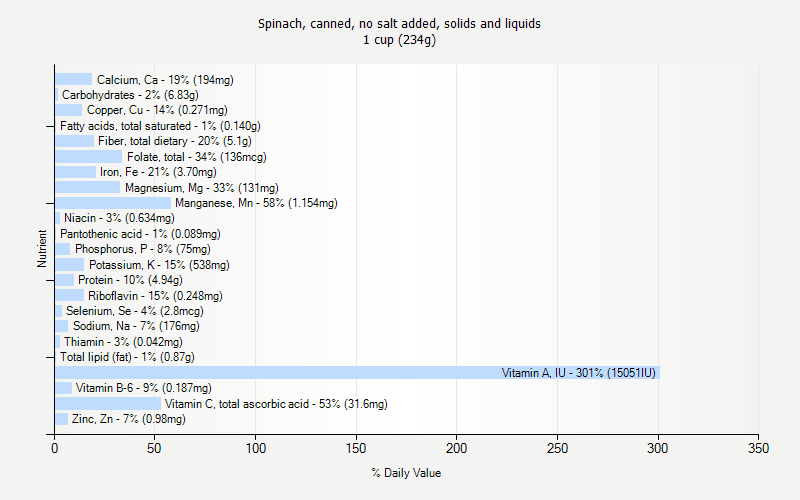 Spinach, canned, no salt added, solids and liquids nutrition
The Sodium Sneak Attack
Okay, real talk: canned spinach often comes swimming in a salty brine. A single cup can pack over 800 mg of sodium, which is about a third of your daily limit. That’s the equivalent of eating a bag of potato chips with your greens.
But here’s the fix: drain it and rinse it. Run that green glop under cold water for about thirty seconds. You’ll wash away up to 40% of the sodium, turning it from “heart attack on a spoon” into a “pretty reasonable dinner choice.” You’re welcome.
Fiber That Keeps Things Moving
Canned spinach is also a solid source of fiber—about 4 grams per cup. That’s the stuff that keeps your digestive system running like a well-oiled train. Think of it as nature’s gentle janitor, sweeping out your insides while you watch TV.
And because it’s already cooked, your stomach doesn’t have to work as hard to break it down. Pro tip: If you’re feeling a little “stuck,” a side of canned spinach is a kinder, gentler solution than chugging prune juice. Trust me on this one.
How to Eat It Without Crying
The biggest mistake people make is eating it straight from the can, cold and naked. That’s like judging a book by its slimy cover. Sauté it with garlic, olive oil, and a squeeze of lemon. The heat kills the weird can-taste, and the lemon makes it shine.
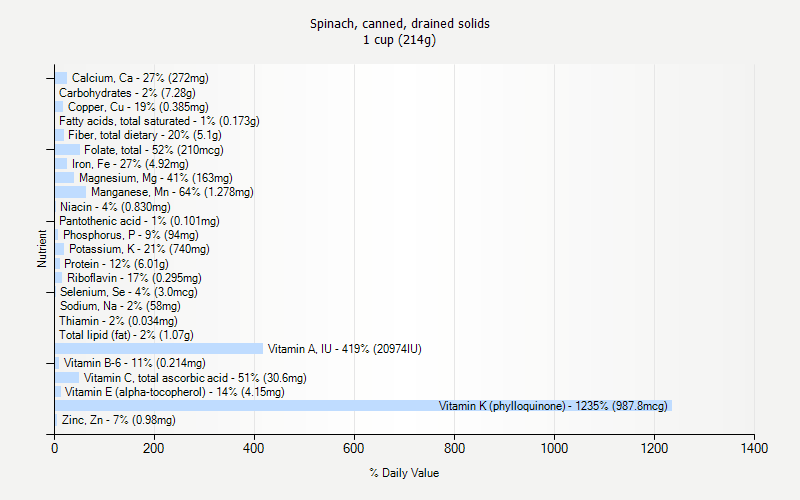 Spinach, canned, drained solids nutrition
You can also hide it in just about anything: stir it into pasta sauce, blend it into a smoothie (yes, really—it turns it green, but not gross), or mix it into scrambled eggs. Your taste buds won’t know what hit them, but your body will send a thank-you note.
The Surprising Fresh vs. Canned Showdown
Here’s a fact that will make your head spin: when fresh spinach sits in your fridge for a week, it loses about 50% of its nutrients. Canned spinach is processed within hours of being picked, locking in those vitamins like a time capsule. You can eat a can from six months ago and get more benefits than that sad bag of leaves you forgot about.
Plus, canned spinach is cheap. A can costs about a dollar, while fresh spinach costs three to four bucks and goes bad in three days. For the price of a fancy coffee, you can get three days’ worth of vitamins. That’s a steal, and your wallet won’t hate you.
The Final Verdict
Is canned spinach ugly? Absolutely. Is it a little weird? You bet. But is it a nutritional powerhouse that’s easy, cheap, and surprisingly versatile? Yes, yes, and yes. It’s the underdog of the produce aisle—the scrappy, salty hero that doesn’t need to look good to be good.
So next time you’re standing in front of that can, remember: you’re not buying regret. You’re buying brain-boosting vitamin A, bone-strengthening calcium, and enough iron to fuel a small army. Just rinse it, cook it, and maybe don’t stare at it too long. Your body will thank you. And that’s a fact you can take to the bank—or the café.
