Is Yogurt Or Milk Better For Smoothies

Morning routines can feel rushed, yet a cold, velvety smoothie offers a quick way to start the day feeling nourished and refreshed. Whether you are a busy parent assembling a...

Morning routines can feel rushed, yet a cold, velvety smoothie offers a quick way to start the day feeling nourished and refreshed. Whether you are a busy parent assembling a breakfast for yourself and the kids or a fitness enthusiast blending a post-workout recovery drink, the smoothie has become a modern staple for good reason. It is fast, customizable, and endlessly adaptable to individual tastes. But every great smoothie starts with a base decision that people debate more often than you might expect: should you reach for yogurt or milk? Each option carries unique benefits, and understanding them can help you craft a smoothie that not only tastes incredible but also aligns with your health goals.
Milk has long been the classic smoothie base, sitting in fridge doorways across the world for good reason. Its primary purpose in a smoothie is to provide a light, drinkable consistency that blends seamlessly with fruits, leafy greens, and powders. A cup of whole milk delivers around eight grams of protein, calcium, and vitamin D, all essential for muscle function and bone strength. Because milk is relatively neutral in flavor, it allows the natural sweetness of bananas or berries to take center stage without any competing tang. For someone who prefers a thinner, pourable texture — perhaps to sip from a cup during a morning commute — milk tends to be the clearer choice.
Yogurt, on the other hand, brings a completely different personality to the glass. Its thicker texture transforms a smoothie into something closer to a protein-packed shake, adding body and richness that many people find deeply satisfying. One of yogurt's standout advantages is its abundance of probiotics, live beneficial bacteria that support gut health and digestion. Choosing plain Greek yogurt can add up to fifteen grams of protein in a single serving while introducing only minimal added sugar. Consider a scenario in which you skip breakfast on a hectic weekday: blending yogurt with a handful of oats, almond butter, and frozen berries creates a satisfying meal replacement that keeps you full until lunch.
Must Read
The differences become even more apparent when you compare their nutritional profiles side by side. Milk generally offers more calcium per serving and contains naturally occurring lactose, which can be uncomfortable for people with dairy sensitivity. Yogurt, however, has partial lactose because the fermentation process breaks it down, making it a more manageable option for those who experience mild dairy-related bloating. When it comes to calories, full-fat milk and whole-milk yogurt can be surprisingly close in count, while fat-free versions of either option dramatically lower the energy density. If you are watching your calorie intake but still want a satisfying texture, fat-free Greek yogurt strikes an appealing balance between creaminess and lightness.
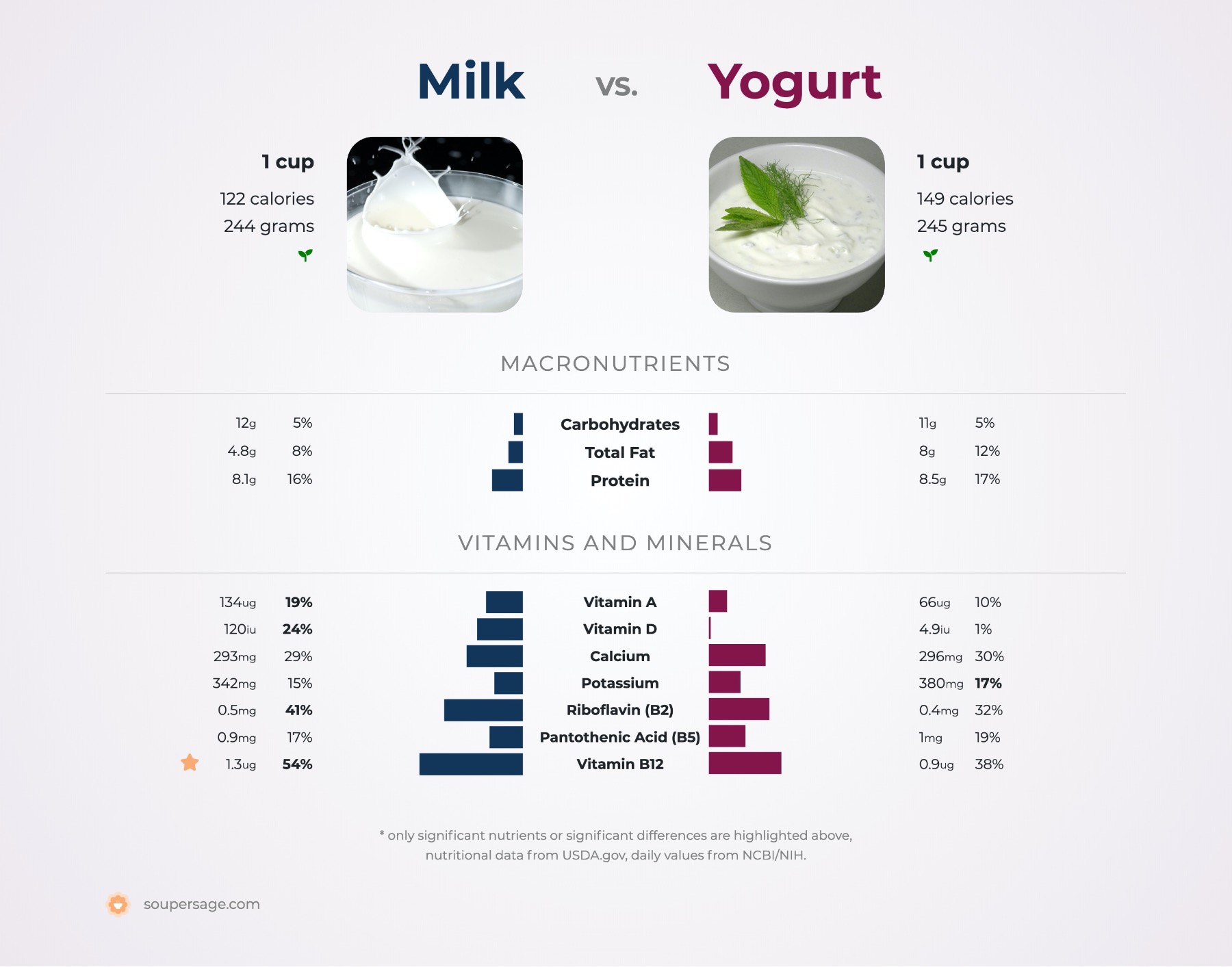 1 Cup Of Yogurt
Practical tips can make this decision much less overwhelming. First, taste-test both bases with your favorite fruit combination before committing to either one — your palate knows what it likes. Second, try combining the two; half a cup of milk paired with half a cup of yogurt often yields the ideal middle ground between drinkableness and thickness. Third, check labels carefully: flavored yogurts can contain up to twenty grams of added sugar per serving, which defeats the purpose of a healthy smoothie. Opt for unsweetened or plain varieties and let fresh fruit handle the sweetness. Finally, explore non-dairy alternatives such as oat milk or coconut yogurt if you follow a plant-based lifestyle — gluten-free oat milk blends harmoniously with tropical fruits for a holiday-like vibe any day of the week.
Ultimately, neither yogurt nor milk is objectively superior — the better choice depends entirely on your personal preferences and nutritional needs. If you want a refreshing, easy-sipping base with generous calcium, milk wins. If you crave creaminess, extra protein, and gut-friendly probiotics, yogurt takes the lead. The true joy of smoothies lies in experimentation, so start blending, adjust as you go, and let each version reflect a little more of what your body actually loves.