Is There Milk In A Pina Colada

Picture this: you’re poolside, palm trees swaying, and you take a blissful sip of a piña colada. Suddenly, a friend leans over and asks, “Is there milk in this?” You freeze. I...
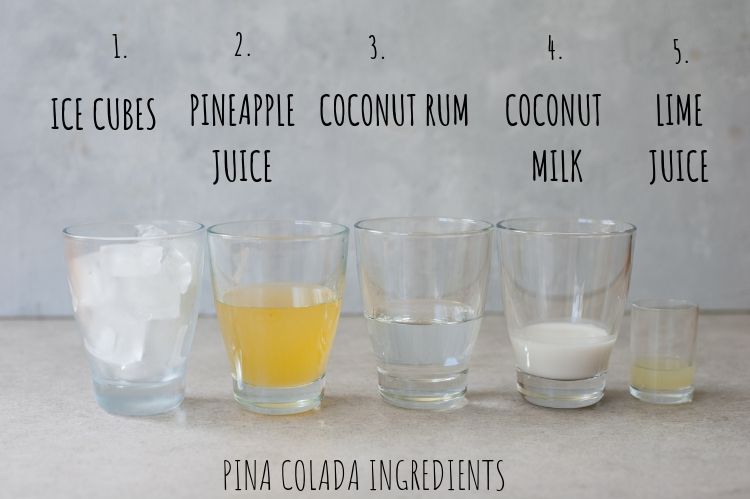
Picture this: you’re poolside, palm trees swaying, and you take a blissful sip of a piña colada. Suddenly, a friend leans over and asks, “Is there milk in this?” You freeze. Is that creamy, dreamy texture actually dairy? Let’s settle this before you panic-spit your drink into the hibiscus bush.
The Short Answer: No, You’re Not Drinking a Cow’s Bathwater
Here’s the good news: a classic piña colada contains absolutely zero milk. That luscious, velvety mouthfeel comes from a much more tropical—and frankly, more fun—source. We’re talking about coconut cream, the thick, fatty, sweetened stuff that makes you believe in paradise.
If you saw a bartender pouring something white into your glass, your brain did a dairy default. But nope, that’s coconut doing all the heavy lifting, wearing a tiny palm-frond hat and laughing at your lactose intolerance fears.
Must Read
But Wait, Isn’t Coconut Cream Made of… Something Milky?
Technically, coconut cream is just the high-fat part of canned coconut milk, which is neither milk from a mammal nor a suspicious white liquid from a science lab. It’s the grated flesh of a coconut, soaked in water, then squeezed until it surrenders its creamy soul.
Think of it as the heavy cream of the plant kingdom—and it has about three times the flavor of anything that came out of a dairy cow. Your tongue knows the difference, even if your brain is suspicious.
The Real Culprit: The “Cream of Coconut” Mix-Up
The confusion usually strikes when someone stumbles across a recipe calling for “cream of coconut.” That’s not the same as canned coconut cream. “Cream of coconut” is a sugary, syrupy, artificially thickened goop often sold in cans by brands like Coco López. It’s sweetened, shelf-stable, and very, very good at making your drink taste like a vacation.
And no, it still doesn’t have milk. Unless you count the metaphorical milk of human kindness from whoever invented this glorious concoction. But actual cow milk? Never present. It’s a dairy-free zone, my friend.
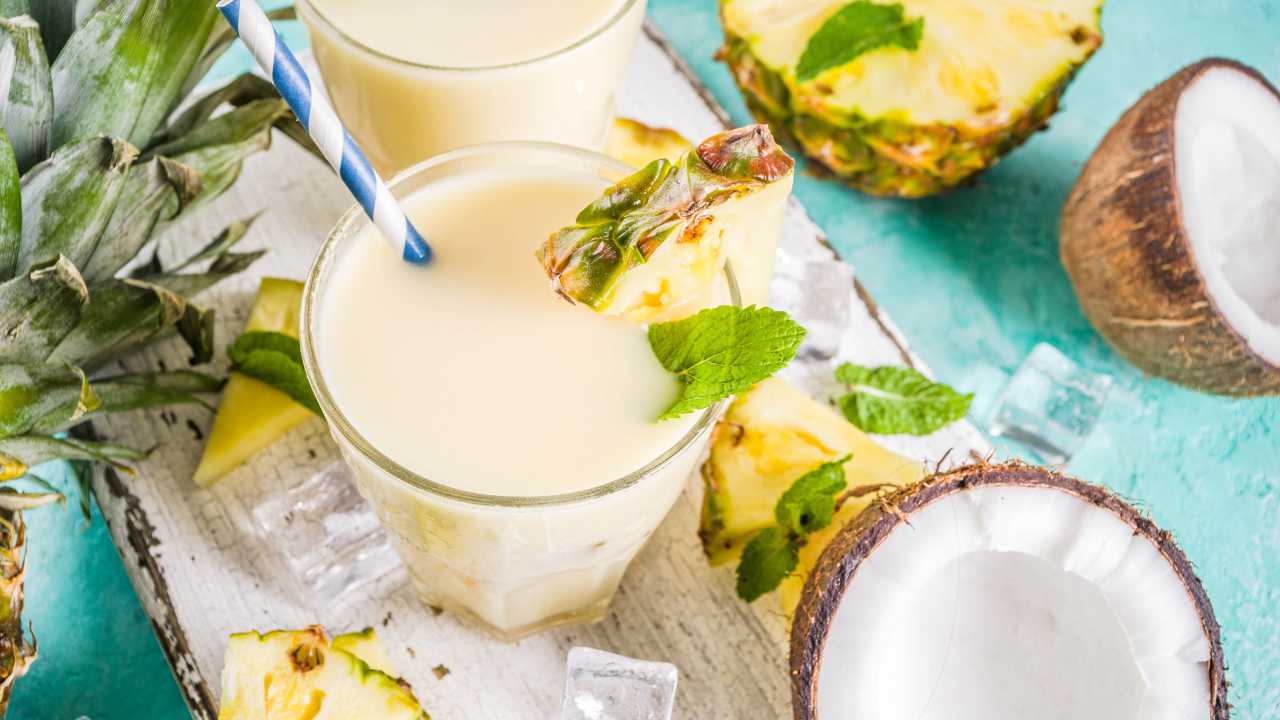 Should You Make Pina Colada With Coconut Milk
What About That “White Drink” Look?
Here’s a surprising fact: the color of a piña colada actually comes from emulsification. When you blend coconut cream with pineapple juice and rum, the fat particles from the coconut get so tiny they actually scatter light, making the whole thing look milky white.
It’s the same optical illusion that makes milk look white—except this time, it’s a coconut party in your eyes. Your brain screams “dairy!” but your taste buds are laughing and doing the hula. Trust your buds, not your paranoia.
Wait, Do Some Bars Sneak Milk In Anyway?
Okay, let’s be real for a second. Some lazy poolside bars or budget-minded resorts might cut corners and add a splash of milk or cream to make the drink cheaper or thicker. This is what I call the “Coconut Lie”—a betrayal of trust that should be punishable by a hundred laps in the swim-up bar.
If you’re lactose intolerant or vegan, just ask before you order: “Does this have real milk or just coconut?” A good bartender will look personally offended by the question—and then reassure you it’s pure coconut goodness. A bad one will fidget and reach for the whole milk. You’ve been warned.
 Pina Colada My Perfect Pina Colada Recipe
Surprising Fact: The Piña Colada Is Older Than Milk in Your Fridge
The official piña colada was born in 1954 at the Caribe Hilton in San Juan, Puerto Rico. Bartender Ramón “Monchito” Marrero spent three months perfecting a drink that would be creamy without dairy, using fresh coconut cream because, you know, Puerto Rico doesn’t have a lot of dairy farms with ocean views.
So for over 70 years, the piña colada has been naturally dairy-free. It’s a testament to how amazing a drink can be when you let a coconut do its job without ruining it with moo-juice. That’s almost a spiritual truth.
The Final Slurp: Drink Without Fear
So next time someone squints at your piña colada and asks, “Is there milk in that?” you can smile like a smug tropical wizard. No milk, Sherlock. It’s all fat, sugar, rum, and good vibrations from a coconut that probably had a better life than you did that week.
And if you really want to scare them, lean in and whisper: “It’s actually cream of coconut, which is basically the coconut’s soul blended with gratitude and fifteen grams of sugar.” Then take a long, delicious sip while they stare into the abyss of their own confusion. Salud!
