Is Nike A Small, Medium, Or Large Cap Company? How Do You Know?

Have you ever wondered what separates a neighborhood sneaker shop from a global sportswear giant like Nike? For many investors and business enthusiasts, classifying a company...
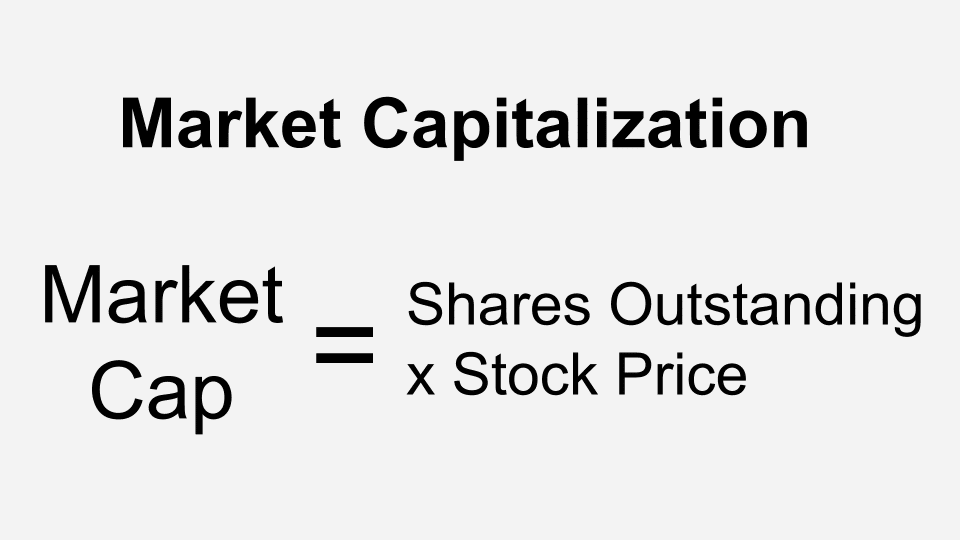
Have you ever wondered what separates a neighborhood sneaker shop from a global sportswear giant like Nike? For many investors and business enthusiasts, classifying a company by its market capitalization—or "market cap"—is a fascinating and practical way to understand its scale, stability, and growth potential. Market cap, calculated by multiplying a company's stock price by its total number of shares, instantly tells you whether a business is a small, medium (mid), or large cap player. This simple metric isn't just for Wall Street traders; it's a powerful lens for everyday decision-making, from choosing which stocks to buy to understanding why some brands dominate your local mall while others feel like scrappy startups. For instance, if you're saving for retirement, you might lean toward large caps for their stability, whereas a risk-tolerant friend might chase small caps for explosive growth. Knowing how to spot these categories gives you a clearer map of the financial world around you.
The key purpose of classifying companies by market cap is to measure their relative size and risk. A large cap company, like Nike, is typically a well-established, stable giant with a market value exceeding $10 billion—often $200 billion or more. These corporations are household names, boast diverse revenue streams, and are less volatile than their smaller counterparts. Their benefits for everyday life are profound: they provide consistent employment, pay steady dividends, and their products—like Nike’s sneakers or Apple’s iPhones—are woven into our daily routines. In contrast, mid cap companies (between $2 billion and $10 billion) offer a balance of growth and stability, while small caps (under $2 billion) are often nimble, high-risk innovators that could become the next big thing. Understanding this spectrum helps you appreciate why a company like Nike can weather economic storms better than a tiny athletic apparel startup, and why you might feel more confident buying their stock for a long-term goal like funding your child’s education.
So, where does Nike stand? Nike is unequivocally a large cap company, and it has been for decades. As of 2025, its market capitalization typically hovers between $150 billion and $200 billion, placing it firmly among the world’s most valuable corporations. To put this in perspective, imagine trying to buy every share of Nike stock at its current price—you would need over $150 billion in cash, an amount greater than the entire economy of many countries. This sheer size means Nike has immense resources to invest in new technologies, sponsor superstar athletes, and dominate global supply chains. For a casual observer, you can confirm this by checking any financial website like Yahoo Finance or Bloomberg, where Nike’s market cap is listed right next to its stock ticker (NKE). If you see a value well above $10 billion, you know you’re dealing with a large cap titan.
Must Read
How do you know for sure? The easiest way is to look up a company’s market cap on a trusted financial platform. For example, type "Nike market cap" into Google, and you’ll instantly see a number updated in real-time. If that number exceeds $10 billion, it’s large cap. Between $2 billion and $10 billion is mid cap, and below $2 billion is small cap. But don’t just rely on a single figure—check the company’s share price and outstanding shares, then multiply them yourself to double-check. For Nike, with roughly 1.5 billion shares outstanding and a price around $100–$120 per share, the math consistently yields a figure above $100 billion. Another clue: large cap companies are often components of major stock indices like the S&P 500 or the Dow Jones Industrial Average. Nike is a member of both, which is a dead giveaway of its massive scale.
To make this concept practical, consider a common scenario. Imagine you are a young professional building an investment portfolio. You want a mix of safety and growth. By identifying Nike as a large cap, you know it offers lower volatility and steady dividends—ideal for the "anchor" of your stock holdings. Meanwhile, a small cap company like a new eco-friendly shoe brand might be your "growth gambler," but carries higher risk of bankruptcy. Understanding these categories helps you avoid putting all your savings into overly risky small caps or missing out on the stability large caps provide. For everyday life, this knowledge even helps when you see news about Nike laying off workers or launching a controversial campaign; you can reason that its vast market cap gives it a financial cushion that a small company would lack.
 Dype | Detailed Sneaker Legit Checks
Here are a few simple tips for readers to explore this on their own. First, visit any free stock screener (like Finviz or MarketWatch) and filter by market cap categories to see the staggering difference between a small cap and a large cap. Second, practice with familiar brands: check market caps for Coca-Cola (large cap), your favorite regional coffee chain (likely small or mid cap), and a tech startup you’ve read about. Third, track how market caps change over time—Nike’s cap might dip during a bad quarter but rarely falls below the large cap threshold, while a small cap might spike or crash dramatically. Finally, use this metric as a conversation starter: next time you see a Nike ad, you can confidently tell a friend that the company behind it is a $150 billion behemoth, not a small player. This simple classification turns abstract numbers into a meaningful story about power, risk, and everyday economics.
In conclusion, Nike is a large cap company by every measure, and knowing how to verify this empowers you to navigate the financial world with clarity. Whether you are investing, shopping, or simply curious, market cap provides a quick, reliable snapshot of a company’s stature. Its benefits for everyday life range from smarter savings decisions to a deeper appreciation of the brands you use. So, the next time you lace up a pair of Nikes, remember: you are stepping into a story of massive scale, and with a few simple checks, you can always know exactly where that story stands in the market’s hierarchy.