Is Melting Ice Cream Physical Or Chemical

Have you ever stared at a puddle of your favorite ice cream and wondered—is this a tragedy, or is it science? You’re not alone. It’s a perfectly normal thought on a hot summer...
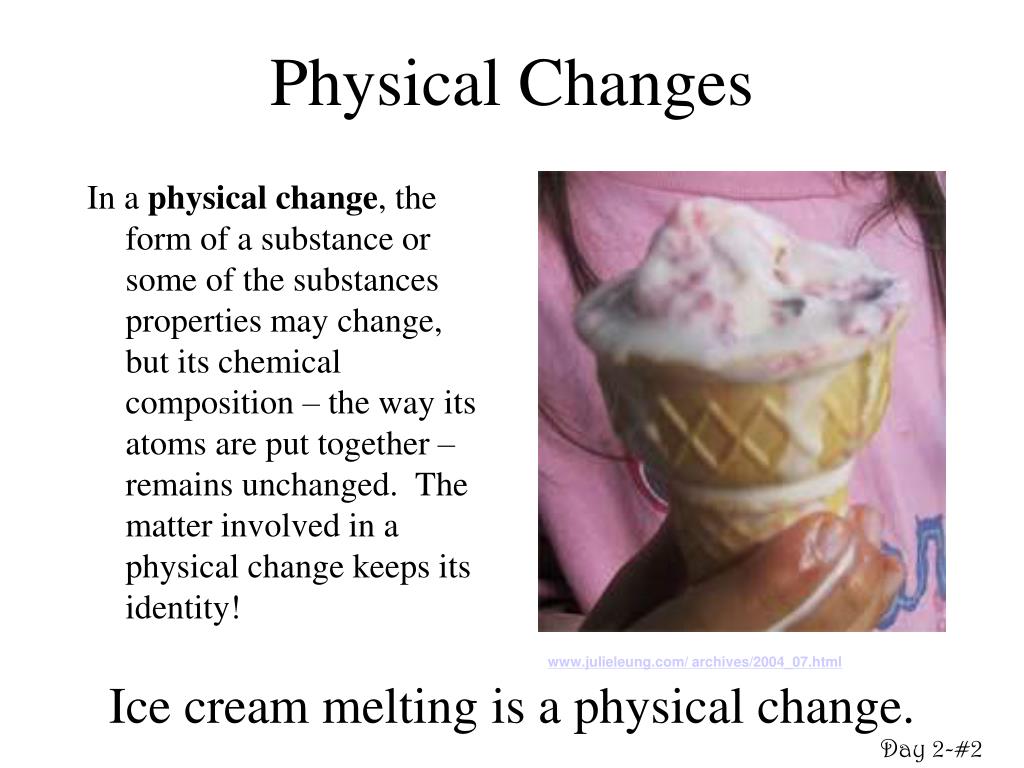
Have you ever stared at a puddle of your favorite ice cream and wondered—is this a tragedy, or is it science? You’re not alone. It’s a perfectly normal thought on a hot summer day. We’re diving into the sticky mystery of whether melting ice cream is a physical change or a chemical one. Spoiler: the answer is simpler than you think, but the journey is pretty cool.
Let’s start with the basics: what is a physical change? Think of it like rearranging your furniture. The couch is still a couch, even if you move it to the other side of the room. A physical change alters the form or appearance of a substance, but its chemical identity stays the same. You can usually reverse it—just shove the couch back.
Now, what about a chemical change? That’s more like baking a cake. You can’t unbake it. You end up with something totally new, like carbon dioxide bubbles or a brown crust. The atoms rearrange themselves into new molecules. Fireworks exploding? Chemical. Toast burning? Chemical. Ice cream melting? Well…
Must Read
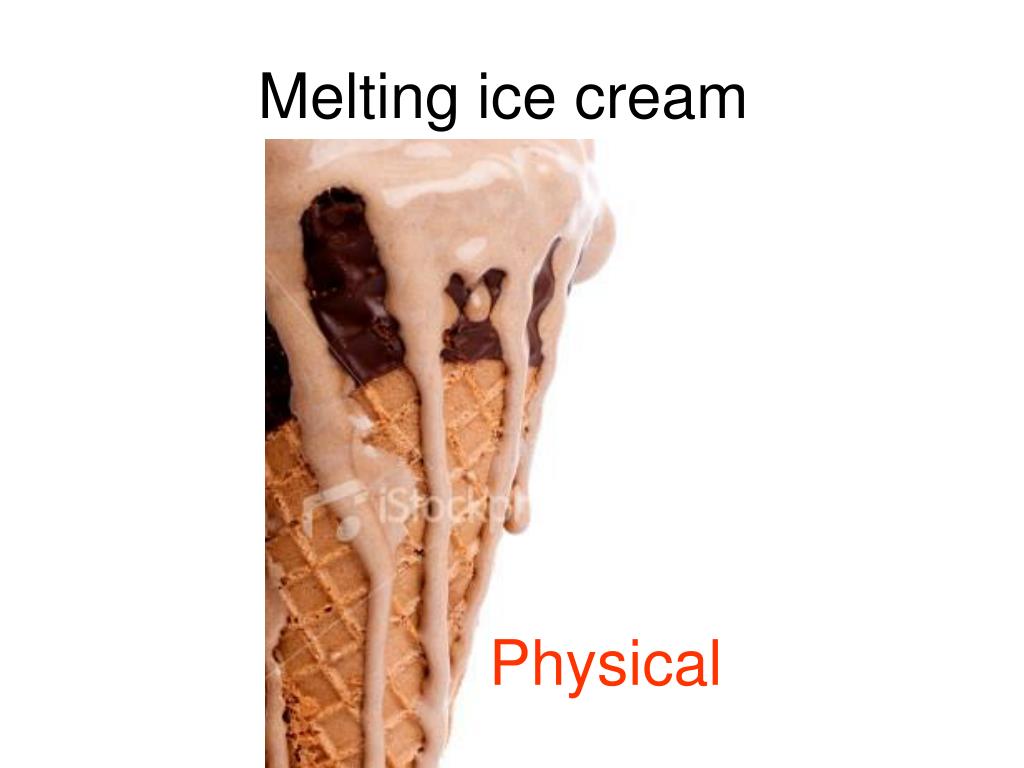
Here’s the juicy part: when your ice cream melts, it goes from a solid to a liquid. That’s it. The molecules of fat, sugar, and water don’t change into anything else. They just loosen up and start flowing. It’s like when you wake up from a nap—you’re still you, just less solid and more wobbly.
So, melting ice cream is a physical change. No new substances are created. The creamy, sweet stuff is still creamy and sweet—it’s just sad and puddled. You could technically refreeze it (though it won’t have the same fluffy texture). It’s not a chemical reaction; it’s a phase transition.
But wait—why does this matter? Isn’t it just a boring science fact? Not at all. Understanding this helps you spot the difference between real transformations and simple shape-shifting. It’s like knowing whether a magician actually changed a coin into a rabbit (chemical) or just palmed it (physical). It makes you a smarter observer of the world.
What about the "Scoop" on Freezing?
Fun fact: freezing ice cream is also a physical change. You’re just cooling the liquid back into a solid. No molecular makeover. It’s the same as water turning to ice—just tastier. So if you leave a melted pint in the freezer, you get a rock-hard block of the same stuff. No new flavors appear.
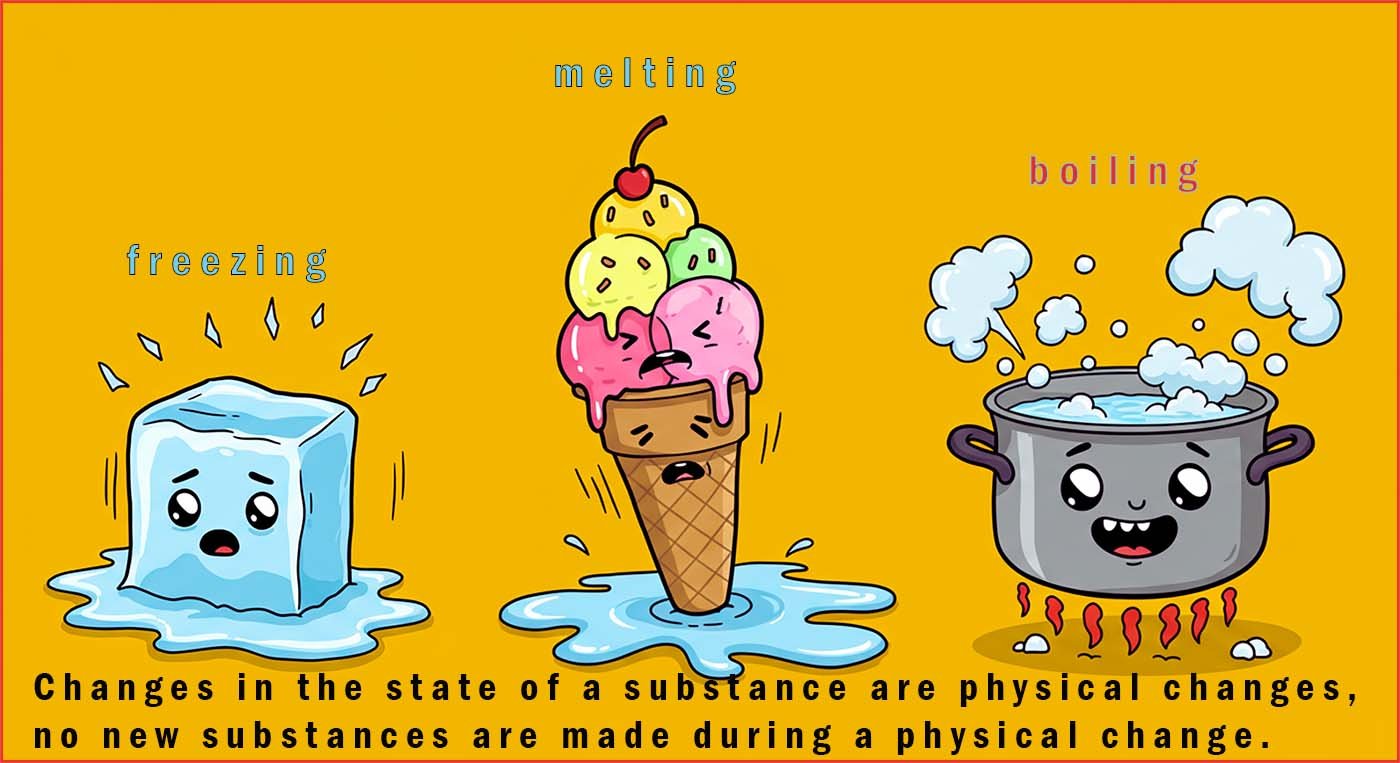 Melting Ice Cream Is A Physical Change
But here’s where it gets interesting: making ice cream from scratch? That involves a bit of chemistry. When you mix cream, sugar, and flavorings, you’re creating an emulsion. The proteins and fats interact in a chemical way to trap air. So the base ice cream mixture is a chemical masterpiece. But once it’s made, melting it is pure physics.
Think of it like friendship. Making a friend involves a lot of chemistry—shared experiences, trust, inside jokes. But just hanging out on the couch? That’s physical. You’re still friends, just in a different position. Melting ice cream is the couch-hanging-out version of your dessert.
Why Your Brain Loves This Question
We get hooked on this question because it feels bigger than it is. It’s a doorway to understanding matter itself. Everything around you is either changing physically or chemically. Your coffee brewing? Mostly physical. Your bread toasting? Chemical. And your ice cream melting? A chill, reversible physical event.
Rhetorical question time: Does it matter if you call it physical or chemical when you’re licking a drippy cone? Probably not. But knowing gives you a superpower: you can explain to your friend why their melted sundae isn’t a lost cause. It’s just temporarily liquid.
Plus, there’s a certain peace in realizing that melting isn’t destruction. It’s just a change of state. The ice cream hasn’t betrayed you. It’s just obeying the laws of thermodynamics. You can’t be mad at physics—it’s just doing its job.
 PPT - Physical and Chemical Properties PowerPoint Presentation, free
Next time you see a puddle of mint chocolate chip, try a little experiment. Put some in the freezer. Come back in a few hours. Is it still ice cream? Yes. Is it as good? Debatable. But it’s still chemically the same. That’s the beauty of a physical change—it’s a second chance.
The Coolest Part
Here’s the kicker: melting ice cream is actually a perfect example of how we label the world. We love categories. Physical vs. chemical, solid vs. liquid. But nature doesn’t care about our labels. It just does its thing. The ice cream melts because it’s warm. That’s the whole story.
So next time you’re scooping a bowl of melty goodness, you can smile. You know it’s a physical change. And if someone argues with you, just say, “Hey, it’s not a chemical reaction—it’s just a phase.” You’ll sound smart, and you’ll be right. That’s a win-win.
And honestly, isn’t it kind of relaxing to know that some messes aren’t permanent? A melting ice cream is just taking a temporary break. It’s not lost forever. It’s just waiting for you to either eat it fast or stick it in the freezer. No alarms, no surprises—just a delicious lesson in science.
So go ahead, enjoy that drippy cone. You’re not just having a snack. You’re having a real-time demonstration of physics. And that’s pretty sweet.
