Is Melting Chocolate Physical Or Chemical Change

Picture this: You’re halfway through a stressful Tuesday, and you decide to treat yourself to a square of dark chocolate. You pop it on your tongue, and it begins to soften, t...
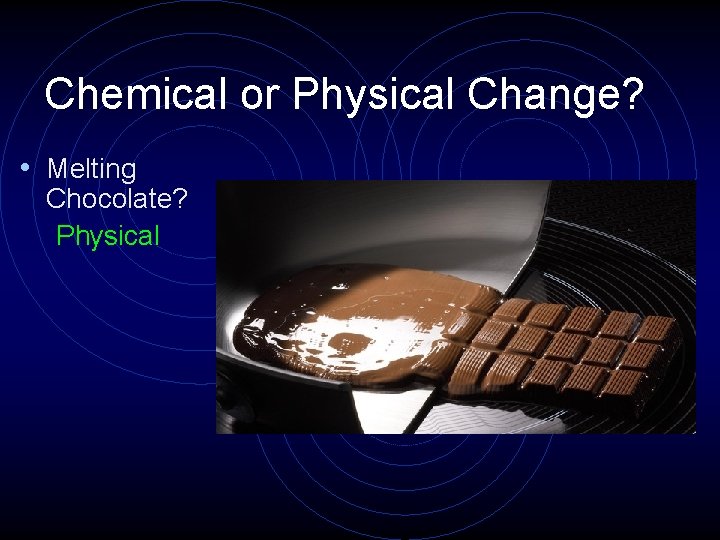
Picture this: You’re halfway through a stressful Tuesday, and you decide to treat yourself to a square of dark chocolate. You pop it on your tongue, and it begins to soften, to melt into that glorious, velvety puddle of joy. But as the chocolate disappears, a tiny, nagging thought bubbles up: Is this a physical change or a chemical change? Well, grab a napkin, because we’re about to dive into the sticky science of your favorite comfort food.
Let’s start with the obvious: melting chocolate is a physical change. That’s right—your brain wasn’t lying to you when you first guessed it. When a solid chocolate bar turns into a liquid, its chemical identity stays the same. The cocoa butter molecules are still cocoa butter molecules; they’re just wiggling around more because you applied heat (or body heat, you furnace).
But wait—don’t close the chocolate box yet. There’s a plot twist. If you burn the chocolate—say, you forget it in the microwave for two minutes and it turns into a black, acrid blob—that’s a chemical change. You’ve now got carbon, bitter compounds, and a ruined snack. The molecules have fundamentally broken apart. So, step one: don’t be a microwave monster.
Must Read
Why Your Mouth Is a Physics Lab
Here’s a fun fact that will make you sound smart at parties: chocolate melts at just below body temperature. Specifically, cocoa butter has a melting point around 93–96°F (34–36°C). Your mouth sits at a cozy 98.6°F (37°C), so chocolate basically gives you a standing ovation the second it hits your tongue. It’s practically designed to surrender.
This is why chocolate feels so sensual and indulgent. It’s not just your imagination—it’s a thermodynamic handshake. But if you’re eating chocolate in a desert at 110°F, you’re not savoring; you’re holding a brown puddle. And that’s still a physical change. Solid to liquid, no new molecules. Boring science, delicious results.
Still with me? Good. Because here’s where we break out the magnifying glass and a tiny lab coat. The cocoa butter in chocolate is a crystalline fat, and it can exist in six different crystal forms. Yes, six. Chocolate makers go absolutely bonkers Forcing it into the perfect crystal Form V (also called beta crystals) to get that satisfying snap and glossy shine. Melt it and re-solidify it incorrectly, and you get a dull, crumbly mess. That’s still a physical change—no chemical bonds were made or broken—but it’s a structural betrayal.
The Sneaky Chemical Culprits
Now, let’s talk about the enemies of pure physical change. If you add milk, sugar, or fancy ingredients like caramel chunks, you’re introducing new chemistry. But the melting itself? Still physical. The sugar dissolving in the cocoa butter? That’s a physical dissolution, not a chemical reaction. The cocoa solids are just along for the ride.
However—and here’s the big reveal—if your chocolate contains emulsifiers like lecithin, those molecules help keep the fat and solids friendly. That’s not a chemical change either, but it’s a chemical assistance. It’s like hiring a bouncer to keep the party civil. No new molecules, just a better party.
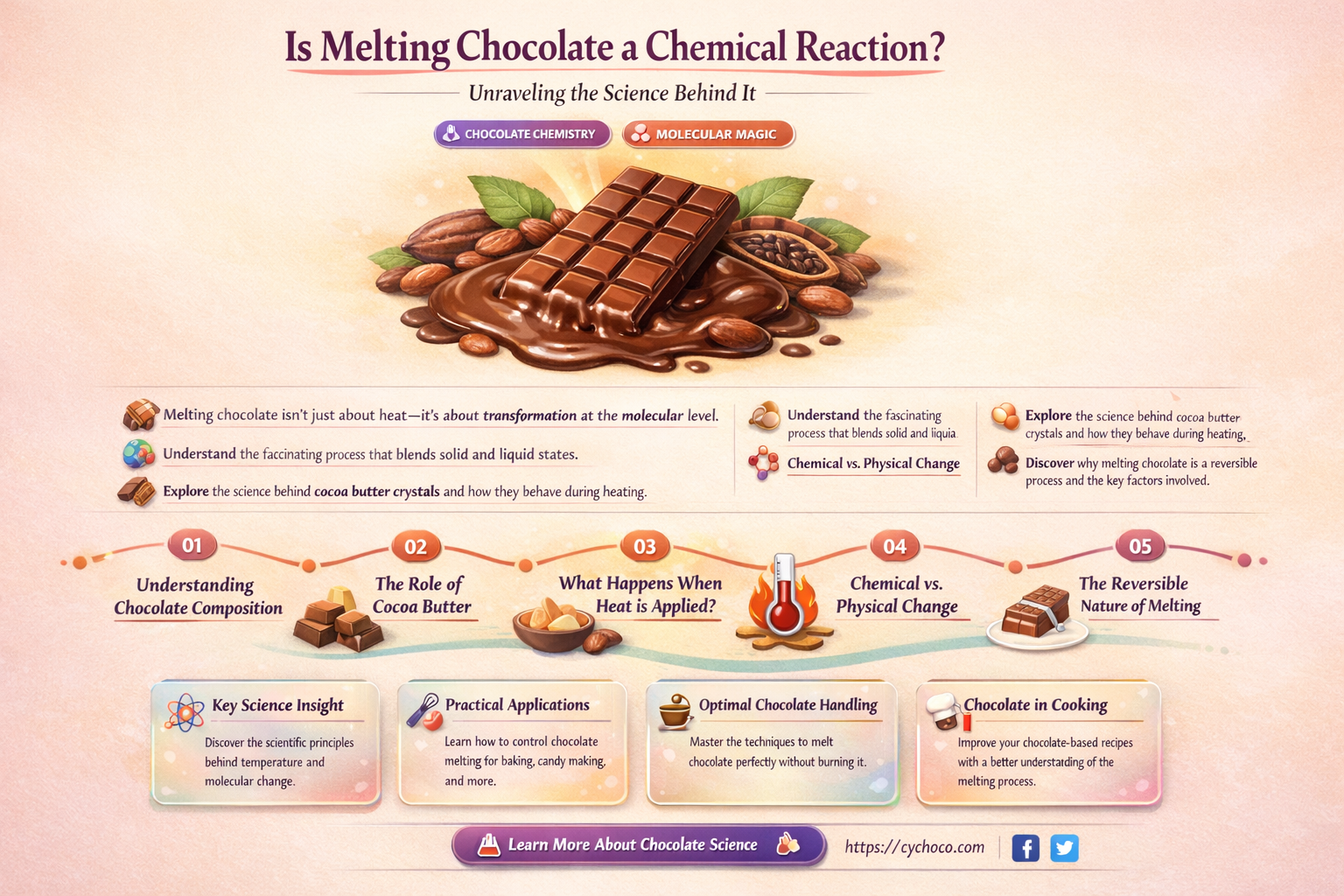 Is Melting Chocolate A Chemical Reaction? Unraveling The Science Behind
But what about the mythical “bloom”? You know, when old chocolate gets that white, dusty film? That’s fat or sugar migrating to the surface, and it’s a physical change too. You can actually fix it by melting and re-tempering the chocolate. Unless it’s sugar bloom from humidity—then the sugar has partially dissolved and recrystallized as ugly white spots. Still physical, but ugly physical.
A Joke to Break the Tension
Why did the chocolate bar go to therapy? Because it couldn’t handle its meltdown issues. (I’ll be here all week, folks. Try the nougat.) But seriously, this question matters for one very important reason: if you’re a cook, knowing the difference saves your dessert. If you heat chocolate too fast or add water (the ultimate enemy), the cocoa butter separates and you get a grainy, seized mess. That’s a physical change gone wrong—like trying to un-spill milk. Once seized, the fat and solids are still the same chemicals, but they’ll never hug again.
The Surprising Fact That Will Blow Your Mind
Ready? You can melt chocolate in a microwave without changing its chemical structure, but you can also melt it using only friction. Yes, if you rub a chocolate bar aggressively between your hands (or on a steady surface), the heat from friction will soften it. It’s a physical change caused by pure motion. Try that with a rock and you’ll just get sad fingers. Chocolate is the only substance that turns your body heat into a reason to live.
So, the next time someone asks, “Is melting chocolate a physical or chemical change?” You can say, with the confidence of a chocolate sommelier, “It’s physical, unless you set it on fire, in which case you’ve committed a crime against dessert.” And then offer them a piece. Because the best science is always shared over a melted snack.
Wrap up: Melting chocolate is a physical change—a reversible, molecular dance of heat and structure. The only chemical change you need to worry about is the one that turns your sour mood into a sugar high. And that, my friend, is the sweetest reaction of all.
