Is Ice Cream Melting A Chemical Change

Picture this: a sunny afternoon, you're holding a double-scoop waffle cone, and within six seconds flat, it's dripping golden ooze onto your hand. You start sweating more than...

Picture this: a sunny afternoon, you're holding a double-scoop waffle cone, and within six seconds flat, it's dripping golden ooze onto your hand. You start sweating more than the ice cream itself, and your only thought is "Am I watching a chemical change or just life betraying me?" Well, my friend, grab a napkin because we're diving into this deliciously sticky question.
The Quick Answer (Before You Cry Into Your Sundae)
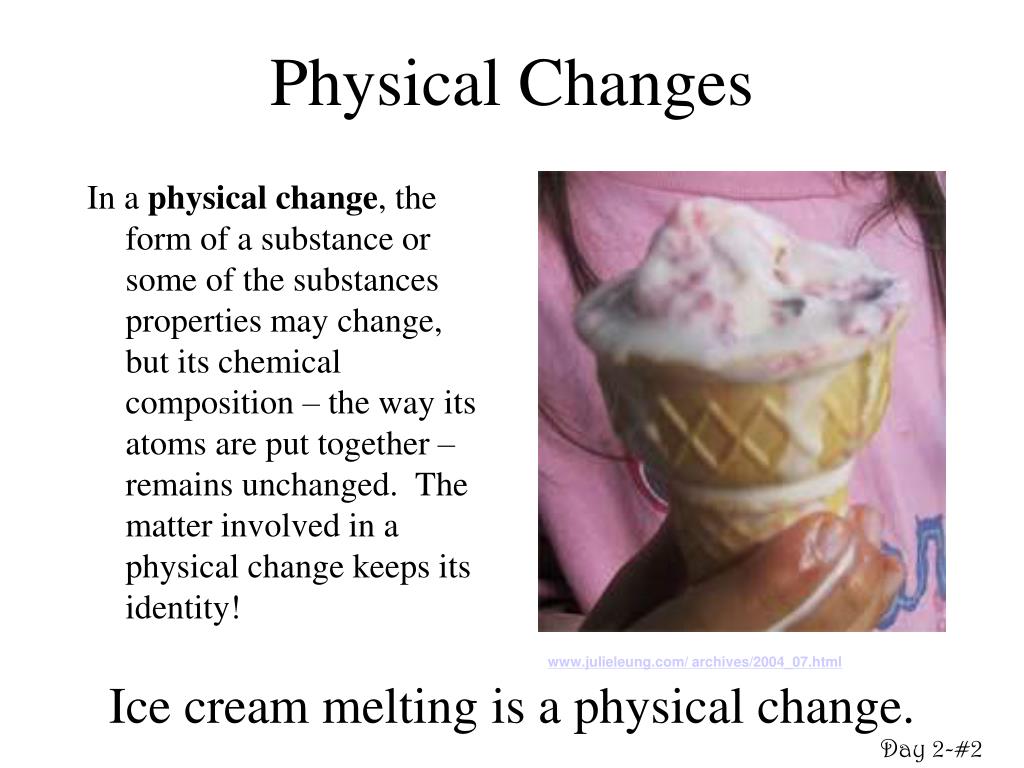
Melting ice cream is NOT a chemical change. It's a physical change, which means the substance stays exactly the same — it just changes its form from a solid to a liquid. Your ice cream doesn't turn into, say, photographic film or pig iron. It's still ice cream, just in a mood.
Physical Changes vs. Chemical Changes: The Muddy Middle School Battle
A physical change is when matter changes its state, shape, or size without becoming something entirely new. Think of an ice cube melting, sugar dissolving into coffee, or you stretching a rubber band until it snaps. The elements and molecules remain identical throughout the transformation.
Must Read
A chemical change, on the other hand, is when one or more substances are rearranged to form entirely new substances with different chemical properties. Rusting iron, burning wood, and an egg going from slime to solid in a hot skillet are all classic chemical changes. The key giveaway? A new substance is created.
So when your birthday cake candles melt into a wax puddle, that's physical. When the smoke from the extinguished candles floats away and leaves soot on your frosting, well, that part was chemical. Science at parties — what a time to be alive.
 PPT - Chemical and Physical Changes PowerPoint Presentation - ID:1882249
But WAIT — Ice Cream Is Complicated, Right?
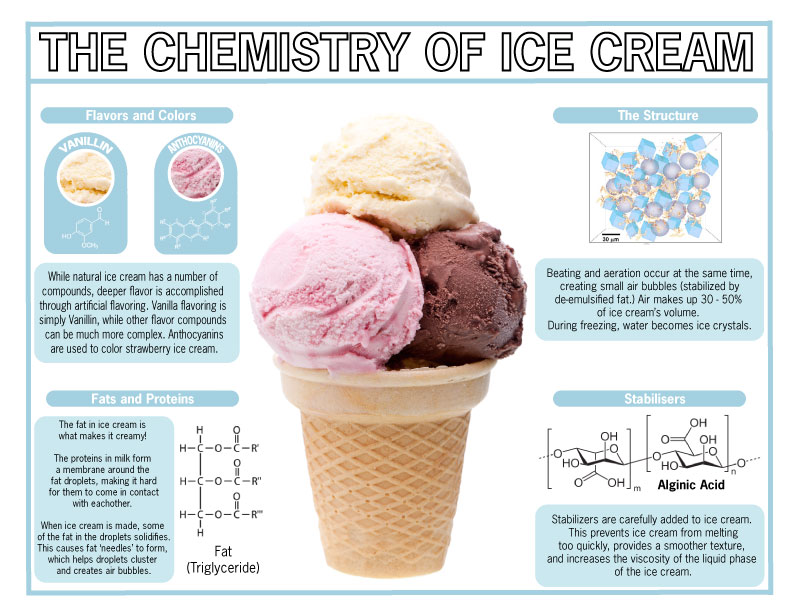
Here's where it gets interesting. Ice cream isn't just frozen water like an ice cube; it's an incredibly complex emulsion of fat globules, milk proteins, sugar crystals, and trapped air bubbles all hugging each other in frozen harmony. So when you drag a spoon through it, all these components are technically present and accounted for — no new molecules are being born.
When the heat hits, those sugar crystals dissolve, the fat softens, the ice crystals turn to water, and the structure collapses into a soupy mess. But every single molecule in that mess was already inside the scoop before it melted. Nothing new formed — only relationships got awkward, kind of like a high school relationship.
Of course, if you leave it out long enough on a hot sidewalk, bacteria might start partying inside your puddle, producing acids and gases. At that point, yes, chemical changes are absolutely happening. Your melted ice cream on the sidewalk has officially evolved into a science experiment nobody asked for.
 Ice Cream Chemical Reaction _ The scoop on ice cream: is it a physical
Surprising Fact: Ice Cream Contains Surprisingly Little Ice
The average ice cream has about 50% water, and not all of it is frozen — some is dissolved into the sugar and fat. That's why ice cream is soft and scoopable instead of a solid block of frozen milk. Your freezer works hard, but the sugar crystals work way harder keeping things scoopable.
The air whipped into ice cream can account for up to 50% of its volume. That means half of that towering waffle cone you just paid eight dollars for is nothing but air. Science is wild, and so are ice cream prices.
So, What Really Happens When It Melts?
Heat energy from the environment slides into the ice cream and gives molecules enough kinetic energy to break free from their fixed positions. The solid structure dissolves layer by layer — crystals, fat globules, sugar, and proteins all progressively transition into a liquid state. Every molecule that entered as ice cream leaves as ice cream.
 PPT - Changes in Matter Physical VS Chemical Changes PowerPoint
The process of melting is called fusion, which sounds way more dramatic than honestly advertised. But it's also why ice cream stays cool, because it absorbs heat while melting — one tiny parting gift to your now-sticky fingers.
The Final Scoop
Melting ice cream is a purely physical change. It changes its state from solid to liquid, but the ice cream is still ice cream — just emtionally broken after tanning on a July patio. No new substances are formed, no chemical bonds are broken, and every molecule remains identical.
So the next time your cone starts dripping like it's having a personal tropical vacation, reassure yourself that science says this is perfectly normal. It's not a chemical change — it's just your ice cream living its best liquid life. Now go grab another scoop and enjoy the physics.
