Is Freezing Water A Chemical Change

Welcome to the wonderfully weird world of everyday science, where even the simplest kitchen experiment can spark a mini-debate! If you’ve ever made ice cubes and wondered, “Is...
Welcome to the wonderfully weird world of everyday science, where even the simplest kitchen experiment can spark a mini-debate! If you’ve ever made ice cubes and wondered, “Is freezing water a chemical change?” you’re in for a treat. This question isn’t just a dry textbook puzzle—it’s a fun key to understanding how our universe organizes matter. By the end of this article, you’ll see ice, steam, and even melting chocolate through new eyes. The best part? You don’t need a lab coat—just a freezer, a curious mind, and maybe a few friends to impress with your newfound knowledge. Let’s dive into the frosty truth!
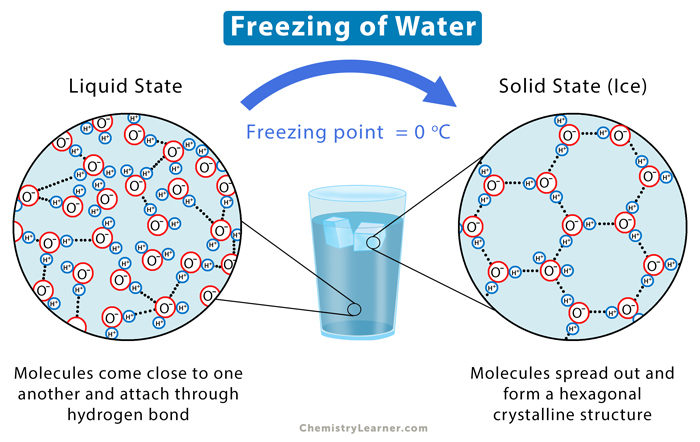
So, what’s the short answer? Freezing water is not a chemical change; it’s a physical change. Chemists love clear categories, and here’s why the distinction matters: a chemical change creates a brand-new substance with different properties (think of burning wood into ashes or rusting iron into flaky orange stuff). A physical change, however, only alters the form of the same substance. When water freezes, it’s still H₂O—just in a solid state. The molecules don’t break their bonds or rearrange into something new; they simply slow down and lock into a crystalline dance. That’s why you can melt the ice right back into liquid water without any magic or loss. Understanding this gives you superpowers to spot real chemical changes in your daily life—like baking a cake or digesting food—and avoid common myths.
Let’s get creative with examples to make this stick. Picture a glass of water on your counter. If you leave it in the freezer overnight, it becomes a solid ice cube. Now, if you drop that cube into hot tea, it melts back into water. No new stuff—just a temperature game. Now imagine you take that same water and add a fizzy tablet (like Alka-Seltzer). That’s a chemical change because the tablet reacts with water to produce carbon dioxide gas, making bubbles. The water is now a different mixture! Another fun test: think of grilling a steak. The heat turns proteins into new compounds (that delicious brown crust)—a chemical change. But freezing that steak? Just a physical solidification. This contrast is why your freezer is a time machine, not a chemistry lab, for your leftovers.
Must Read
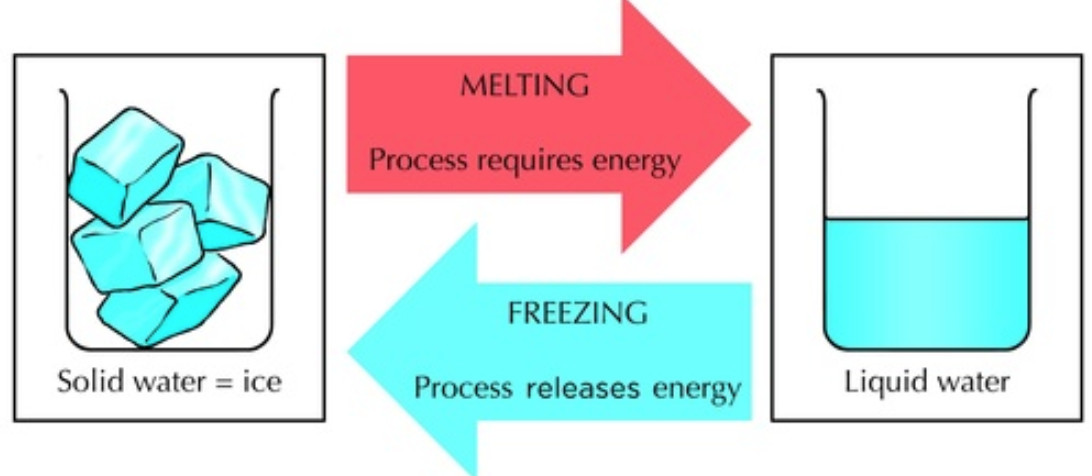
Here’s a clever way to remember the difference: ask yourself, “Can I reverse it easily?” For freezing water, yes! Just warm it up. For a chemical change like burning wood, you can’t reverse the ashes back into a log. Another tip: look for energy changes that are purely thermal versus those that involve light, odor, or color shifts. Freezing water only involves removing heat (exothermic), but it does not produce a new color or scent. Try this kitchen challenge: freeze water in a balloon to make a perfect spherical ice ball. Once it melts, you’ll still have the same water. Then, for contrast, boil an egg—the white turns solid and rubbery, and no amount of freezing will turn it back into a raw egg. That’s a chemical change in action!
Practical advice for curious readers: want to demonstrate this concept to friends or kids? Grab two identical plastic bottles of water. Freeze one overnight, and leave the other at room temperature. Show them that both have the same taste and are H₂O (taste test safely!). Then, take the frozen bottle and let it thaw—it’s still water. A more dramatic trick: use distilled water and a clean freezer. Supercool a bottle by letting it sit very still in the freezer for 2-3 hours (check often!). When you pour it out, it can instantly turn to slush—a physical change you can control. This is pure physics, not chemistry, and it’s a crowd-pleaser at parties.
 Freezing Point - Definition, Examples, Quiz, FAQ, Trivia
Why should you care about this frosty fact? Beyond winning trivia night, knowing the difference helps you plan and experiment successfully. For example, if you’re making homemade ice cream using salt and ice, you’re using a physical change (freezing point depression) to cool the cream, but the cream itself undergoes no chemical transformation—it just thickens and chills. This knowledge saves you from ruining recipes: you won’t try to reverse a burned dish by freezing it. Plus, it’s a gateway to understanding bigger ideas like states of matter (solid, liquid, gas) and how the same molecules can play different roles. Water is a chameleon—it can freeze, melt, evaporate, and condense without ever losing its identity as the elixir of life.
In conclusion, freezing water is a beautiful, reversible physical change—not a chemical one. It’s a perfect example of how matter respects its own rules, shifting shapes without changing its soul. Next time you pop an ice cube out of a tray, smile knowing you’re holding one of nature’s simplest yet most instructive lessons. Want to dive deeper? Try melting chocolate, crushing a can, or cutting paper—each is a physical change. Compare that to toasting bread (chemical) or mixing vinegar and baking soda (chemical). With this lens, your kitchen becomes a living textbook. So go ahead, freeze a water bottle, watch the crystals form, and remember: the ice you melt today is the same water you drank yesterday. Science is that cool.