Is Chicken A Temperature Control For Safety Food

Let’s be honest—chicken can be a little intimidating. You buy a pack of breasts, pop them in the fridge, and suddenly you’re living with a ticking time bomb. Is it still safe?...
Let’s be honest—chicken can be a little intimidating. You buy a pack of breasts, pop them in the fridge, and suddenly you’re living with a ticking time bomb. Is it still safe? Did I leave it out too long? The answer, dear reader, has a lot to do with something called temperature control for safety, or TCS for short.
What Does “Temperature Control for Safety” Mean?
In plain English, TCS is a fancy way of saying that certain foods—like chicken—need to be kept at the right temperature to stop bad bacteria from throwing a party. Chicken is basically a VIP lounge for microbes if you let it sit between 40°F and 140°F for too long. That’s what food safety nerds call the “danger zone.”
Think of it like this: you wouldn’t leave a carton of milk on the counter all day. Chicken is even more high-maintenance. It’s the diva of the protein world, and we have to treat it like one.
Must Read
Your Kitchen Counter Is Not a Chicken Hotel
Picture this: you’re making dinner, you’re tired, and you leave the raw chicken on the counter while you scroll through your phone. Just ten minutes, you think. No big deal. But here’s the thing—bacteria multiply fast, and they don’t care about your busy schedule.
The USDA says you can leave chicken out at room temperature for up to two hours. But that’s the absolute max. One hour is safer if you’re in a warm kitchen. So if you’re prepping chicken, treat it like a toddler: never leave it unattended for too long.
The Fridge: Your Chicken’s Best Friend
Your refrigerator should be set to 40°F or below. That’s the sweet spot where bacteria slow down and take a nap. Chicken loves it cold—it’s practically the chicken’s version of a spa day.
One time, my neighbor bought a family-sized pack of chicken thighs and stuck them in the fridge door. Door shelves aren’t as cold as the back of the fridge. Guess who ended up with chicken that smelled funny by Wednesday? Yep. Lesson learned: store chicken on the bottom shelf, in the back, where it’s coldest and won’t drip on your lettuce.
 Chicken Internal Temp Chart: Safe Cooking Temperatures Guide
Thawing: The Slow and Steady Wins the Race
Never—I repeat, never—thaw chicken on the counter. That’s like asking for a bacterial rave. Instead, thaw it in the fridge overnight, or use the cold water method (chicken in a sealed bag, submerged in cold water, changed every 30 minutes).
I learned this the hard way when I was in college. I left a frozen chicken breast on the kitchen counter at 10 a.m., thinking I’d cook it for dinner. By 4 p.m., it was still cold in the middle but warm on the edges. I cooked it anyway, and let’s just say my stomach paid the price. Don’t be like college me.
Cooking: The Final Boss
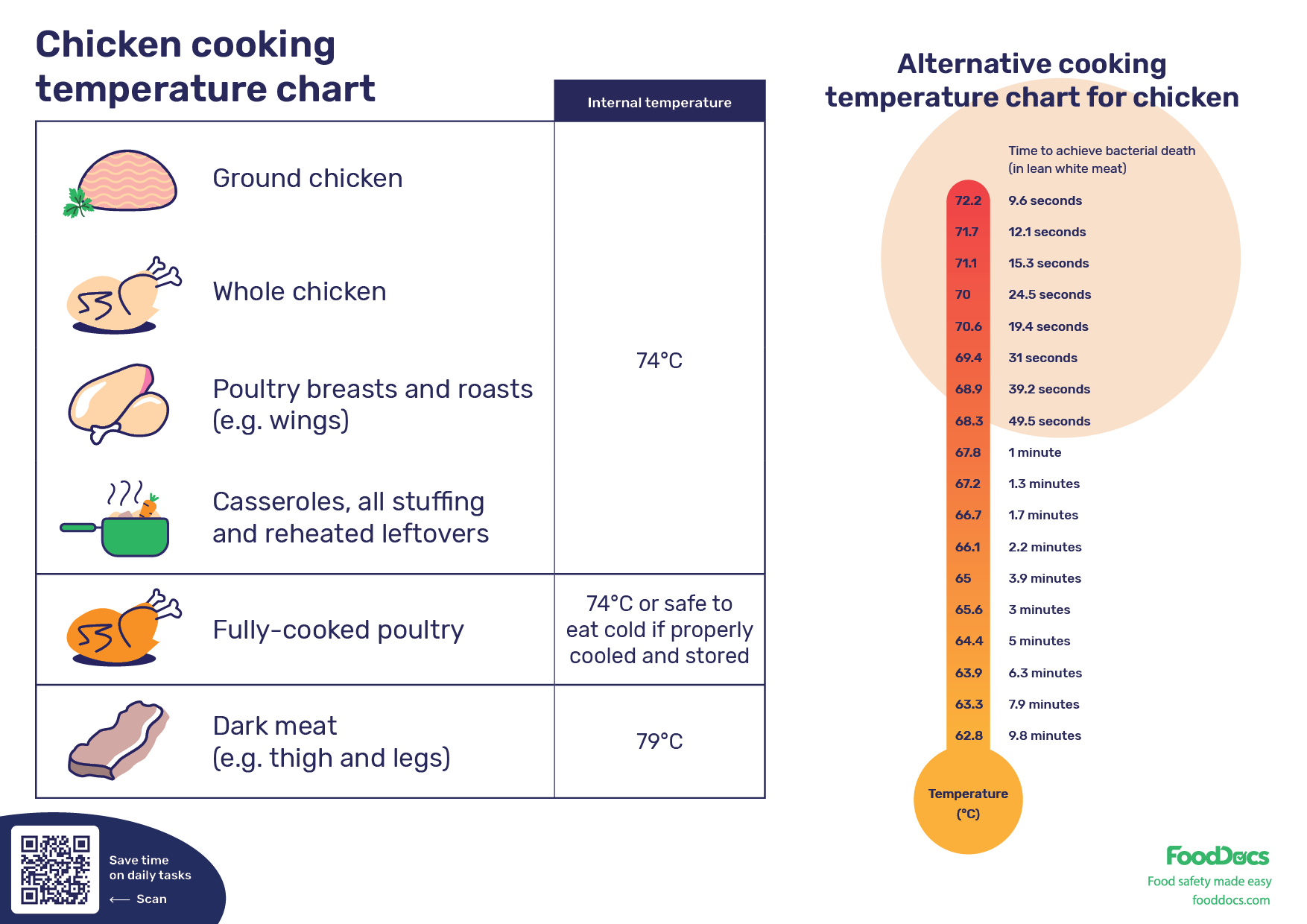
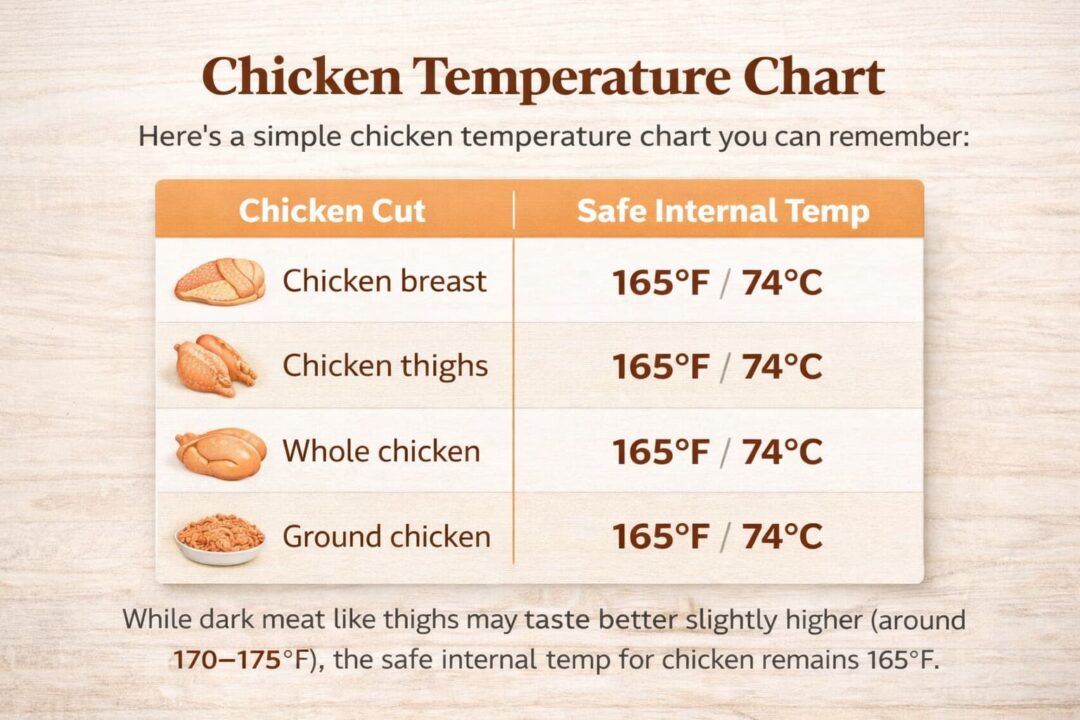
Once you’re ready to cook, chicken needs to hit 165°F inside. That’s the magic number where Salmonella and friends go to meet their maker. Use a meat thermometer—not your eyes or a guess. Juices running clear? That’s a myth, folks.
I used to hate thermometers until I bought one that beeps. Now I feel like a legit chef. You deserve that peace of mind. A dry chicken breast is better than a trip to the ER. Trust me—I’ve been the one saying, “I think it’s done,” only to eat it with a side of anxiety.
 Chicken Internal Temp: The Secret to Safe, Perfect Chicken - Foodiosity
Leftovers: Love Them, But Don’t Trust Them Forever
Cooked chicken should go back in the fridge within two hours. And yes, that includes the pizza you ordered with chicken on top. Once it’s cold, you’ve got three to four days to eat it. After that, toss it. Your nose is a good guide, but bacteria can be sneaky.
I have a friend who keeps chicken in the fridge for a week and says, “It smells fine.” Bless their heart, but I’ve seen their trash can after that chicken makes a reappearance. Don’t be that person.
Why Should You Care?
Because life’s too short for food poisoning. It’s not just about being a kitchen nerd—it’s about enjoying your meals without a side of regret. Temperature control for safety is your kitchen’s secret weapon. It keeps your chicken safe, your stomach happy, and your dinner guests coming back.
So next time you handle chicken, think of it like a fragile friendship: keep it cool, don’t leave it out, and know when to let it go. You’ve got this. You’re the boss of your chicken, not the other way around.
