Is Absinthe Legal In The Us

So, there I was, at this quirky little bar in New Orleans, sipping on a Sazerac, when the bartender leans in and says, "You know, this stuff used to be illegal." I raised an e...
So, there I was, at this quirky little bar in New Orleans, sipping on a Sazerac, when the bartender leans in and says, "You know, this stuff used to be illegal." I raised an eyebrow, "Oh yeah? What was it, too strong for the good ol' US of A?" He chuckled, "Nah, it was the wormwood. They thought it'd make you go crazy." I laughed, "Well, that's one way to keep the party in check, I guess." And that, my friends, is how I stumbled upon the intriguing tale of absinthe and its legal status in the US.
Absinthe: The Green Fairy
For those of you who've been living under a rock (or just not paying attention to the resurgence of Victorian-era trends), absinthe is a highly alcoholic, anise-flavored spirit that was all the rage in late 19th-century Europe. It was known as the "Green Fairy" for its emerald hue and the hallucinatory effects it was rumored to cause. But enough about my wild nights in Paris, let's get back to the story.
Thujone: The Bogeyman of the Bar Scene
Now, the reason absinthe was banned in the US (and many other countries) was because of a compound called thujone. Found in the wormwood plant, thujone was thought to cause hallucinations, convulsions, and even death. The media of the time had a field day with it, painting absinthe as a dangerous, mind-altering drug that was turning people into violent, insane lunatics. Sound familiar? It's like the war on drugs, but with more berets and less jazz.
Must Read
But here's the thing: thujone is not the same as THC, the active ingredient in marijuana. While it can have psychoactive effects in high doses, the amount found in absinthe is so tiny that it's virtually insignificant. It's like saying that because you can drink enough water to drown, you should ban all liquids. But I digress.
Absinthe Makes the Heart Grow Fonder
So, why was absinthe banned if it wasn't actually dangerous? Well, that's a tale as old as time: prohibition is often more about politics and morality than public health. With temperance movements gaining steam and anti-immigrant sentiment on the rise, absinthe, with its European origins and association with bohemian artists, became an easy target.
In 1912, a sensationalized murder case involving a Swiss farmer and a bottle of absinthe was all it took to push the US over the edge. The "Absinthe Murder" was the final nail in the coffin, and the US banned the sale, production, and importation of absinthe in 1915.
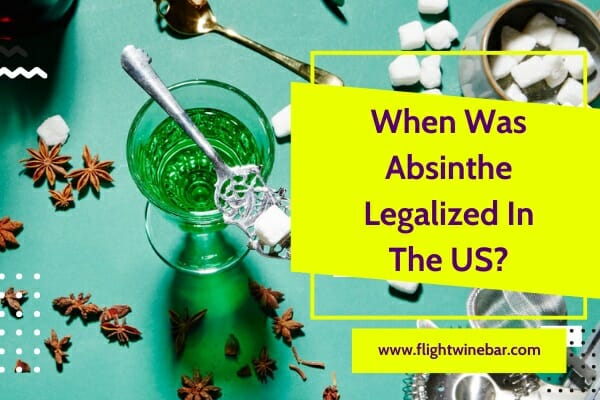 When Was Absinthe Legalized In The US?
Absinthe Makes a Comeback
But as with all good things, the ban didn't last forever. In 2007, the US Food and Drug Administration (FDA) revised its policy on thujone, allowing absinthe to be sold as long as it contained less than 10 parts per million. This was great news for absinthe enthusiasts and bad news for anyone who thought they'd never have to hear about the Green Fairy again.
Today, absinthe is legal in the US, as long as it's produced and labeled according to FDA guidelines. You can find it in bars, liquor stores, and even online. And while it might not make you see the "Green Fairy" or go on a violent rampage, it can still pack a powerful punch. So, drink responsibly, my friends, and remember: absinthe might not be the devil's drink, but it's still alcohol, and alcohol is the devil's drink.
And there you have it, the tale of absinthe's legal status in the US. I hope you found it as fascinating as I did. Now, who's up for a drink?
