Internal Temperature For Done Meatloaf

Okay, so you're standing in front of a freshly baked meatloaf and you're wondering: is it actually done? You poke it, you prod it, maybe you even jiggle the pan a little. But...
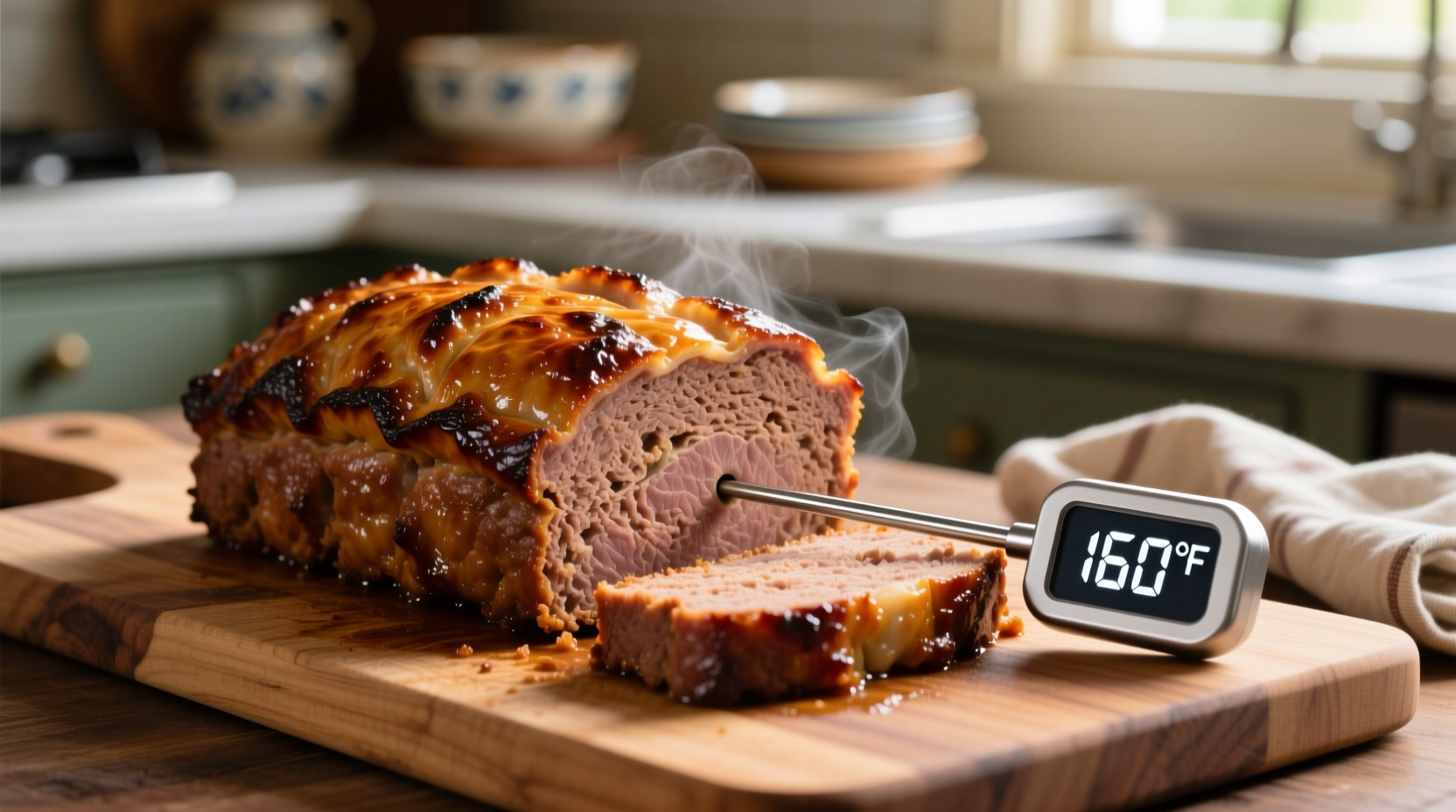
Okay, so you're standing in front of a freshly baked meatloaf and you're wondering: is it actually done? You poke it, you prod it, maybe you even jiggle the pan a little. But honestly, the only thing that tells you for sure is a little thermometer stuck right into the middle.
And here's the thing — the internal temperature for a done meatloaf is one of those kitchen facts that feels random at first. But once you get it, you're basically a meatloaf pro. Well, temporary pro at least.
So, What's the Magic Number?
Drumroll, please. The temperature you're aiming for is 160°F (71°C). Yes, that's it. A nice, round, delicious number.
Must Read
Why 160 degrees? Well, that's the temperature where any lurking nasty bacteria decide to pack up and leave. Think of it like a bouncer at a club — at 160°F, all the uninvited germs hit the door and never come back in.
And that makes your meatloaf completely safe to eat, which, let's be honest, is kind of the whole point, right?
Why Does Temperature Matter More Than Looks?
You could stare at your meatloaf all day and still not know if the center is cooked through. It's like guessing how deep a lake is just by looking at it — good luck with that.
A meatloaf can look brown and gorgeous on the outside while the middle is still sneaky pink and undercooked. That's where a kitchen thermometer changes everything.
It's honestly one of the cheapest and smartest tools in any kitchen. A thermometer basically does what your eyes can't do: it tells you what's happening right in the center.
 Classic Meatloaf (Juicy, Not Dry)
The Cool Part: Carryover Cooking
Here's something that surprises most people. Your meatloaf keeps cooking even after you take it out of the oven. That's real.
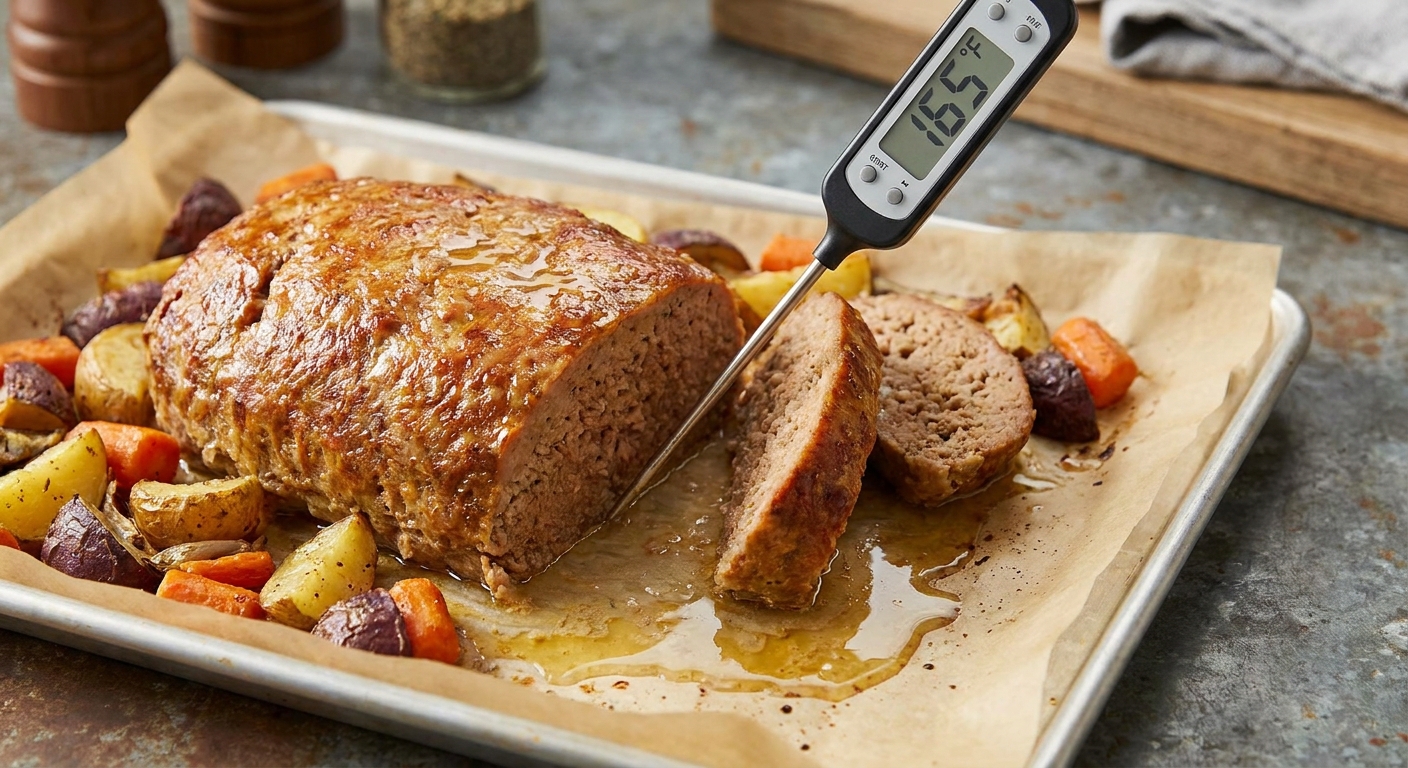
This is called carryover cooking, and it can push the temperature up another 5 to 10 degrees while it rests. So if you pull the meatloaf out right at 160°F, it might climb to 165°F on the counter all by itself.
Isn't that wild? It's like a little oven that never turned off, just hiding inside your loaf. So pull it at 160°F and let it do its thing.
What If You Go Overboard?
Now, what if your meatloaf accidentally hits 170°F or even higher? Will it turn into a brick? Not exactly, but it won't be as tender as you'd like.
Above 160°F, the proteins start tightening up fast, squeezing out moisture. Think of it like wringing out a sponge — the more heat you add, the drier your loaf becomes.
 How Long to Cook Meat Loaf: Perfect Timing Guide
Nobody wants a crumbly meatloaf. That's why checking the temperature early and often is a total game-changer.
How to Check It Like a Pro
First, hold on to that thermometer and let me tell you where to stick it. You want to aim for the thickest part of the center, usually right in the middle of the loaf.
Push the probe in far enough to get an accurate reading, but don't stab it like an action movie. One smooth insertion is all you need.
Read the display, wait a few seconds for the temperature to settle, and boom — you've got your answer. If it says 160°F, your meatloaf is done. If it says 150°F, give it a few more minutes.
A Fun Comparison to Remember
Think of your meatloaf like a phone battery. At 40%, it might look like it's doing fine, but push it much longer and you're running on fumes.
:max_bytes(150000):strip_icc()/Cajun-Style-Meatloaf-23_preview-33246a1f0cb541c89223fc7d518a7a63.jpg) Cajun-Style Meatloaf Recipe
Cajun-Style Meatloaf Recipe
160°F is your 100% charge — fully cooked, safe to eat, and ready for dinner. Anything less and you're eating something that still has miles to go.
It's a simple analogy, but it sticks. And if you remember your phone battery charge, you'll remember your meatloaf temperature. Maybe. Good enough, right?
Quick Tips Before You Go
Preheat the meatloaf properly. Let it rest for 10 minutes after cooking so the temperature evens out. That'll make slicing way cleaner too.
Don't guess. If you don't have a thermometer, seriously consider grabbing one. They're inexpensive and they'll save you from a lot of kitchen guesswork.
And remember — 160°F is your golden ticket. Stick to it, and every meatloaf you make will be safe, juicy, and genuinely delicious.
So next time you pull a meatloaf out of the oven and someone asks "is it ready?" you won't just shrug. You'll smile, pull out the thermometer, and give them a confident answer. And honestly, that feels pretty great.
