Internal Temperature For Cooked Pork

Pork Perfection: Why Internal Temp is Your New BFF Hey there, food explorers! Let's talk about something that's super important when it comes to cooking pork - and no, it's n...
Pork Perfection: Why Internal Temp is Your New BFF
Hey there, food explorers! Let's talk about something that's super important when it comes to cooking pork - and no, it's not just about making sure your kitchen doesn't smell like a sausage factory (though, let's be real, that's a bonus). We're talking about internal temperature. Now, don't roll your eyes at me, this isn't as boring as it sounds. Stick with me, I promise it's going to make your pork dishes the talk of the town.
Why Internal Temp Matters More Than You Think
First things first, why should you care about internal temperature? Well, my friend, it's all about safety and flavor. You don't want to be serving up a side of salmonella with your Sunday roast, do you? And let's not forget, pork that's cooked just right is tender, juicy, and oh-so-tasty. Overcooked pork? That's a sad, dry, chewy mess nobody wants.
So, how do you avoid the pork pitfalls? It's all about knowing your numbers. Just like Goldilocks, we want our pork to be 'just right'. Not too hot, not too cold, but just right.
Must Read
Meet Your New BFF: The Meat Thermometer
Now, you might be thinking, "That sounds like a lot of work. I've been cooking pork just fine without all this fuss." And you might be right, but let me introduce you to your new best friend - the meat thermometer. This little gadget is going to change your pork game forever. It's like having a secret weapon in your culinary arsenal.
No more slicing into your pork chops to check if they're done (and losing all those delicious juices in the process). No more guessing games. With a meat thermometer, you can cook pork with confidence. And the best part? It's not just for the pros. Even if you're a kitchen newbie, you can be a pork perfectionist in no time.
So, What's the Magic Number?
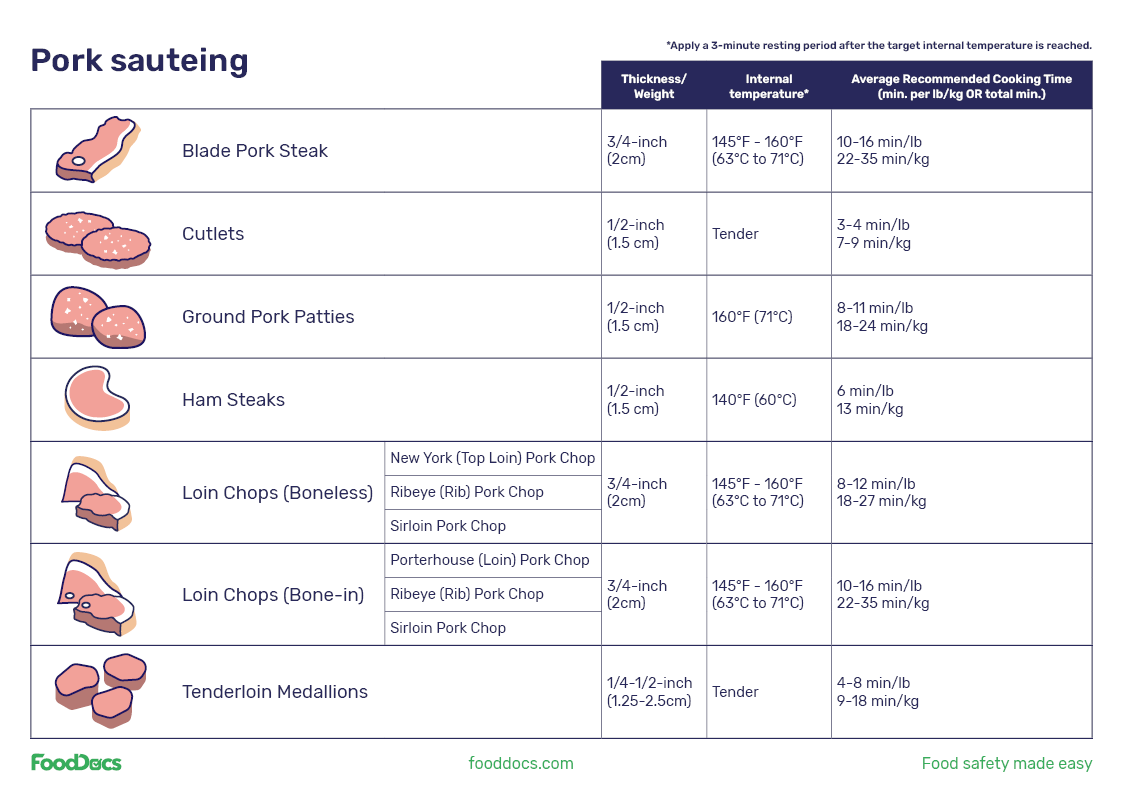
Alright, you're sold. You've got your meat thermometer ready to go. But what temperature are we aiming for here? According to the USDA, it's 145°F (63°C) for whole cuts (like pork chops and roasts) and 160°F (71°C) for ground pork. But here's the thing - pork can continue to cook a bit after you take it off the heat, so it's a good idea to pull it off the grill or out of the oven when it hits 140°F (60°C) for whole cuts. This gives it a chance to rest and cook to that perfect 145°F (63°C) without overcooking.
 Pork Cooking Temperature - National Pork Board
And remember, every cut of pork is different, so use your thermometer as a guide, not a rule. It's all about finding that sweet spot where your pork is cooked through but still oh-so-tender.
Now Go Forth and Cook!
So, there you have it. Internal temperature might seem like a boring topic, but it's the key to unlocking a world of perfectly cooked pork. Don't be intimidated by the numbers, embrace them! You've got your meat thermometer, you know your numbers, and now you're ready to cook up a storm.
So, go on. Experiment with new recipes. Try out that slow cooker pork shoulder you've been eyeing. And most importantly, have fun! Cooking should be a joy, not a chore. And remember, every dish is a chance to learn, to grow, and to make something delicious. So, get out there and cook with confidence. Your taste buds (and your guests) will thank you.
Happy cooking, food adventurers!
