Internal Temp Of Ham With Bone

Let’s be real for a second: there are few things in life more nerve-wracking than hosting a holiday dinner, especially when a beautiful, bone-in ham is the star of the show. Y...

Let’s be real for a second: there are few things in life more nerve-wracking than hosting a holiday dinner, especially when a beautiful, bone-in ham is the star of the show. You’ve got the glistening glaze, the pineapple rings, the whole festive vibe—and then there’s the internal temperature question, lurking like a tiny, anxious goblin in the back of your mind. I get it. But we’re going to fix that, right now, with zero stress and a whole lot of charm.
First things first: forget everything you’ve heard about “pink means raw.” With ham, pink is perfectly normal. That’s because most bone-in hams you buy are either fully cooked (dry-cured or wet-cured) or at least partially cooked. Your job isn’t to “cook” it from scratch; your job is to reheat it with love and make sure it’s safe. The USDA says your target is 140°F for a fully cooked ham, and 145°F if you’re starting with a fresh, uncooked one. But here’s the kicker: you have to measure from the thickest part, avoiding that stubborn bone. The bone conducts heat weirdly, and if you stick your thermometer right next to it, you’ll get a fake reading—a cruel trick that’ll either dry out your masterpiece or leave you wondering if you’ll survive dinner.
So, where do you poke? Imagine the ham as a lovely, sleepy bear. You want to go into the meatiest cheek, not the ear (the shank end) or the shoulder (the butt end). Aim for the center of the thickest muscle, at least two inches deep, and wait ten seconds for the thermometer to settle. If you’re using an instant-read, give it a kiss of confidence. If you’re using a probe thermometer that stays in the oven, well, you’re basically a culinary superhero already.
Must Read
Now, let’s talk about that glorious resting period. Once your ham hits 140°F (or 145°F, you rule-follower), pull it out of the oven. Resist the urge to carve immediately! The internal temperature will continue to rise by about 5 to 10 degrees—that’s called carryover cooking. It’s like the ham is saying, “I’m not done being delicious yet.” Let it rest for 15 to 20 minutes under a loose tent of foil. This allows the juices to redistribute, so your slices are tender and not a sad, dry pile of memories.
Of course, there’s the age-old debate: spiral-sliced vs. whole bone-in. Spiral-sliced hams are pre-cut, which means they dry out faster. So they usually need a glaze basted every 15–20 minutes and a lower oven temp (325°F). Whole bone-in hams? They’re sturdier, more forgiving, and they hold onto moisture better. But either way, your thermometer is your best friend. Don’t trust that little pop-up plastic thingy that came with the ham. It’s a liar. Throw it away and use a real one. I’m not saying it’s evil, but I’m also not saying it’s not.
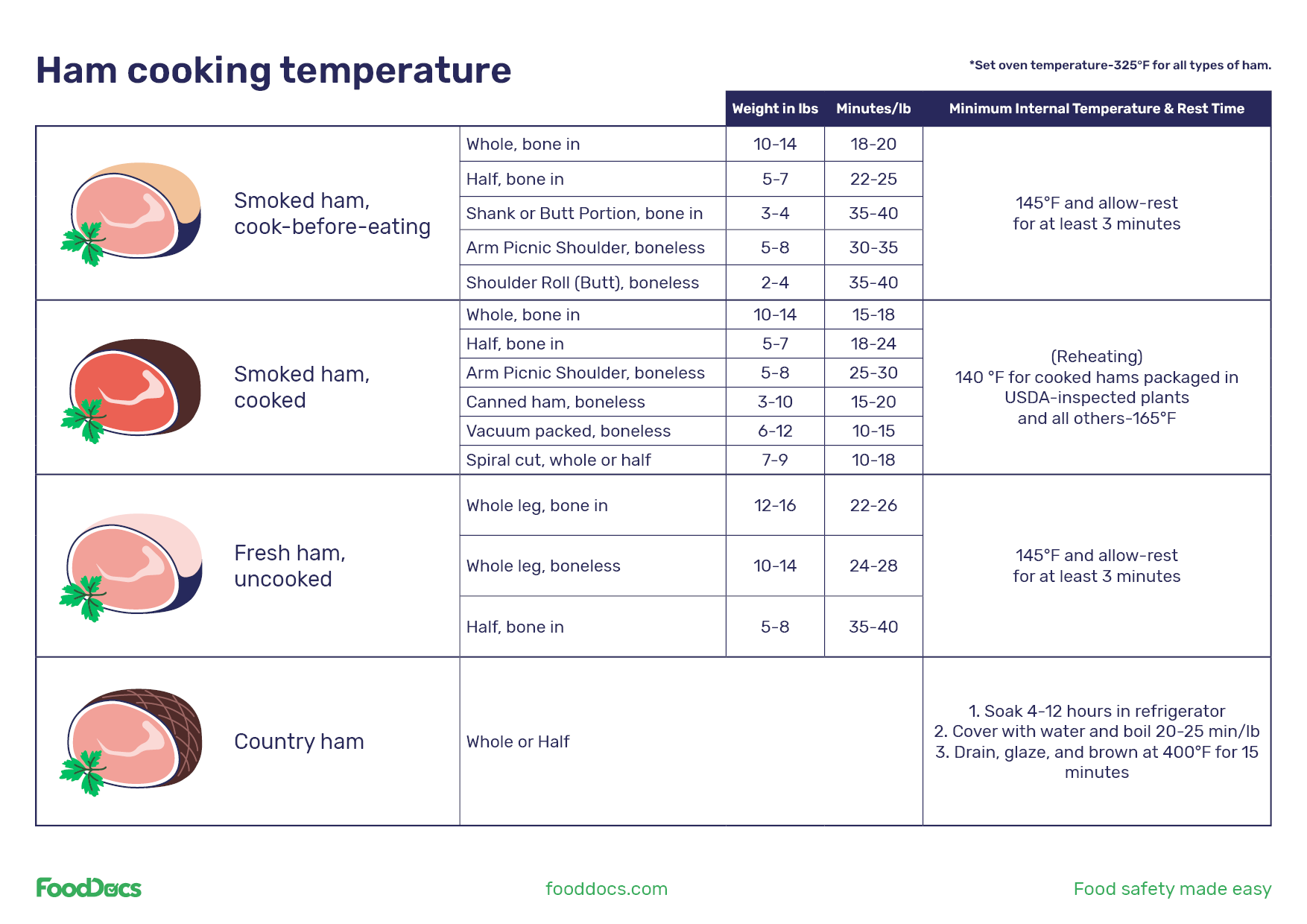 What Temperature Should Cooked Ham Be? A Guide to Safely Cooking Ham
One more tip: if you’re feeling fancy, glaze that bad boy during the last 30 minutes of cooking. A mix of brown sugar, mustard, and a splash of pineapple juice? Yes, please. But remember—sugar burns fast, so keep an eye on it. You want a sticky, caramelized crust, not a blackened smokestack.
So here you are, armed with a thermometer, a perfectly heated ham, and the smug satisfaction of knowing you didn’t overcook it into sawdust. As you set that golden, bone-in beauty on the table, take a deep breath. The internal temp is perfect. The friends and family are gathering. The laughter is about to flow. And you know what? You’ve got this. Because food isn’t just about numbers on a dial—it’s about the joy of sharing something warm and wonderful. So slice into that ham, watch the steam rise, and smile. You’ve just made a memory, one perfectly cooked bite at a time.
