How Were The Pyramids In Egypt Built

For anyone who has ever looked up at a photograph of the Giza Plateau, the question comes with a kind of pleasant, persistent buzz: how did they actually do it? It’s a topic t...

For anyone who has ever looked up at a photograph of the Giza Plateau, the question comes with a kind of pleasant, persistent buzz: how did they actually do it? It’s a topic that enjoys a special spot in our collective curiosity—part history, part mystery, and entirely practical when you think about it. The main purpose of understanding these construction methods isn’t just to impress friends at trivia night, though that is a nice bonus. It helps us appreciate human ingenuity and organization on a scale that modern projects still struggle to match. For history buffs, it’s a thrilling puzzle. For engineers, it’s a masterclass in physics without electricity. And for the rest of us, it’s simply a satisfying story about people working together with what they had.
You’ve probably heard a few common theories—ramps, levers, and sheer manpower. These aren’t just museum labels; they are the core ideas that most archaeologists agree upon. One variation involves a long, straight ramp of mud-brick and limestone chips, built up one side of the pyramid as it rose. Another clever tweak was a spiraling ramp that wrapped around the monument, allowing workers to drag stones upward while the pyramid grew taller. Some researchers even suggest internal ramps hidden inside the structure itself. No matter the variation, the underlying principle is the same: move heavy blocks from point A to point B without modern machinery.
The benefits of digging into this topic go beyond simple wonder. When you learn how the Egyptians likely transported granite blocks from Aswan, over 500 miles away, by cargo boat and sledge, you start seeing everyday logistics in a new light. That furniture delivery you’re waiting for? Suddenly, it feels a bit less stressful. For students, the pyramid methods offer a crash course in teamwork and project management—organizing thousands of workers, feeding them, and keeping them on schedule. For DIY enthusiasts, the concept of wetting sand to reduce friction (a trick used to slide heavy sledges) is a practical tip you could use to move a stubborn sofa across a lawn.
Must Read
Want to start making sense of it all? First, grab a good book by an Egyptologist like Mark Lehner or Zahi Hawass. They break down the evidence from actual quarry marks and tool remains. Don’t just read the text—look at the diagrams. Second, try a small hands-on experiment at home. Get a heavy book, tie a string around it, and pull it across your floor. Then, wet the floor slightly with a damp cloth and pull again. Notice the difference? That’s the same friction-reducing principle the Egyptians used on the desert sand. Third, watch a documentary that shows replication projects, like the one where a team actually built a small pyramid using period tools. Seeing it happen is worth a thousand theories.
A common hurdle is the sheer size of the stones—some weighing 80 tons. How do you even start? The simple tip here is to focus on the smaller pieces first. Most of the pyramid’s core was built with much smaller, manageable blocks (about 2.5 tons each). The giant granite blocks were used sparingly, for the king’s chamber and the roof. So, the first thing to get comfortable with is the idea that the Egyptians didn't lift huge stones every day. They moved a lot of medium-sized stones very efficiently, using ramps, sledges, and lots of workers pulling in rhythm. That’s much less intimidating, right?
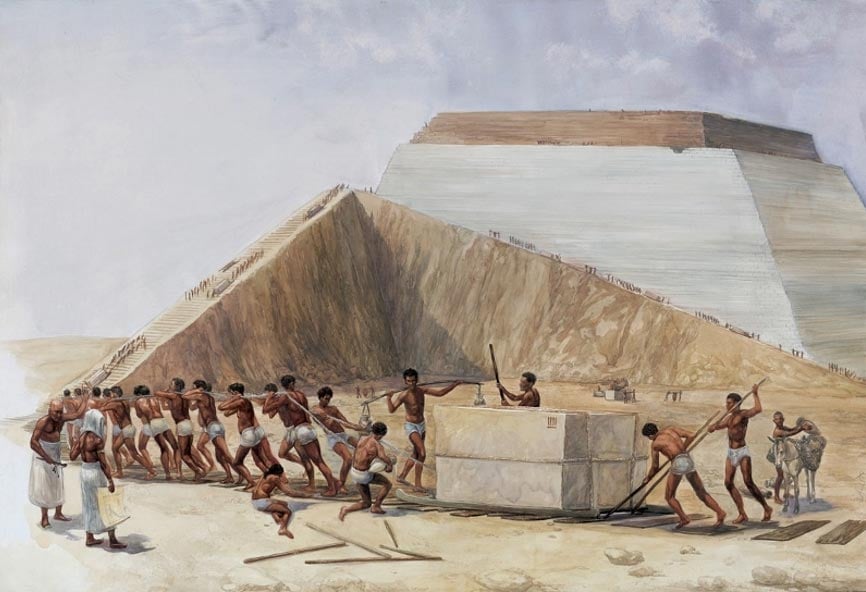 Demystifying the Egyptian Pyramids with Hard Facts | Ancient Origins
Another powerful tip is to look at the tools they actually had. Copper chisels, wooden mallets, and stone hammers. The pyramids were not built with magic—they were built with persistence and tested methods. The Egyptians used water levels (a trench filled with water) to keep the base perfectly flat. They used the North Star to align the sides. If you want to appreciate the process, take a walk in your own neighborhood and notice how modern builders use levels and string lines. The principle is identical—the Egyptians just scaled it up 10,000 times. Their greatest tool wasn’t bronze; it was planning and organization.
Ultimately, the question of how the pyramids were built isn’t about a single secret trick. It’s a story of human grit and smart, slow progress. So next time you see a pyramid photo, smile. Instead of a dusty relic, see a team of people—engineers, stonecutters, boat pilots—solving problems one step at a time. And maybe, just maybe, take that lesson with you into your own day. Because if they could move 80 tons over sand with a wet sledge, you can probably handle that email you’ve been ignoring.
