How To Write A Financial Plan For A New Business

So, you've decided to take the leap and start your own business, huh? Congrats! You're now part of the brave souls who've chosen to navigate the wild waters of entrepreneurshi...
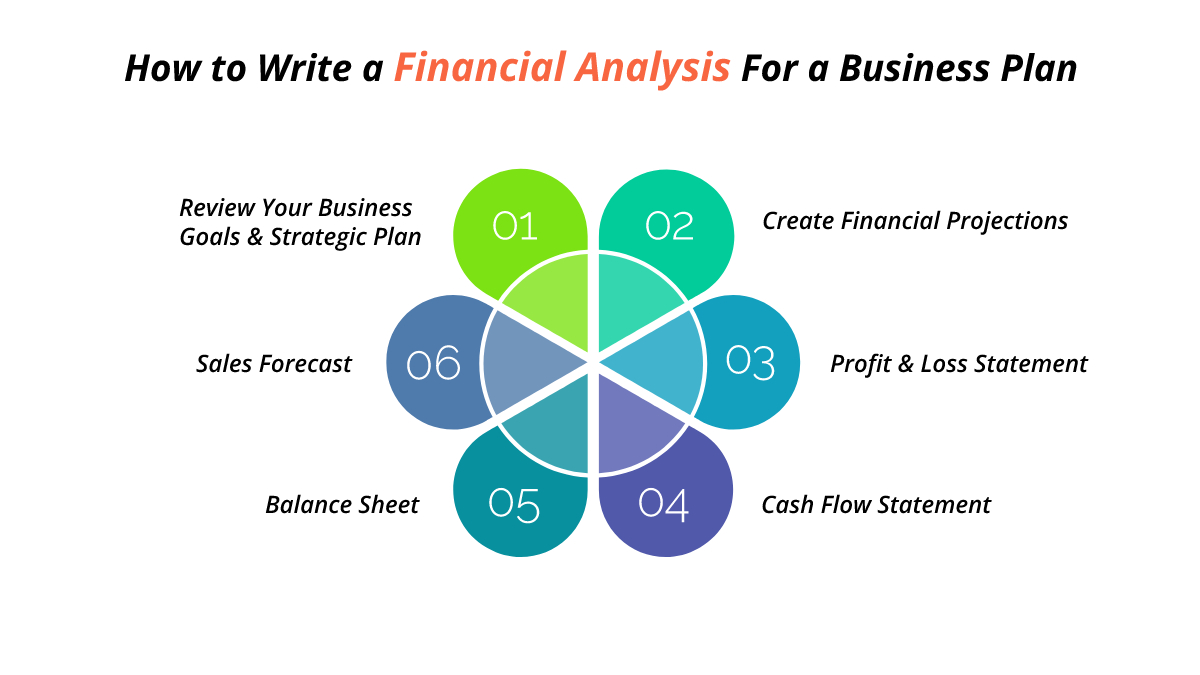
So, you've decided to take the leap and start your own business, huh? Congrats! You're now part of the brave souls who've chosen to navigate the wild waters of entrepreneurship. But hold your horses, partner. Before you dive in, let's talk about something that's not as exciting as naming your business or designing your logo, but it's just as crucial - creating a financial plan.
Imagine you're going on a road trip. You've got your destination in mind, you've packed your bags, but you haven't thought about how you're going to get there. Are you going to drive? Take a train? Hitch a ride with a friendly alien? (If it's the latter, can I come too?) The point is, you need a plan to get from point A to point B, and the same goes for your business.
Why Bother with a Financial Plan?
You might be thinking, "I'm not a numbers person, and I've got a million other things to do. Can't I just wing it?" Well, sure, you could. But remember the time you tried to cook dinner without a recipe, and you ended up with a smoking pot and a pizza delivery guy laughing at you? Yeah, let's not do that again.
Must Read
Having a financial plan helps you make informed decisions, manage your cash flow, and understand your business's financial health. It's like having a GPS for your business - it won't drive the car for you, but it'll keep you from driving off a cliff.
Alright, Alright, I'm Convinced. How Do I Make One?
Great! Let's dive in. Here are the key elements you need to include in your financial plan.
Executive Summary
This is like the blurb on the back of a book - it gives a quick overview of your entire financial plan. It should include your business's purpose, the market you're in, and your financial goals. Write it last, even though it goes first. Trust me, it'll make more sense that way.
Business Overview
Here's where you talk about your business - what it does, who it does it for, and why it's awesome. You should also include any relevant industry trends and how your business fits into the market.
Sales Forecast
This is where you predict how much money you think you'll make. It's based on your pricing strategy, the number of sales you expect, and your marketing efforts. Be realistic, but don't sell yourself short. Remember, you're not a mind reader, so it's okay if your predictions aren't spot on.
Expenses
Now, let's talk about the not-so-fun part - spending money. List out all your expected expenses, from rent and utilities to marketing and software. Don't forget to include taxes and insurance. Yes, they're boring, but they're necessary. Think of them as the vegetables in your business's diet - you might not like them, but they're good for you.
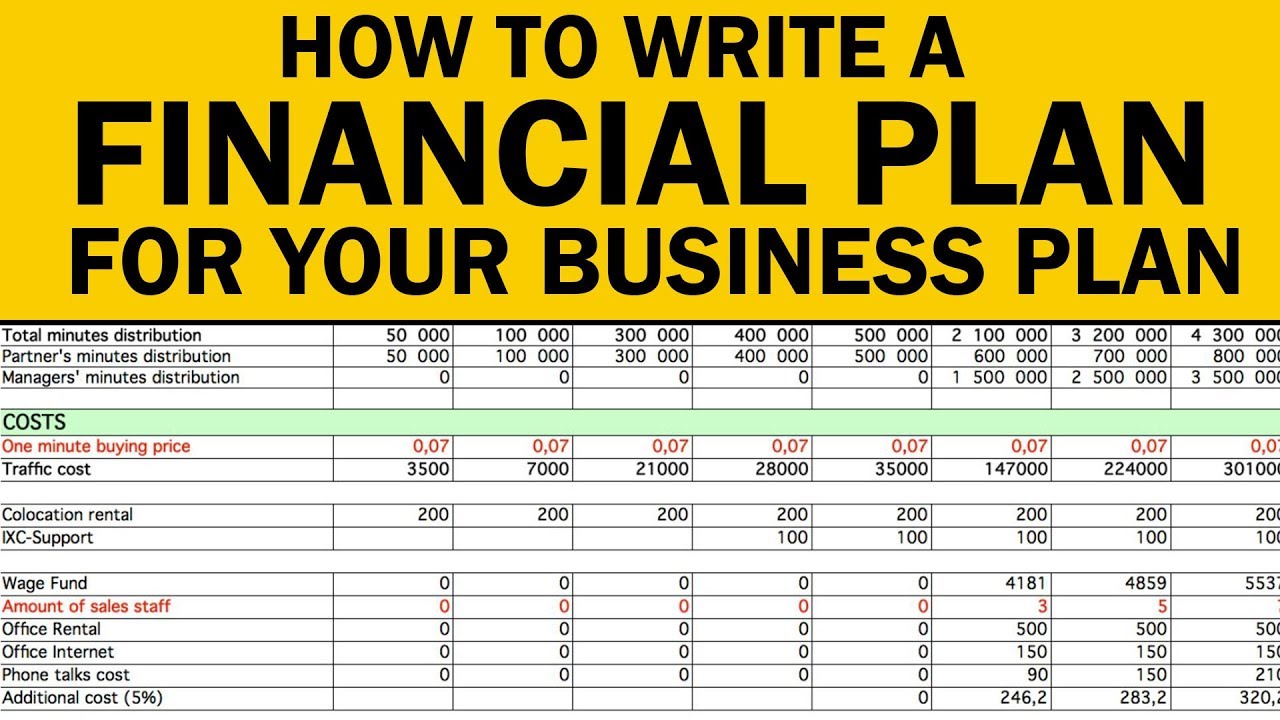 How to Write a Financial Plan for Your Business Plan in 2025 - YouTube
Cash Flow Statement
This is where you figure out when you'll have money coming in and when you'll have money going out. It's like planning your weekly grocery trips - you need to know when you're going to run out of milk (money) so you can go to the store (make a sale) and restock.
Break-Even Analysis
This is the point where your business starts making a profit. It's the moment when you've made enough money to cover your costs. It's like when you finally pay off your student loans and you realize you can actually afford to eat out once a week. It's a beautiful thing.
Financial Projections
These are your financial goals for the next 3-5 years. They should be based on your sales forecast and your expenses. They should also be realistic and achievable. Remember, you're not trying to become a billionaire overnight (unless you are, in which case, can I have a job?).
Funding Request (if applicable)
If you're looking for investors or a loan, this is where you make your pitch. Tell them why you need the money, how you'll use it, and how you'll pay them back. Make sure to include any relevant financial information to back up your claims.
And there you have it! Your very own financial plan. It's not as scary as it sounds, is it? Remember, this is a living document - it should change and grow with your business. So, don't be afraid to update it as you go along.
Now, go forth and conquer, you financial planning rockstar, you! And remember, if you ever feel lost, you can always come back here for a little refresher. I'll be here, cheering you on (and maybe laughing at some of your expenses - I'm looking at you, office supply budget).
