How To Test A Purge Valve

So, Your Car's Acting Weird, Huh? Let's Talk Purge Valves! Alright, so there I was, cruising down the highway, radio blasting, singing my heart out to some old classic (don't...

So, Your Car's Acting Weird, Huh? Let's Talk Purge Valves!
Alright, so there I was, cruising down the highway, radio blasting, singing my heart out to some old classic (don't judge, we all have our moments). Suddenly, my car starts acting like it's got the hiccups. It's not the engine, it's not the tires, it's something... strange. Sound familiar?
Now, before you start imagining your car's possessed by some sort of mechanical ghost, let's talk purge valves. Yes, you heard it right. Those little guys can cause quite the ruckus when they're not working as they should. So, grab a coffee, let's dive in, and learn how to test a purge valve.
First Things First: What's a Purge Valve?
Alright, class is in session. A purge valve is like the bouncer of your car's evaporative emissions control (EVAP) system. Its job? To make sure no nasty vapors from your gas tank sneak into the engine or the atmosphere. It's a small, but mighty component, and when it's not doing its job, your car can act all sorts of wonky.
Must Read
Symptoms: When Your Purge Valve's Acting Up
So, how do you know if your purge valve's the culprit? Well, here are a few signs to look out for:
- Your car's running rough, like it's got a case of the Mondays.
- You're getting a check engine light, which is never a good sign.
- You're smelling gas, and it's not just because you filled up at the station.
If any of these sound like your ride, it might be time to give that purge valve some attention.
Testing a Purge Valve: Let's Get Our Hands Dirty
Alright, now that we've established that your purge valve might be the villain of the story, let's test it. Don't worry, you don't need a PhD in automotive engineering for this. Here's what you'll need:
- A multimeter (if you're testing resistance)
- A vacuum pump (if you're testing for leaks)
- A friend to help out (optional, but helpful)
Testing Resistance
First up, we've got testing resistance. Here's how:
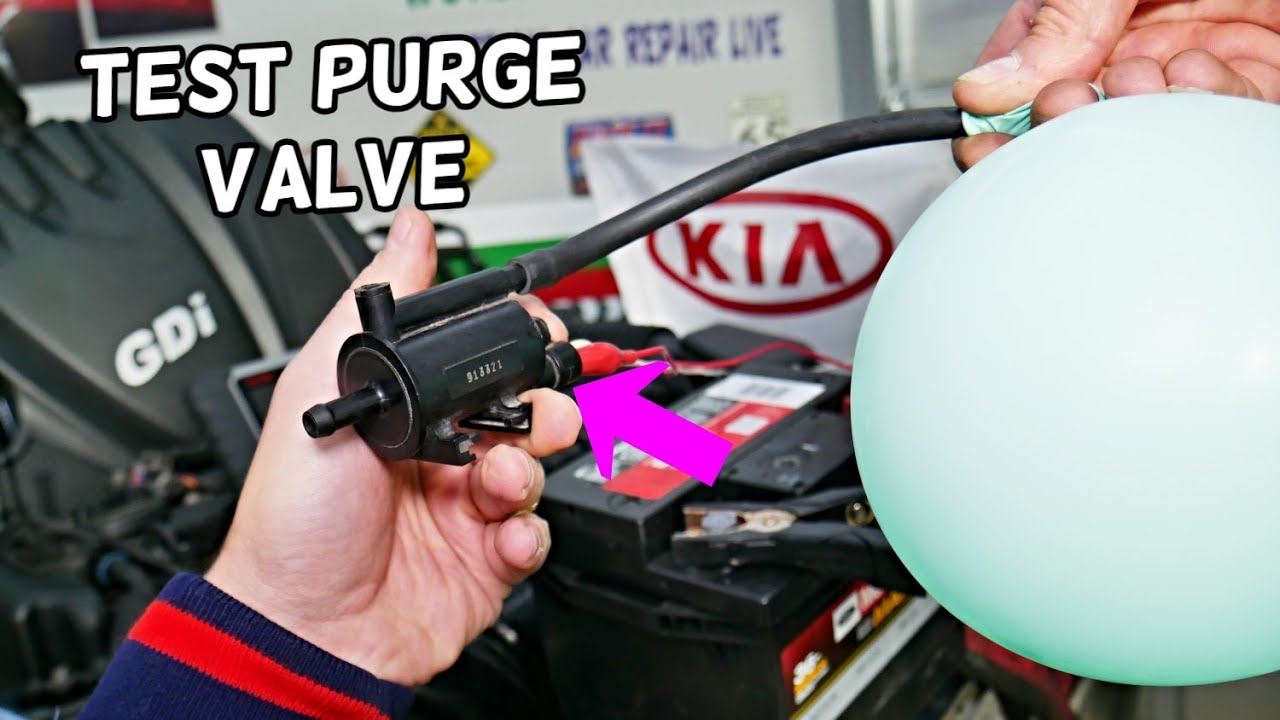 HOW TO TEST PURGE CONTROL VALVE ON KIA SPORTAGE, KIA SORENTO - YouTube
- Locate your purge valve. It's usually near the engine, connected to the EVAP system.
- Disconnect the electrical connector.
- Set your multimeter to ohms (resistance).
- Touch one probe to each of the valve's electrical terminals. You should see a reading between 10-100 ohms. If it's way off, or there's no reading at all, your valve might be fried.
Testing for Leaks
Next up, we've got testing for leaks. This one's a bit more hands-on:
- Locate the purge valve's hose.
- Clamp the hose closed near the valve.
- Connect your vacuum pump to the other end of the hose.
- Turn on the pump. If the valve's working, you shouldn't see any change in pressure. If it's leaking, you'll see a drop in pressure. If that's the case, it's time for a new valve.
And there you have it! Two simple ways to test your purge valve. Remember, if you're not comfortable doing this yourself, it's always a good idea to take your car to a professional. After all, safety first, right?
Prevention: Keeping Your Purge Valve Happy
Alright, so you've tested your purge valve and it's all good. Great! But how do you keep it that way? Here are a few tips:
- Regular maintenance. Keep up with your car's scheduled services. They'll catch any potential issues early.
- Keep your gas cap on tight. A loose cap can cause all sorts of EVAP system woes.
- Don't ignore warning lights. If your car's telling you something's up, listen to it.
And there you have it, folks! From weird car symptoms to testing purge valves, we've covered it all. Now you're armed with the knowledge to keep your ride running smooth. Happy wrenching!
