How To Tell If A Potato Has Gone Bad

Let’s talk potatoes. Specifically, the sad, wrinkly ones hiding in the back of your pantry. Everyone has been there. You want mashed potatoes, but you’re scared to open that...

Let’s talk potatoes. Specifically, the sad, wrinkly ones hiding in the back of your pantry. Everyone has been there.
You want mashed potatoes, but you’re scared to open that bag. What if they’ve become sentient? What if they smell like a goblin’s armpit?
Relax. I’m your potato detective. Let’s solve this mystery together.
Must Read
The Sniff Test (No, Really)
First, trust your nose. A good potato smells like clean dirt and nothing else. If you get a whiff of mildew, damp socks, or actual garbage, that potato is done.
A bad potato has a distinct, musty smell. It’s not subtle. It’s the potato screaming, “I have become a science experiment!”
Fun fact: rotten potatoes can release a gas called solanine. It’s a natural toxin. Don’t huff the expired spud.
The Squish Factor
Pick that potato up. Give it a gentle squeeze. A healthy potato is firm and solid, like a rock you found outside.
If it gives way like a stress ball, it’s trouble. Specifically, if it feels spongy or mushy, it’s rotting from the inside.
Quirky detail: a mushy potato is basically a water balloon full of bacteria. Pop it, and you’ll regret your choices for the rest of the day.
The Eyes Have It (And Other Growths)
Look at those “eyes.” A few small, pale sprouts are fine. That’s just the potato trying to become a plant. Peel them off and you’re golden.
But long, gnarly sprouts that are greenish or purple? That’s the potato going full Dr. Frankenstein. It’s using its own starch to grow legs.
If the sprouts are longer than your thumb, toss it. It’s no longer a potato. It’s a time capsule of regret.
Green Means “Go (Away)”
Green skin is the biggest red flag. That green color comes from chlorophyll, but it also means increased solanine levels.
Solanine tastes bitter. Even a tiny bit can give you a stomach ache. A big dose can make you feel like you ate a bad oyster.
If you see green patches, cut them off deep. If the whole potato is green, just say goodbye. It’s not worth the weird, peppery taste.
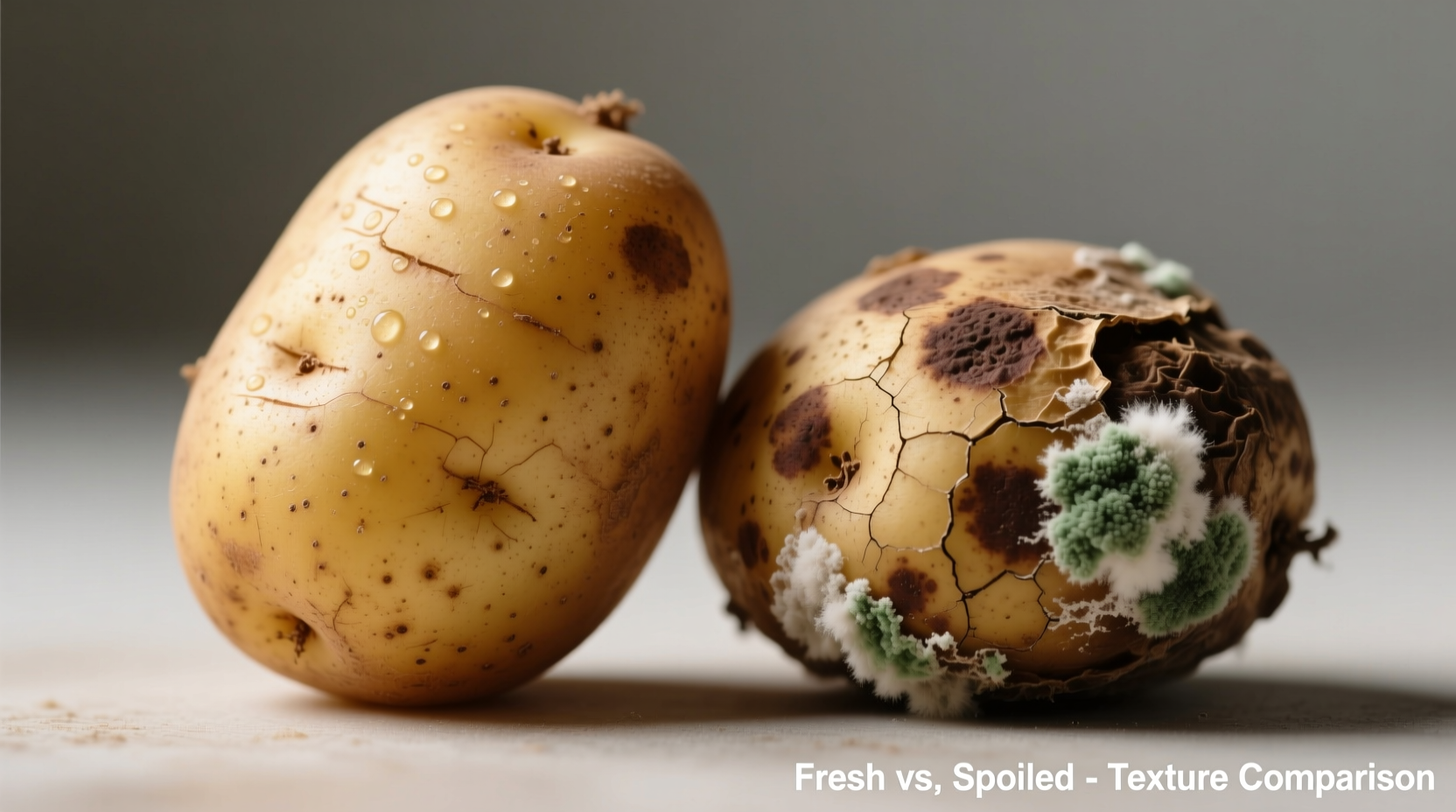 How to Tell If a Potato Is Bad: 7 Clear Warning Signs
The Wrinkle Watch
Wrinkles are a potato’s early warning system. A slightly wrinkled potato is just old and thirsty. It will still cook up fine, but maybe not for a fancy dinner.
But if the skin looks like a shrunken head from a pirate movie? That’s dehydration plus decay. The inside will be shriveled and hollow.
Fun fact: wrinkled potatoes lose their water and their flavor. You’ll end up with sad, mealy mash. Nobody wants that.
The Final Test: The Cut
If it passes all other tests, cut it open. A good potato is cream-colored or pale yellow inside. No drama.
If you see black, brown, or pinkish spots, it’s bruising or early rot. Cut those bits out. But if the center is hollow or dark, that’s a “hollow heart.” Toss it.
Worst case: if you see fuzzy mold in any color? The potato is a biohazard. Into the trash. Now.
Why This Matters (And Is Fun)
Here’s the crazy part: potatoes are alive. They breathe. They age. They have a shelf life just like you do.
People treat potatoes like furniture. They buy a bag and forget about it for two months. That bag becomes a microbiome.
One bad potato can spoil the whole batch. It releases moisture and gas that turns the others into sprouty zombies. That’s why you must inspect regularly.
Store them in a cool, dark, dry place. No fridge (the starch turns into sugar). No sunlight (hello, green poison). A paper bag is best.
In conclusion: your nose, your fingers, and your eyes are the detectives. Use them. You’ll save your dinner and avoid the saddest, most disappointing meal of your life.
Now go rescue those spuds. Or toss them with honor. You are the boss of the potato. Not the other way around.
