How To Get Rid Of Puffy Eyes From Crying

There is a profound, if bittersweet, release in a good cry. Whether it follows a heartbreaking movie, a personal disappointment, or a wave of overwhelming stress, the act of s...
There is a profound, if bittersweet, release in a good cry. Whether it follows a heartbreaking movie, a personal disappointment, or a wave of overwhelming stress, the act of shedding tears is a natural and cathartic emotional valve. It allows us to process feelings, lower tension, and feel a sense of closure. Yet, the morning after this emotional purge often brings an unwelcome physical souvenir: puffy, swollen eyes. For many, this visible aftermath can feel embarrassing or frustrating, a lingering trace of vulnerability that interrupts our daily confidence. The good news is that this temporary swelling is not inevitable; with a few targeted, gentle remedies, you can soothe your skin and restore a refreshed, clear-eyed appearance, helping you face the day with renewed composure.
The root cause of post-cry puffiness is largely biological. When you cry, tears drain through the nasolacrimal ducts near your eyes, which can become irritated and clogged. More importantly, tears are hypertonic—they contain a higher concentration of salt than the surrounding tissues. This draws fluid into the delicate skin around the eyes via osmosis, leading to that telltale swelling. Additionally, the friction of rubbing your eyes while crying aggravates the capillaries, making the area appear red and inflamed. Understanding this mechanism is the first step; the key is to gently encourage drainage and reduce inflammation without causing further irritation.
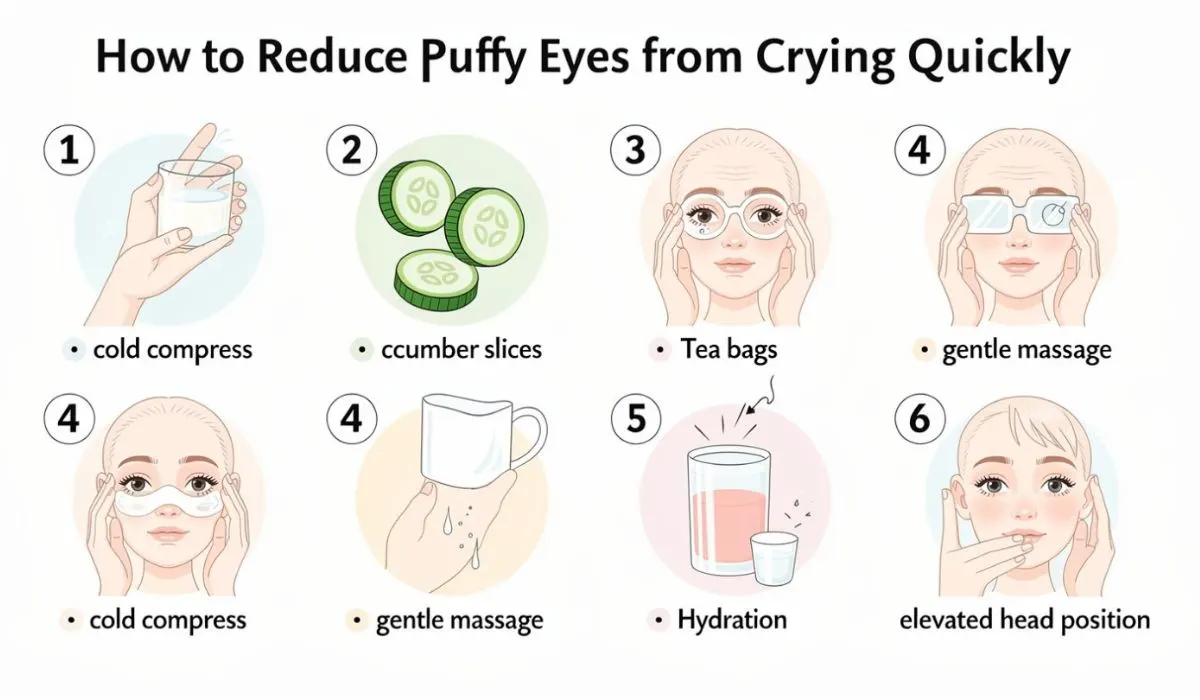
Your first and most effective tool is cold therapy. The principle is simple: cold temperatures constrict blood vessels, reducing fluid leakage and calming inflammation. Never apply ice directly to the thin skin, as it can cause frostbite or damage. Instead, use a cooling agent with a barrier. Two chilled metal spoons, placed in the freezer for ten minutes, then laid over your closed eyes for five to ten minutes, work wonders. Alternatively, a gel eye mask kept in the refrigerator, or even a bag of frozen peas wrapped in a soft cloth, can achieve the same effect. The cold will constrict the dilated vessels, shrinking the puffiness and soothing the overall sensation of heaviness.
Must Read
Another highly effective, soothing technique involves gentle lymphatic drainage. The lymphatic system is your body's waste-removal network, and it relies on movement. You can manually help the trapped fluid drain away from your eye area. After applying a cool compress, use your ring fingers—the weakest digits, thus the safest—to perform a soft massage. Start at the inner corners of your eyes, near the bridge of your nose, and gently tap or sweep outward along the lower orbital bone, ending at the temples. Repeat this motion five to ten times. You can also gently stroke from the inner corner down the side of your nose toward your cheek. The goal is to guide the fluid, not to push or rub, which can break capillaries and worsen redness.
For immediate, everyday relief, don’t underestimate pantry staples. Two items in particular are surprisingly effective. First, cucumber slices are a classic for a reason: they are mostly water and are naturally cool, providing gentle hydration and cooling. Place chilled slices over your eyes for ten minutes. Second, used green tea bags are a powerful resource. The tannins and caffeine in green tea act as astringents, helping to tighten skin and constrict blood vessels. Brew two bags, squeeze out the excess liquid (or squeeze and then chill them), and place them over your eyes for ten to fifteen minutes. The combination of coolness and astringent properties tackles both inflammation and fluid retention simultaneously.
 How to Get Rid of Puffy Eyes from Crying: Effective Remedies
Equally important is knowing what to avoid. In the immediate aftermath of crying, resist the strong urge to rub your eyes. Rubbing can break fragile capillaries, creating red spots or dark circles, and it further irritates the skin barrier. Similarly, be careful with heavy eye creams or thick makeup. Such products can trap the retained fluid and clog pores, making the puffiness linger longer. Stick to a minimalist routine: a gentle, fragrance-free eye cream with caffeine or vitamin K, or simply a light layer of your regular moisturizer. And crucially, elevate your head while sleeping—use an extra pillow for the first night—so gravity helps drain the fluid away from your eyes rather than letting it pool.
Beyond these immediate fixes, remember that the puffiness is a temporary, physical echo of a necessary emotional release. While it can feel frustrating, treating your crying eyes with the same tenderness you gave your crying heart is part of the healing process. These simple, gentle techniques—cold compresses, lymphatic massage, a cooling eye mask, or a chilled tea bag—are not just cosmetic quick fixes. They are acts of self-care, allowing you to wipe away the physical traces of a difficult moment so you can move forward with a calmer, clearer vision—both literally and figuratively. The tears were healthy; the puffiness is just a passing cloud. With a few minutes of targeted care, you can help it pass more quickly.
