How To Find The Right Calorie Deficit

So, there I was, standing on the scale, staring at the number that seemed to have a personal vendetta against me. I'd been at this whole 'healthy lifestyle' thing for a while...
So, there I was, standing on the scale, staring at the number that seemed to have a personal vendetta against me. I'd been at this whole 'healthy lifestyle' thing for a while now, but the scale just wasn't budging. I mean, I was eating salad for breakfast, for crying out loud! What more did it want from me?
That's when it hit me. I was doing everything right, but I wasn't seeing results because I wasn't creating the right calorie deficit. I was eating healthier, sure, but I wasn't eating less. And that, my friends, is where a lot of us go wrong.
What's a Calorie Deficit, Anyway?
Alright, let's back up a bit. A calorie deficit is just a fancy way of saying you're burning more calories than you're consuming. It's the key to weight loss, because when you're in a deficit, your body starts to use up its stored energy - aka fat.
Must Read
Now, you might be thinking, "But I'm already eating healthier! Why do I need to eat less?" Well, here's the thing: even if you're eating nothing but kale smoothies and quinoa bowls, if you're eating more calories than you're burning, you're not going to lose weight.
How to Find Your Magic Number
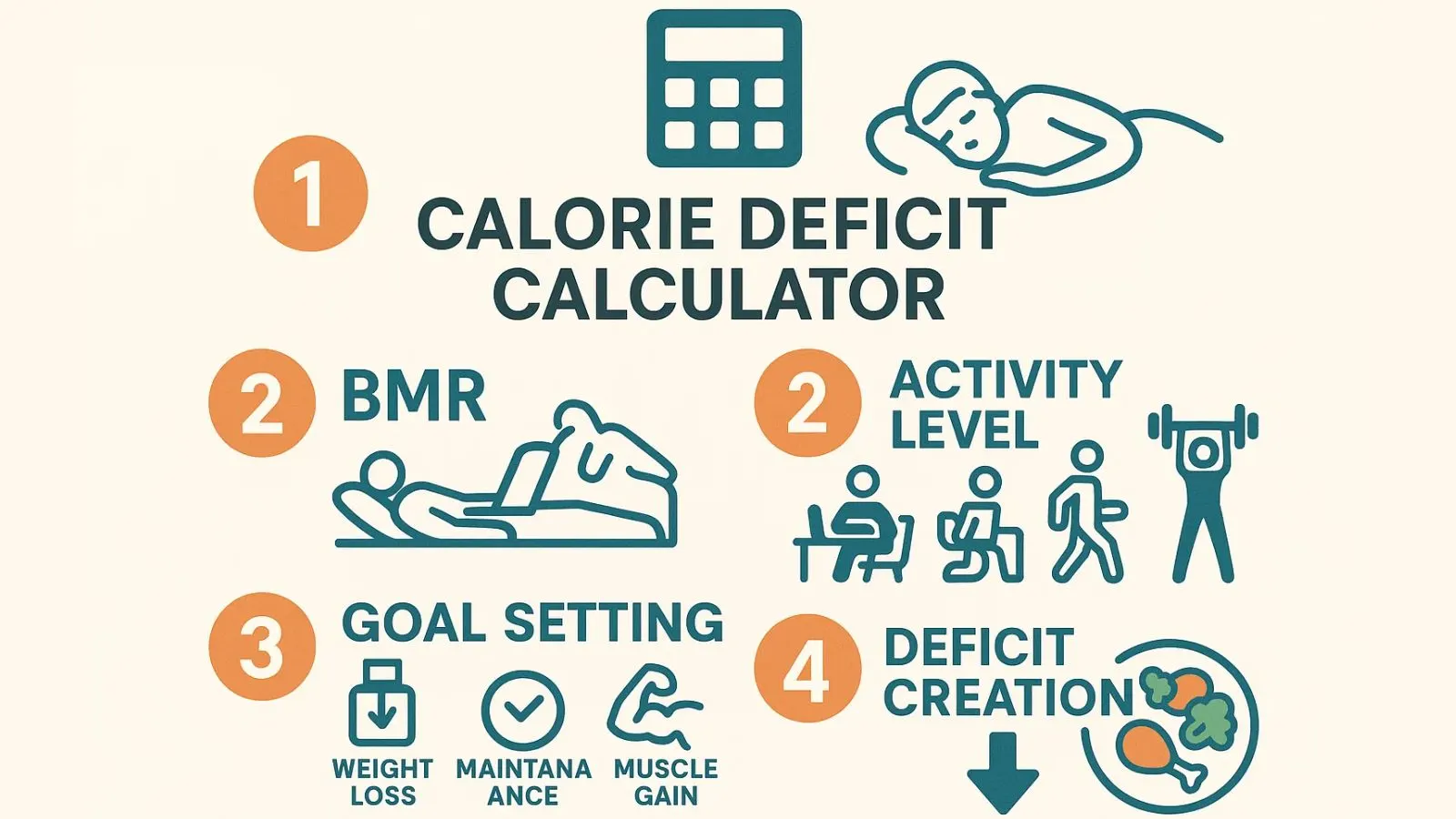
So, how do you find the right calorie deficit? The first step is to figure out your Total Daily Energy Expenditure (TDEE), which is the number of calories your body burns in a day, including exercise. There are plenty of calculators online that can help you figure this out.
Once you've got your TDEE, you can start to play around with different deficit levels. A safe and sustainable deficit is usually around 500 calories per day. So, if your TDEE is 2000 calories, you'd want to aim to eat around 1500 calories a day.
But remember, everyone is different. Some people might find they need a bigger deficit to see results, while others might find that a smaller deficit works better for them. It's all about finding what works for you.
Pro Tip: Don't Forget to Refeed!
Now, before you go and start eating nothing but air, let me stop you right there. It's important to remember that your body needs calories to function properly. That's where refeeding comes in.
Refeeding is when you take a break from your deficit and eat at or slightly above your TDEE for a day or two. It's a great way to keep your metabolism humming along and prevent your body from going into 'starvation mode'.
 What is a Calorie Deficit? - Stephanie Kay Nutrition
Tracking Your Progress
Alright, so you've figured out your calorie deficit and you're sticking to it. Great! But how do you know if it's working?
The scale is a good starting point, but it's not the be-all and end-all. Muscle weighs more than fat, so you might not see a change in the number on the scale even if you're losing fat. That's where progress photos and measurements come in. They can help you see the changes in your body that you might not see on the scale.
And hey, while we're at it, let's give the scale a little less power, yeah? It's just a number. It doesn't define you or your progress. You do you, and forget about what the scale says.
Patience, Grasshopper
Alright, I know I said this was going to be a quick guide, but I feel like I need to leave you with one more piece of advice: be patient.
Losing weight is a marathon, not a sprint. It takes time, and that's okay. Don't rush it. Don't fall into the trap of thinking you need to see results immediately. Trust the process, and trust yourself.
And hey, if you ever find yourself standing on the scale, feeling frustrated and defeated, remember this: you're doing better than you think you are. You're making progress, even if you can't see it yet. Keep going. You've got this.
