How To Calculate Dimensional Weight Ups

Let’s be honest: if you’ve ever shipped a giant box of marshmallows or a gigantic, nearly-empty suitcase, you’ve been ambushed by the dimensional weight trap. You weigh the bo...
Let’s be honest: if you’ve ever shipped a giant box of marshmallows or a gigantic, nearly-empty suitcase, you’ve been ambushed by the dimensional weight trap. You weigh the box—it’s only four pounds!—but the cashier charges you for fifteen. This is the shipping industry’s favorite practical joke, and it’s called “dim weight.” But don’t worry; by the end of this, you’ll be able to outsmart the tape measure like a wily raccoon at a picnic.
What in the world is dimensional weight?
Imagine you’re shipping a pillow the size of a small car. It’s fluffy, it’s light, but it takes up the whole back of a delivery truck. Carriers realized that space is money—not just weight. So they invented dimensional weight to charge you for the volume your package hogs. Think of it as a rent penalty for your box being too lazy to fill up.
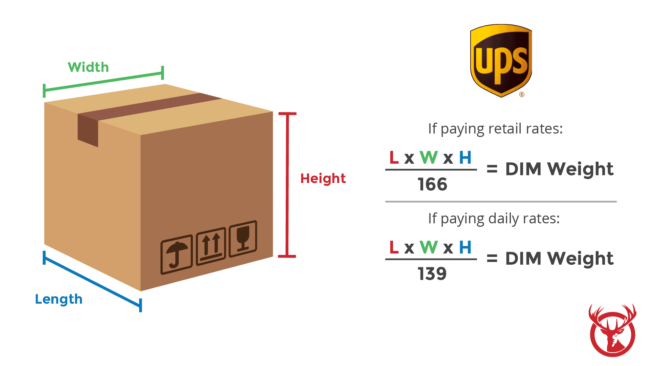
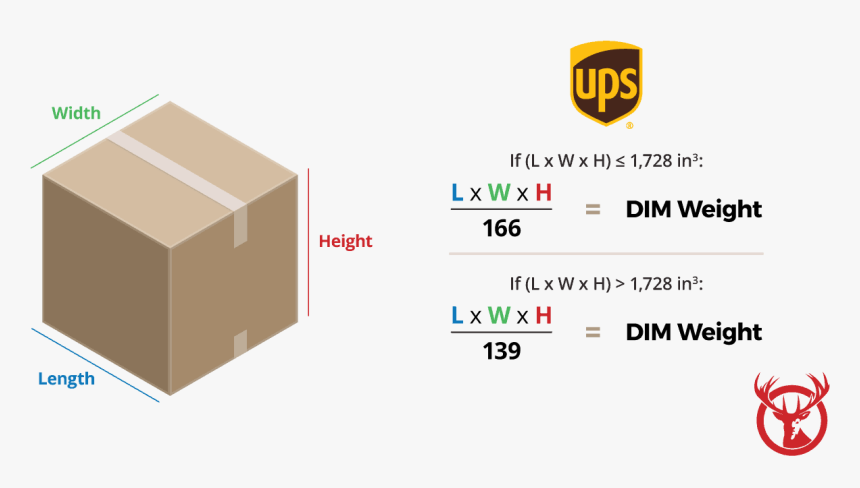
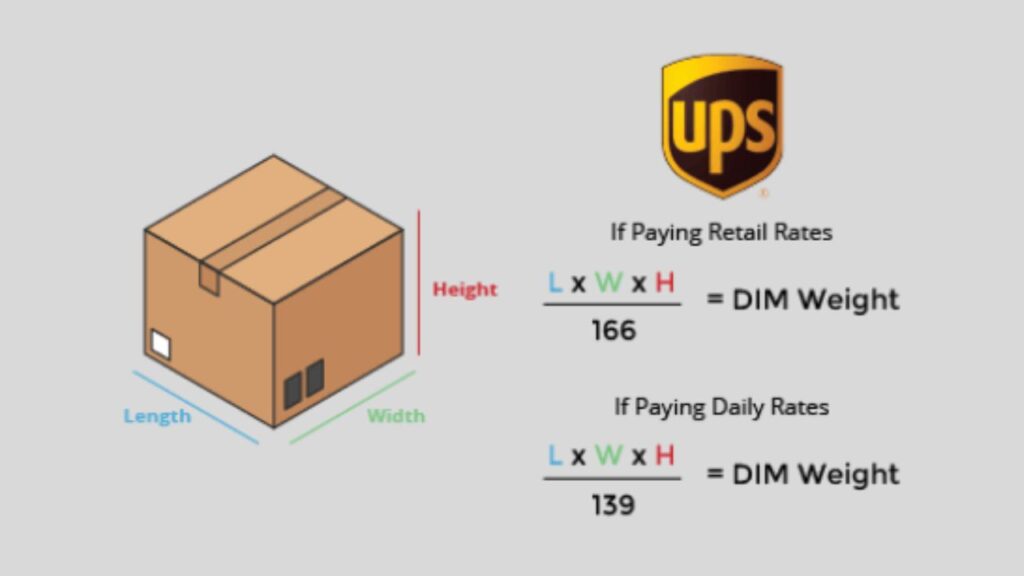
The rule is simple: if your package is big but light, you pay for its size, not its actual weight. If your package is dense like a brick, you pay for the actual weight. The carrier always picks the higher number—because they’re not running a charity for air. UPS uses a “dimensional factor” (DIM factor) of 139 for domestic shipments. That number is your magic key to unlock the shipping math dungeon.
Must Read
The formula that sounds harder than it is
Ready for some math that won’t make your brain cry? Here it is: Length × Width × Height (in inches), then divide by 139. That’s it. That’s the whole evil spell. Let’s say you’re shipping a box that’s 20 inches long, 15 inches wide, and 10 inches tall. Multiply those: 20 × 15 = 300, then 300 × 10 = 3,000. Now divide 3,000 by 139. You get roughly 21.6—so the dimensional weight is 22 pounds.
If your actual scale weight is only 10 pounds, you just got charged for 22 pounds. That’s like ordering a salad and being charged for a steak. Surprising fact: FedEx and UPS use the same DIM factor of 139 for domestic shipments, but UPS rounds up to the next whole pound. So your 21.6 becomes 22. That’s just their way of saying, “Thanks for playing.”
How to measure without losing your sanity
You need a measuring tape—not your eyes. And always round up to the nearest inch. If your box is 14.2 inches long, call it 15 inches. If you round down, the shipping police won’t arrest you, but the computer will correct your measurement and probably add a surcharge. Measure the longest sides of the package, including any bulging tape or handles. That weird strap poking out? Yeah, that counts.
 Ups Dim Weight - Dimensional Weight Formula, HD Png Download - kindpng
Pro tip: If your box is a weird shape, like a ski case or a bicycle box, measure the length, width, and height at their farthest points. You can’t cheat by squishing the tape measure under a floppy corner. The universe knows. A funny truth: some people try to save money by cutting their boxes down to size. You can literally trim an inch off each side and drop your dimensional weight from 22 pounds to 20 pounds. That’s almost like getting a free small pizza with every shipment.
The “air tax” and your wallet
Here’s the kicker: dimensional weight is nearly always the higher number when shipping light, bulky items. A bag of packing peanuts? You’re paying for the peanuts’ ego, not their substance. A giant teddy bear? Its dimensional weight could be higher than a bowling ball’s actual weight. It’s the most absurd tax since the window tax in old England (seriously, they taxed people for having too many windows).
But there’s a silver lining: you can outsmart the system by using a smaller box. If you’re shipping a sweater, don’t toss it in a giant box with mountains of bubble wrap. Use a tight box or a poly mailer. For fragile items, vacuum-seal the air out of the packaging. One shipper I know shipped a fluffy lamp by removing the shade and packing it flat—saved 40% on shipping. Carriers hate this one weird trick!
 Dimensional Weight: Pricing & Calculator | DFH
When you absolutely need to calculate it
If you’re shipping via UPS ground or air, the DIM factor is almost always 139, but double-check on the UPS website because they occasionally change it to mess with you. International shipments use a different factor (usually 166), which is more forgiving of big boxes. Why? Because international shipping is already expensive enough that they don’t need to add more spite.
Surprising fact: UPS started dimensional weight in 2015 for all packages, not just air. Before that, you could ship a giant puffy coat for pocket change. Now, you have to ask yourself: “Is this box breathing in too much air?” The answer is almost always yes—and that air costs you real money.
Final words of wisdom (and sarcasm)
So next time you’re packaging up a giant inflatable flamingo for your cousin, measure it twice, crush it once. If you can’t shrink the box, at least know you’re paying a “volume surcharge” for being a space hog. And remember: dimensional weight is just the shipping world’s way of saying, “We see that empty space, and we want rent.”
Now go forth, tape measure in hand, and dominate that shipping calculator. You’re smarter than a cube of air. Probably.
