How Old Is The Earth According To The Science

So, how old is the Earth? Okay, go ahead and pick a number from your head. Got it? 4.54 billion years is the answer science gives us, and honestly, that number is absolutely w...

So, how old is the Earth? Okay, go ahead and pick a number from your head. Got it? 4.54 billion years is the answer science gives us, and honestly, that number is absolutely wild when you actually sit with it.
That's not a typo. Four point five four billion. If you ever feel like you've been waiting in line forever at the DMV, just remember the Earth has been hanging around since before there even were DMVs to wait in.
How Do We Even Know?
Great question, right? Scientists figured this out mainly by looking at rocks and meteorites almost as old as the planet itself. It's kind of like finding a receipt from 4 billion years ago and doing the math.
Must Read
Radiometric dating is the big trick here. Certain elements inside rocks, like uranium and potassium, decay at incredibly predictable rates, acting like tiny built-in clocks set the moment those rocks formed.
Scientists measure how much of the original element is left versus how much has decayed. From there, they can calculate with eerie precision how long the rock has been sitting there. It's basically the cosmic equivalent of knowing when someone blew out their birthday candles.
The Meteorite Equation
Here's where it gets fun. Meteorites and moon rocks are among the oldest solid materials in our solar system. Scientists have dated those too, and they consistently land around that 4.54 billion-year mark.
Meteorites don't mix with Earth's surface the way Earth's own rocks do. They basically preserve a snapshot of the early solar system without Earth's messy geological activity messing with the data.
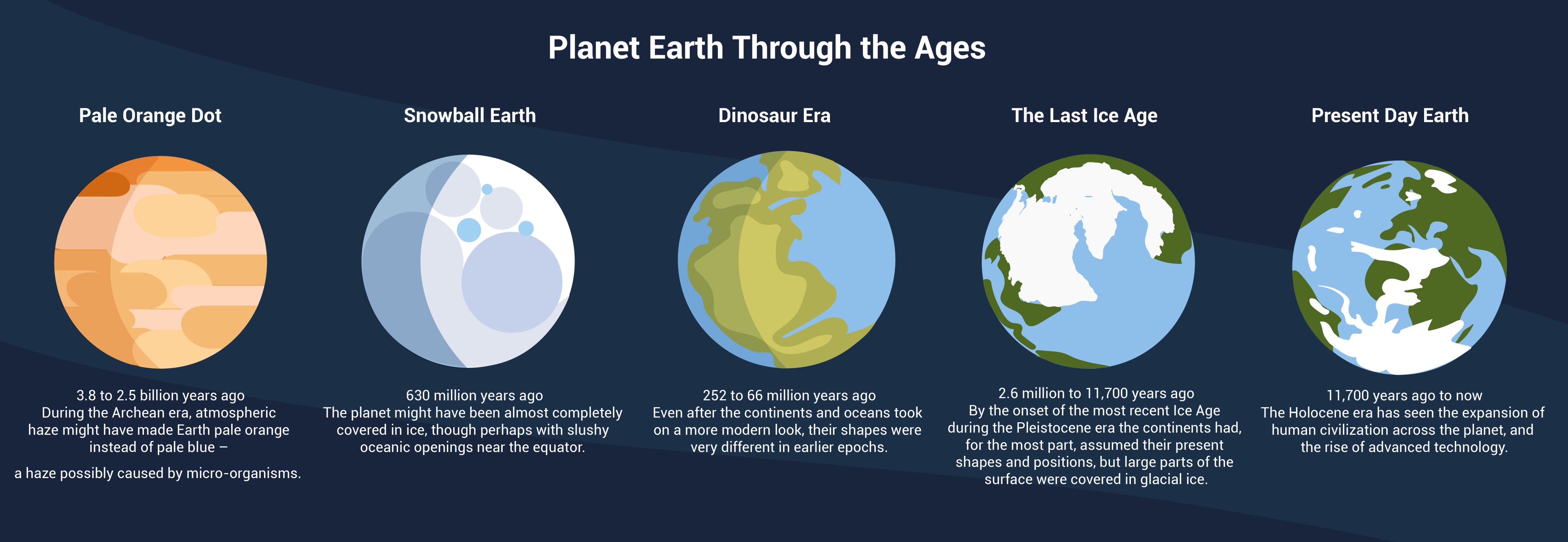 Planet Earth Through the Ages - NASA Science
So when you hold a meteorite, you're literally touching something older than most of the Earth itself. Imagine carrying a piece of space history in your backpack. No big deal, right?
The Earth Is Basically a Young Planet
Ready for a blow-your-mind comparison? The sun is about 4.6 billion years old, making it just slightly older than Earth. The universe, though, is roughly 13.8 billion years old, which means the Earth arrived pretty late to the cosmic party.
The Earth formed when a swirling cloud of gas and dust collapsed under its own gravity. Think of it like a giant cosmic snowball rolling together over millions of years until it became a planet.
By cosmic standards, our planet is actually fairly young. If the universe's entire history were one 24-hour clock, Earth wouldn't show up until about 10:00 PM. The sun has been blazing since around 9:56 PM.
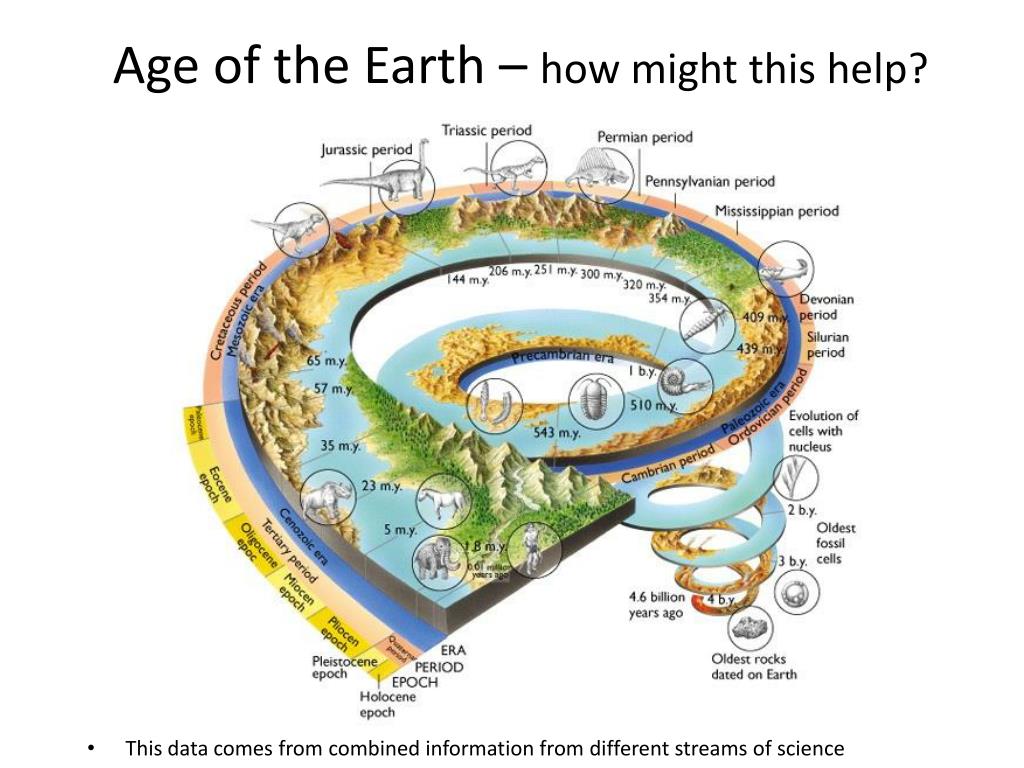 PPT - Evolution PowerPoint Presentation, free download - ID:2357769
So What Does That Actually Feel Like?
Here's a fun way to think about it. If you compressed Earth's entire 4.54 billion years into a single standard calendar year, humans wouldn't even show up until December 31st at 11:59 PM. We're basically the last-second scratch-off ticket of Earth's history.
Dinosaurs ruled the Earth for around 165 million years, yet they'd only straddle the last few seconds of that metaphorical year. And off ale have been around for a mere fraction of a millisecond by comparison.
Isn't that humbling? We build skyscrapers, send rovers to Mars, and binge entire TV shows in the span of a year, while the Earth just quietly sat there evolving for billions of years before we showed up.
Why Should You Care?
Knowing the Earth's age gives us perspective. It reminds us that everything we experience is shared with a planet that has witnessed tectonic plate shifts, ice ages, mass extinctions, and the slow rise of life itself.
 PPT - Evolution PowerPoint Presentation, free download - ID:1819960
Our planet carried simple microbes for billions of years before complex life even thought about evolving. Life went through some intense trials to get to screensavers and avocado toast.
The 4.54 billion-year figure is also a testament to human curiosity. We figured this out by understanding physics, chemistry, and the language of atoms decaying on a schedule. It's honestly kind of badass.
Final Thoughts
The next time you're standing outside on a clear night, just look up. Those stars could be shining for millions, billions, or even trillions of years like our planet has.
Earth has been our cosmic home for an unfathomably long time, and science helps us appreciate just how deep that timeline really goes. Not bad for a planet that started as a ball of hot space dust.
So yeah, 4.54 billion years. Take your time with that number. Your brain probably needs a minute.
