How Much Water To One Bouillon Cube

Let’s be honest—most of us have stood in front of the stove, a bouillon cube in one hand and a measuring cup in the other, feeling a little bit lost. Do you add one cup? Two c...
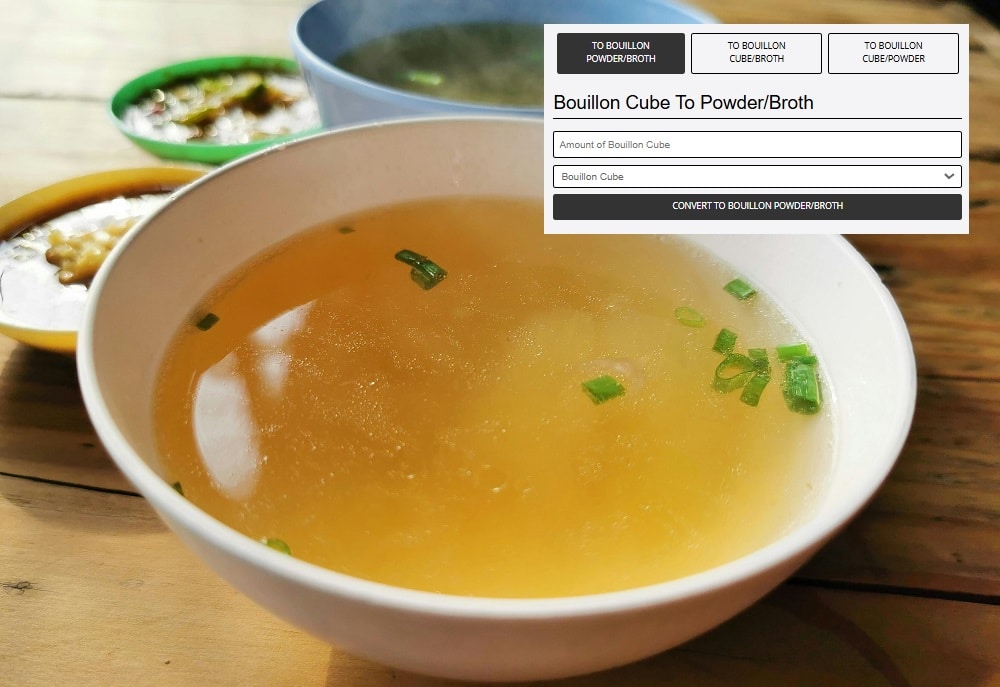
Let’s be honest—most of us have stood in front of the stove, a bouillon cube in one hand and a measuring cup in the other, feeling a little bit lost. Do you add one cup? Two cups? A whole ocean? It’s a tiny cube with big expectations, and getting it wrong can turn a simple soup into a salty brick or a watery whisper. But don’t worry, we’re going to fix this together, one cube at a time.
The Golden Rule That Actually Works
Here’s the simple truth: one standard bouillon cube (or one teaspoon of powder) is meant for one cup (8 ounces) of water. Yes, really. That’s it. Think of it like a little flavor bomb—it needs just enough water to explode into a perfect broth, not a swimming pool.
I learned this the hard way when I tried to make a quick risotto. I tossed in two cubes for what I thought was “enough water,” and my risotto tasted like a salt lick for a very unhappy deer. The cube-to-water ratio isn’t just a suggestion; it’s the difference between “mmm, cozy” and “ouch, my blood pressure.”
Must Read
Real Life Meets the Cube
Picture this: you’re making a lazy Saturday soup with leftover veggies and a handful of noodles. You crumble in one cube, pour in one cup of boiling water, and stir. The smell? Heaven. That’s because you gave the cube its perfect stage—not too big, not too small.
But what if you’re feeding a crowd? If your recipe calls for four cups of broth, just use four cubes and four cups of water. It’s that simple. No math degree required. Just count the cubes, count the cups, and match them one to one.
When You Want a Lighter Touch
Sometimes, you don’t want a full-flavor punch. Maybe you’re making a broth for a sick friend, or cooking rice that needs a gentle hum, not a shout. In that case, feel free to use one cube for two cups of water. It’s your kitchen—you’re the boss.
But here’s a little secret: always taste before you add more salt. Bouillon cubes are sneaky salty, and one cube in two cups can still be plenty for a delicate broth. Trust your tongue, not just the package.
Don’t Be a Cube Crumbler
I used to just toss a whole cube into cold water and hope for the best. Big mistake. The cube sits at the bottom like a stubborn rock, and you end up with a salty lump and bland water. Always dissolve the cube in a small splash of boiling water first, or crush it into a paste with a fork.
Think of it like making instant coffee: you wouldn’t drop a coffee crystal into cold milk and expect magic. Heat and a little stirring are your best friends here. Pour that hot water over the cube, give it a whisk, and watch it melt into salty gold.
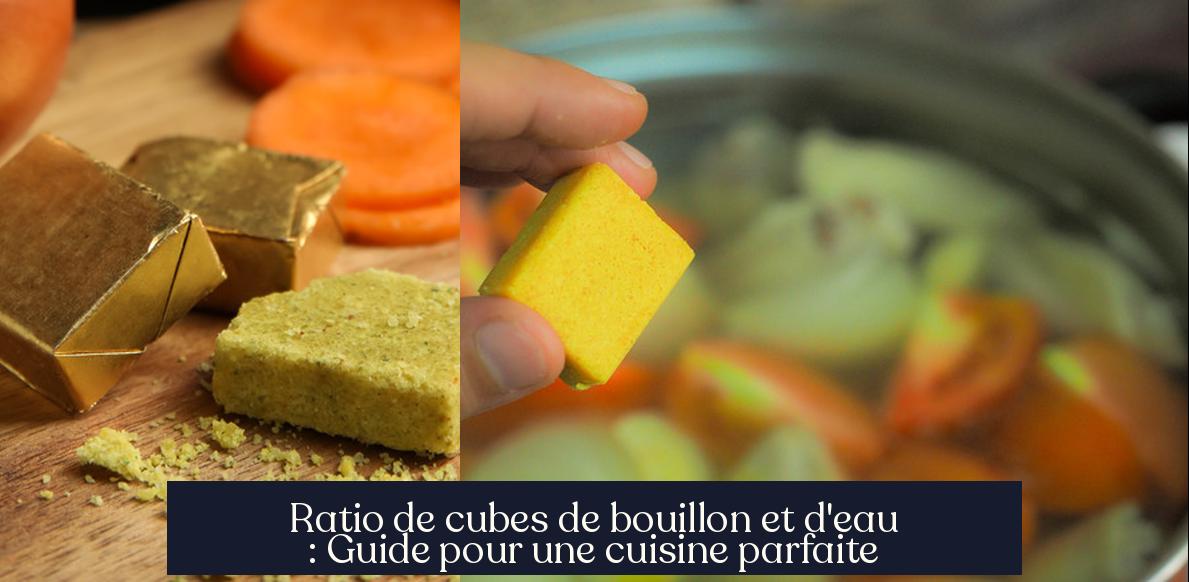 Ratio de cubes de bouillon et d'eau : Guide pour une cuisine parfaite
The Exceptions That Prove the Rule
Not all cubes are created equal. Some are “low-sodium” or “double-strength,” so always glance at the package. Double-strength cubes usually need two cups of water per cube. If you ignore that, you’ll be drinking what tastes like the Atlantic Ocean.
And for my vegetarian friends: veggie cubes can be a little gentler, so one cup per cube is still a safe bet. Just taste and adjust—cooking is a conversation, not a lecture.
Why You Should Care (Beyond Dinner)
Getting this right matters because you deserve a meal that makes you smile, not one that makes you reach for a glass of water. A good broth is the backbone of so many comfort foods—soups, stews, risottos, even gravy. When the ratio is off, the whole dish feels wrong.
Plus, think of the money. Bouillon cubes are cheap, but if you’re using too many, you’re wasting both cubes and flavor. Get it right, and one box can last you through a month of cozy dinners.
A Little Story to Hug It All Together
Last week, my neighbor called me in a panic: “I’m making chicken noodle soup for my kids, and the broth tastes like a science experiment!” I asked, “How much water per cube?” She said, “I just dumped in three cubes and filled the pot.” We laughed, and I told her the one-cup rule. She added more water, tasted it, and said, “It’s like magic. My kids are actually eating it.”
That’s the power of knowing your cubes. It’s not fancy; it’s just good sense wrapped in a salty little block.
So next time you reach for that cube, remember: one cube, one cup. Or two cups if you’re feeling gentle. Stir it with hot water, taste it, and trust yourself. You’ve got this—and your cozy soups will thank you.
