How Much Water Is In 8 Glasses

There is a quiet, almost universal satisfaction in the simple act of filling a glass with cool, clear water. Whether it’s the first sip upon waking, the refreshing pause durin...
There is a quiet, almost universal satisfaction in the simple act of filling a glass with cool, clear water. Whether it’s the first sip upon waking, the refreshing pause during a lunch break, or the steady companion at your desk, the “8-glasses-a-day” rule has become a deeply ingrained symbol of wellness. People value this guideline not for its strict precision, but for its simplicity—it turns the abstract concept of hydration into a tangible, manageable daily goal. It offers a sense of control, a small, achievable promise to care for your body in the midst of a busy life.
At its core, the question “how much water is in 8 glasses?” is about establishing a baseline for health. The key purpose of this guideline is to counteract the subtle, chronic dehydration that many experience without realizing it. Our bodies rely on water for nearly every vital function—from regulating temperature and lubricating joints to transporting nutrients and flushing out waste. When you consistently meet the 8-glass mark, you are providing your cells with the essential environment they need to operate efficiently. The benefit is not a dramatic transformation, but a steady state of improved energy, clearer thinking, and fewer headaches.
Consider a typical afternoon in an office or a work-from-home setup. By 2:00 PM, focus often wanes, energy dips, and a mild craving for coffee or a sugary snack arises. In many cases, this “afternoon slump” is actually a signal of mild dehydration. If you have only had one or two glasses since morning, your brain—which is 73% water—is already underperforming. A better scenario: imagine sipping your fourth and fifth glasses steadily through the morning. By the same afternoon, you feel clearer, more patient, and less prone to mindless snacking. This is the everyday context where the 8-glass rule proves its worth—not as a magic cure, but as a quiet, reliable tool for maintaining mental and physical equilibrium.
Must Read
To understand the volume, let’s be specific. One standard glass of water is typically 8 fluid ounces (about 240 milliliters). Therefore, eight glasses equal exactly 64 fluid ounces or roughly 1.9 liters. While this is a common recommendation, it is not a universal law—it is a starting point. Factors like your body weight, activity level, climate, and even the water content in the foods you eat (fruits and vegetables contribute significantly) can shift your needs. The beauty of the 8-glass framework is that it provides a simple, memorable target that is close to the adequate intake for most adults, making it easy to adjust up or down as needed.
Simple tips can help you explore this hydration habit on your own. First, start the day with a full glass of water before coffee or tea. This kickstarts your metabolism after a night of fasting. Second, use a visual cue: keep a 32-ounce (1-liter) water bottle on your desk and aim to finish it by early afternoon, then refill for the rest of the day. This splits the 64-ounce goal into two manageable blocks. Third, pair drinking with routines—have a glass with every meal, and another when you brush your teeth or finish a phone call. These small anchors make the habit nearly effortless. Finally, listen to your body: if your urine is pale yellow and you rarely feel thirsty, you are likely well-hydrated; if it is dark, increase your intake.
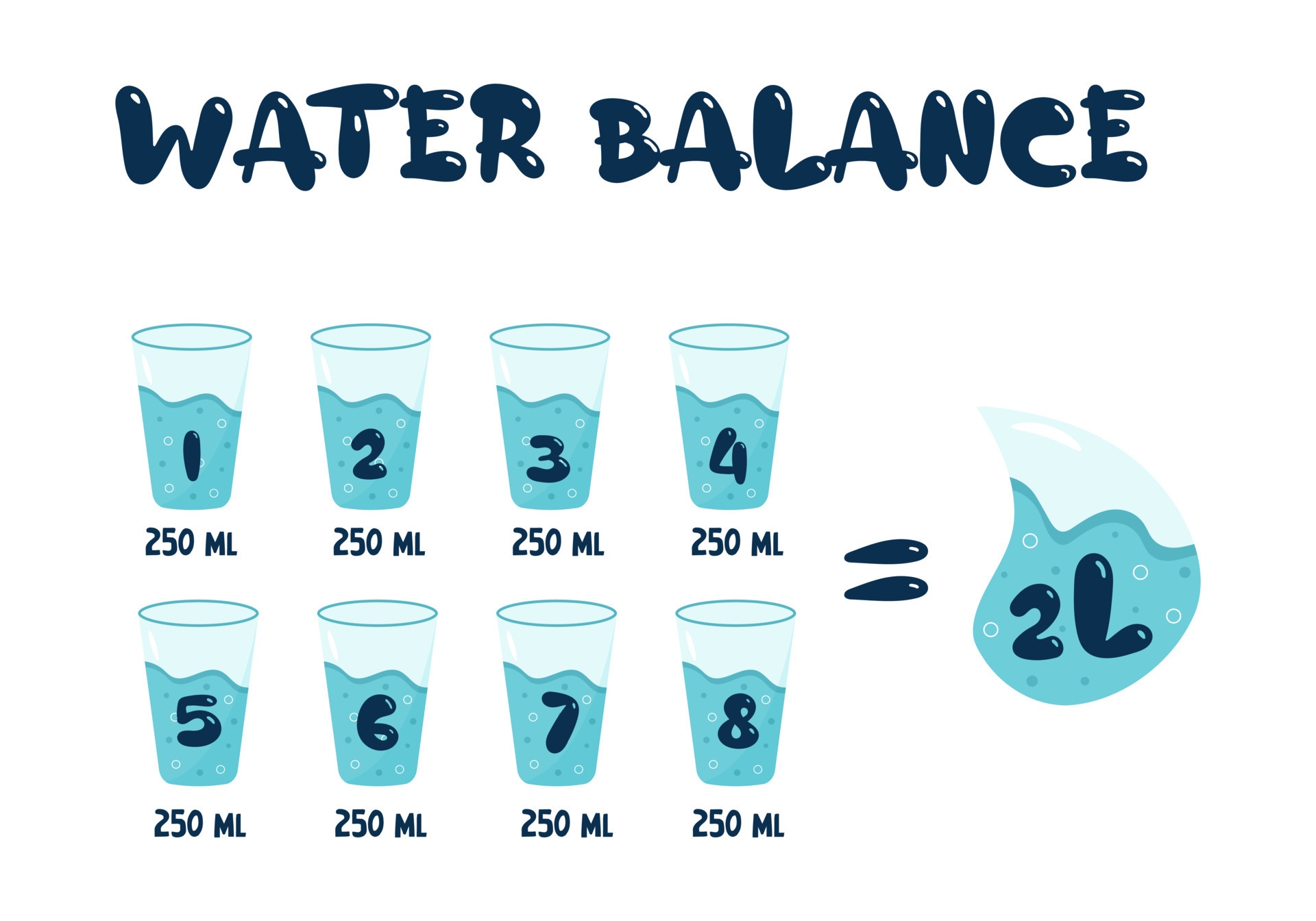 Water balance tracker with 8 glasses per day rule. Healthy lifestyle
One common misconception is that you must force down enormous amounts of water, but the 8-glass rule is designed to be flexible. For instance, if you enjoy a morning smoothie made with milk, yogurt, and fruit, that counts partially toward your fluid intake. Similarly, a cup of herbal tea or a bowl of soup contributes to your total hydration. The 8 glasses refer to total water from all beverages and moist foods, not just plain water. This perspective reduces the pressure and makes the goal feel more like a natural part of a balanced diet rather than a chore. The purpose remains the same: support your body’s basic needs so you can focus on what truly matters.
Ultimately, the value of “8 glasses” lies not in its scientific exactness but in its practical reliability. It is a simple, empowering rule that invites you to be proactive about your health without requiring complex tracking. By embracing this guideline, you are choosing a small, daily act of self-care that compounds into lasting benefits—better digestion, healthier skin, more stable energy, and a quieter mind. So fill that glass, take a sip, and know that you are doing something fundamental and good for the vessel that carries you through every day. The real amount is not a number—it is the consistent, mindful act of replenishing yourself.
