How Much Of The Leek Do You Use

So you’re standing in the kitchen, a leek in your hand. You’ve just washed off the sandy grit, and now comes the big question. What part of this elegant, onion-like vegetable...
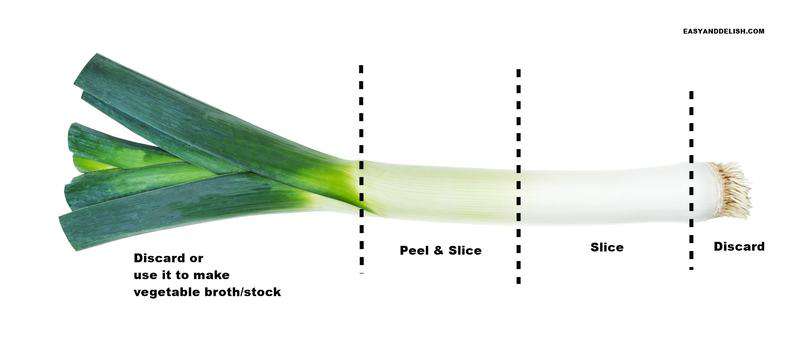
So you’re standing in the kitchen, a leek in your hand. You’ve just washed off the sandy grit, and now comes the big question. What part of this elegant, onion-like vegetable are you actually supposed to eat? It’s a surprisingly common kitchen puzzle, and the answer is not as straightforward as you might think.
Let’s be real: the dark green tops look tough and fibrous. The pale, almost white stalk looks tender and delicious. Your intuition tells you to slice off the green and toss it, right? But hold on—you might be throwing away the best part of the show.
The truth is, you can use almost the entire leek. It’s like a two-for-one deal hiding in your grocery bag. The trick is knowing how to handle each section, because they’re not all created equal.
Must Read
The Pale Green & White Base: The Star of the Show
This is the part everyone knows. It’s the tender, juicy core that makes you feel like a fancy chef. You can slice it thin for soups, sauté it until it’s sweet and buttery, or even eat it raw in a salad if you’re feeling bold.
Think of this section as the chicken breast of the leek world. It’s reliable, versatile, and will never let you down. You definitely want to use this part—it’s the main event.
But here’s a fun secret: you don’t have to stop there. The light green transition zone between the white and the dark leaves is also perfectly fine. Just trim off the very tip of the root end, and you’re golden.
The Dark Green Tops: Don’t Be So Quick to Toss Them!
This is where things get interesting. Those tough, dark green leaves look like they belong in the compost bin. And if you tried to eat them raw or sliced into a delicate risotto, you’d be chewing on what feels like grass clippings.
But here’s the cool part: those tough tops are packed with flavor. Think of them as the chicken bones of the leek. You wouldn’t eat them, but you’d definitely simmer them for stock, right?
Exactly! Save those dark green tops, rinse them well, and toss them into your next pot of vegetable broth. They add a mellow, oniony depth that you can’t get from anything else. It’s like a free flavor upgrade for your soups.
You can also grill the bigger, thicker dark green sections until they char. The bitterness mellows out, and you get a smoky, textural treat. It’s a whole new way to enjoy a vegetable you thought you knew.
The Root End: A Surprising Hero
Most recipes say to chop off the root end and throw it away. But have you ever thought about regrowing your leeks? That little fuzzy bit at the bottom is actually a tiny garden waiting to happen.
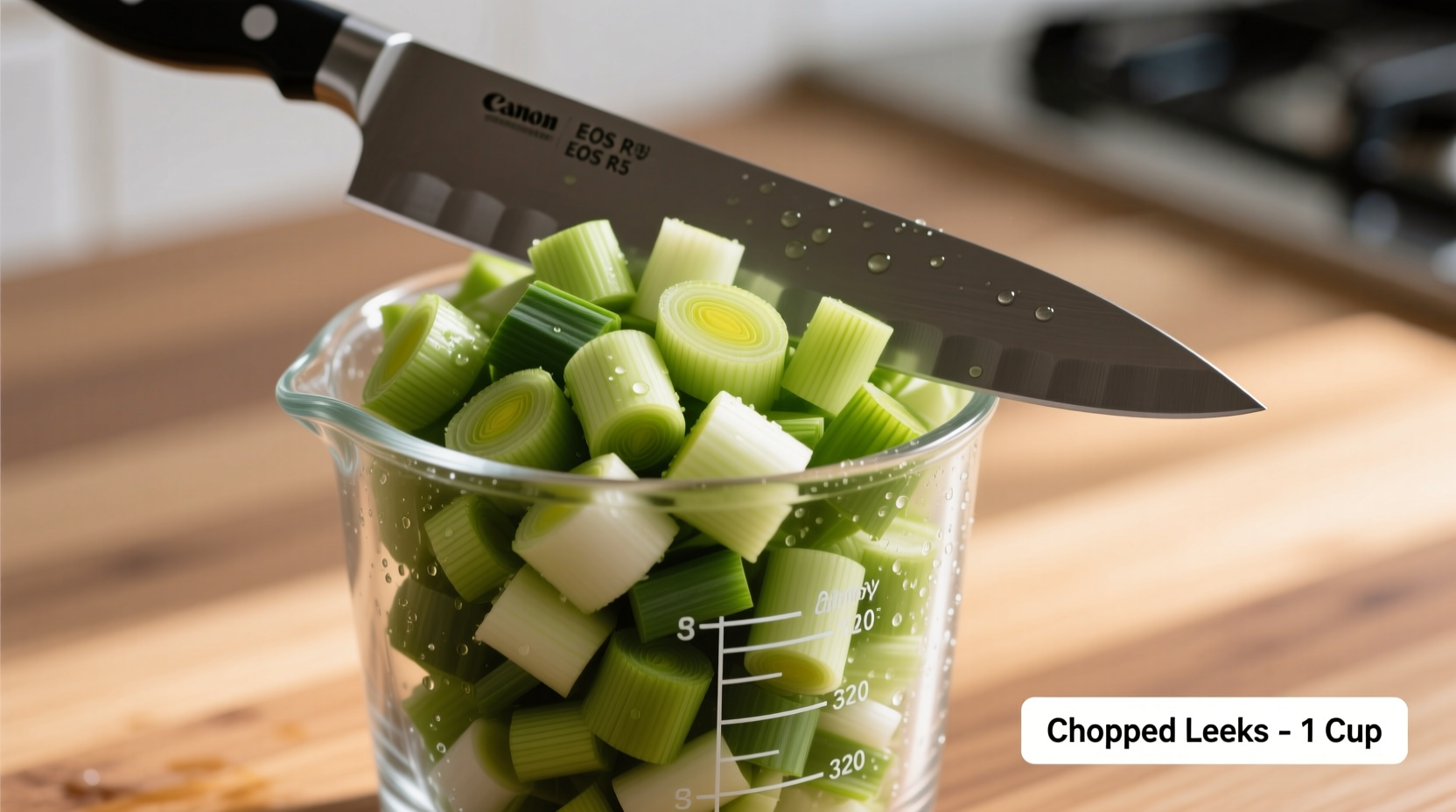 How Much of a Leek to Use: Precise Measurements for Cooking
Just put the root end in a glass of water, change the water every day, and watch new green shoots appear. It’s like having a magic trick in your kitchen. You’ll get a second harvest of fresh leek greens for free.
And if regrowing isn’t your thing, don’t worry. The root end is really too tough to eat, so that’s the one part you should confidently toss. Unless you’re making a super-stock, then everything goes in the pot.
The Practical Breakdown: Your Cheat Sheet
So how much of the leek do you actually use? All of it, just in different ways. The white and light green parts are for your main dish—sauté, roast, or slice them raw.
The dark green tops are for flavoring—stock, braising liquids, or grilling. The little root end is either compost or a fun science experiment. It’s not as complicated as you feared, right?
Let’s be real: you’ve probably been wasting a good 40% of your leeks without realizing it. That’s like buying a bag of avocados and only using the pit. Don’t let the supermarket win.
Why This Matters (and Why It’s Kind of Cool)
Knowing how to use the whole leek makes you feel like a kitchen ninja. It’s not just about saving money (though that’s nice). It’s about reducing waste and unlocking flavors you didn’t know you had.
Think of it like this: a leek is not a one-note vegetable. It’s a layered ingredient that gives you different textures and tastes depending on where you cut. The bottom is sweet and delicate; the top is bold and savory.
Next time you’re at the store, grab an extra leek just to experiment. Try grilling the top, or making a stock with the scraps. You might just surprise yourself with how good a “waste” part can taste.
And hey, if all else fails, remember this simple rule: if it’s green and tough, save it for soup. If it’s pale and tender, eat it now. You’ve got this.
