How Much Dried Thyme Equals A Sprig

You’re in the middle of making a cozy, slow-simmered stew—the kind that makes your whole kitchen smell like a French countryside cottage—and you grab that trusty old recipe. I...

You’re in the middle of making a cozy, slow-simmered stew—the kind that makes your whole kitchen smell like a French countryside cottage—and you grab that trusty old recipe. It says, with infuriating vagueness: “Add 1 sprig of fresh thyme.” You look at your spice rack. You have dried thyme. And now, a tiny existential crisis begins. How much dried thyme equals a sprig? Don’t worry, friend. We are about to solve this botanical math problem together, and I promise it’s easier than calculating a tip on a napkin.
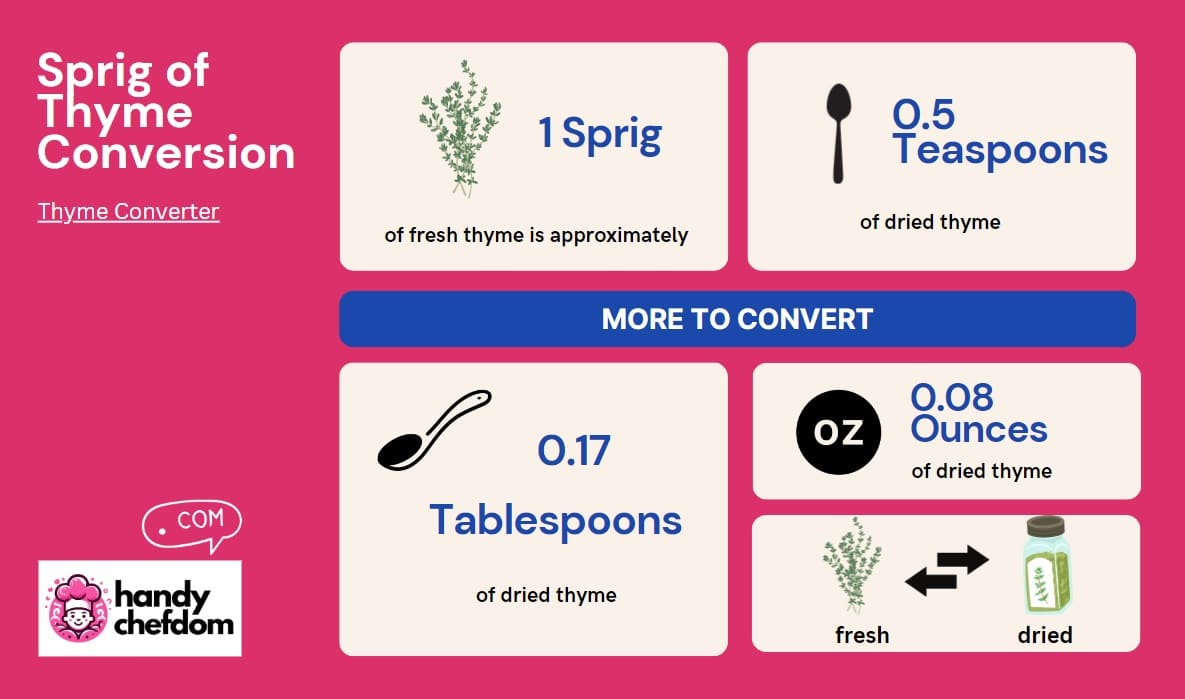
Let’s start with the basics. A “sprig” of fresh thyme isn’t a precise unit, like a cup or a tablespoon. It’s more of a vibes-based measurement. Typically, a sprig is a single stem of thyme, usually 3 to 4 inches long, covered in those tiny, fragrant leaves. But here’s the cheat code: the amount of dried leaves you’ll get from that sprig is about ¼ to ½ teaspoon. Yes, that’s it. So, next time a recipe calls for one sprig, you can confidently toss in a hefty pinch of the dried stuff. If you’re a rule-follower, go with ½ teaspoon. If you’re a rebel who lives on the edge—and I love that for you—start with ¼ teaspoon and taste as you go. (Pro tip: You can always add more, but you can’t un-add dried thyme. It’s like glitter that way.)
Now, why does this matter? Because freshness and dried herbs are not the same beast. Dried thyme is more concentrated than fresh. It’s like the super-condensed, espresso-shot version of the gentle, leafy latte that is fresh thyme. That’s why the conversion isn’t 1:1. If you used a whole tablespoon of dried thyme when a sprig was called for, you’d end up with a dish that tastes like you’re chewing on a Mediterranean pine forest—and not in a good way. So, respect the ratio. (Your taste buds will send you a thank-you note.)
Must Read
But wait, there’s a twist! Timing matters, too. Fresh thyme is delicate; you usually add it near the end of cooking to keep its bright, floral notes alive. Dried thyme, on the other hand, is a tough little soldier. You want to add it early in the cooking process—like, with the onions or the olive oil—so it has time to rehydrate and release its oils into the sauce. Think of it as giving the dried leaves a spa day in a warm bath. They’ll plump up, they’ll relax, and they’ll flavor everything beautifully.
What about that classic kitchen scenario: the recipe says “thyme, to taste”? Oh, I see you, recipe writer. You’re a real poet. For that, I say: start with a single pinch of dried thyme (about ⅛ teaspoon), stir, taste, and then channel your inner Roman chef. If it wants more, give it more. Trust your nose: dried thyme smells earthy, slightly floral, and a little bit like a cozy sweater. If you can smell it clearly, you’ve added enough.
 How Much Dried Thyme Equals 2 Sprigs? #1 Best Answer
And listen, I know we’re all busy. Sometimes you don’t have fresh thyme, and that’s okay. Life is not a cooking competition show with a gong. You are doing great. The fact that you’re even wondering about this means you care about flavor, which already makes you a better cook than someone who just dumps in a whole jar blindly. So go forth, convert those sprigs to teaspoons with confidence, and know that the thyme-fairy godmother is smiling upon you.
Remember: Cooking is about love, not perfection. Whether you use a sprig, a pinch, or a generous whisper of dried thyme, your dish will be delicious because you made it. So sprinkle, laugh at the confusion, and eat something wonderful. You’ve got this, you beautiful kitchen magician.