How Much Does A Tiger Cost

So, you’re curious about the price tag on a tiger? Maybe you’ve watched one yawn on a nature documentary and thought, “I could use a little more stripes and majesty in my life...
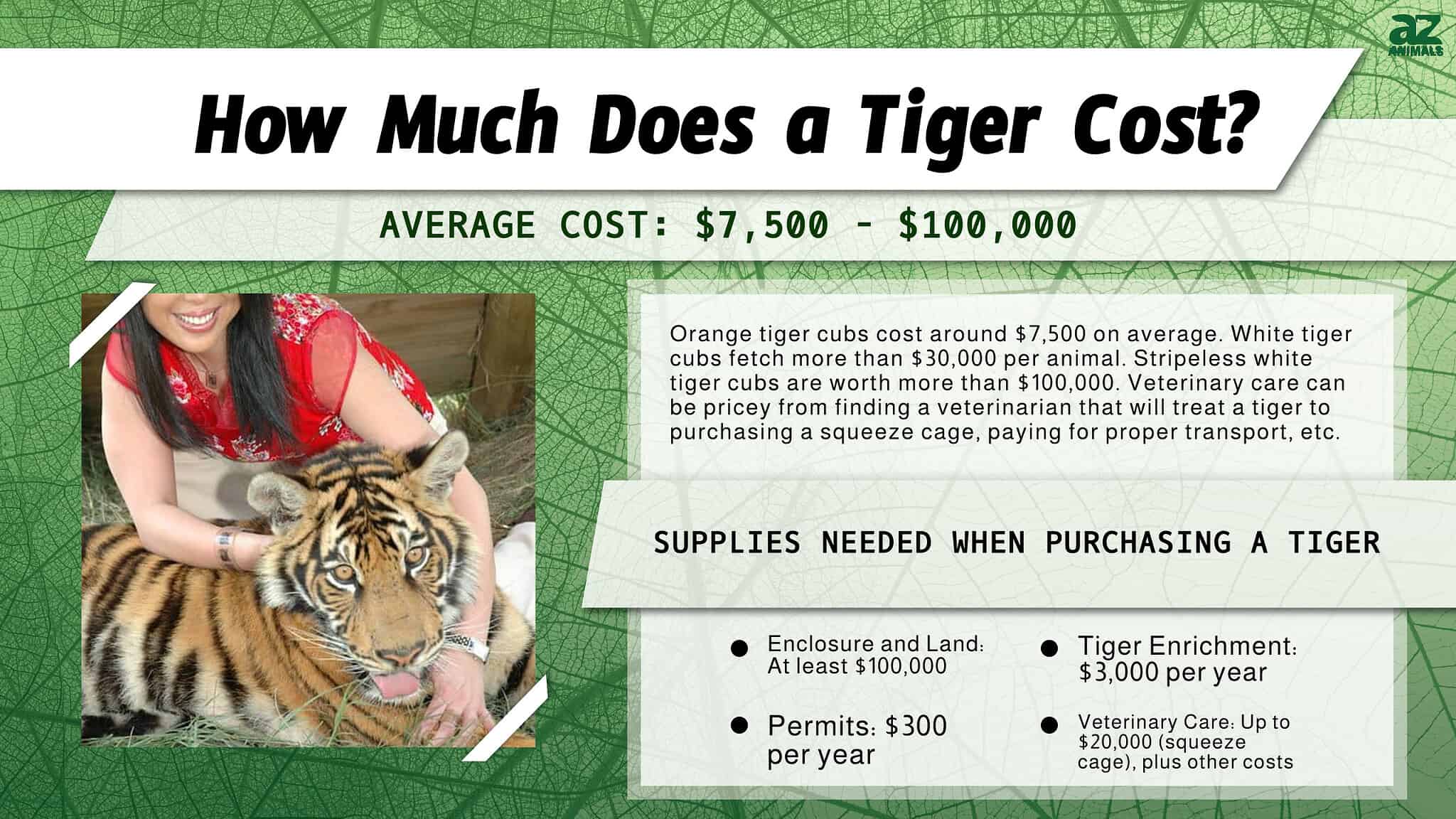
So, you’re curious about the price tag on a tiger? Maybe you’ve watched one yawn on a nature documentary and thought, “I could use a little more stripes and majesty in my life.” It’s a perfectly delightful question, one that instantly makes life feel more adventurous. Let’s dive into the wild economics of owning a creature that could literally eat your sofa.
The Shocking Price Tag (It’s Not What You Think)
First, let’s talk about the actual purchase. Exotic animal dealers can list a tiger cub for anywhere from $1,000 to $10,000, depending on the breed and rarity. But here’s the first gut-check: the price is the least expensive part. You’re not buying a pet; you’re buying a 600-pound apex predator with an attitude.
And if you find a “bargain” tiger for a few hundred dollars? That’s probably a scam, or a sick animal, or a smuggled cub that’s illegal to even touch. In that case, the real cost might be a hefty federal fine or a felony. Not exactly the fun, inspiring vibe we’re going for here.
Must Read
The Real Cost: A Tiger’s Monthly Grocery Bill
Let’s talk breakfast. A tiger eats around 10 to 20 pounds of meat per day. That’s not kibble—that’s high-quality raw beef, chicken, or specially formulated meat. Your monthly food bill alone hits $1,500 to $3,000. For one cat. That’s more than most people pay for their rent.
Then you need a veterinarian—a specialized vet who actually knows how to handle a tiger. Annual check-ups, vaccinations, and emergency tooth surgeries can run $5,000 to $15,000 a year. And if your tiger decides to swallow a shoe? That’s a surgical bill that could make your eyes water.
The Habitat: You Can’t Just Use a Litter Box
Your backyard is not going to cut it. Tigers need a massive, secure enclosure—think a concrete moat, 12-foot fencing, and climate control. Building this zoo-quality habitat costs $50,000 to $100,000 upfront. Plus, you’ll need a permit from your local government (most places say no), and liability insurance will set you back $5,000 or more annually.
Oh, and your tiger will eventually destroy that enclosure. They scratch, climb, and break things on purpose—because they’re bored. Bored tigers get expensive. But here’s the real kicker: the psychological cost of keeping a wild animal in captivity is enormous. They need enrichment, space, and a life that’s not just a concrete box.
The Hidden Price: Your Freedom and Safety
Let’s be honest: you can’t take a tiger for a walk in the park. You can’t bring it to the vet in your sedan. It will see your cat or small dog as a snack. And the moment it escapes—which it will, because it’s a tiger—you’ll be front-page news, and your face will become the internet’s favorite meme. Not the inspiring kind.
 How Expensive is it to own a Tiger? - YouTube
In fact, over 20 people have been killed by captive tigers in the United States since 1990. That’s not a pet; that’s a life-or-death decision. The price of a tiger isn’t just money—it’s your safety and your sanity.
Why This Topic Makes Life More Fun (Seriously)
But here’s the magical twist. You don’t actually need to own a tiger to experience its majestic power. In fact, the sheer cost of keeping one is a hilarious, sobering reality check that makes you appreciate other things. Instead of buying a tiger, you could adopt a rescue dog, sponsor a wild tiger through the World Wildlife Fund, or plan a safari trip.
Spending $100 to adopt a tiger in the wild gives you a photo, a plush toy, and the knowledge that your money actually helps the species survive. For the price of a single month of feeding a captive tiger, you could take a once-in-a-lifetime vacation to India and see one in its natural habitat. That is a memory you can truly cherish.
The Uplifting Note: Learning is the Real Fun
So, how much does a tiger cost? The answer is way more than you have, and way more than you should ever pay. But the question itself is brilliant—it shows you have a curious, adventurous soul. You wanted to know something wild and rare, and now you know the truth.
Let this inspire you: The most expensive things in life aren’t always the best. The best tigers are the ones you encounter through a camera lens, a book, or a respectful distance. Go learn about big cats, support conservation, and maybe buy yourself a really nice glow-in-the-dark tiger poster. Your wallet—and your heart—will thank you.
And hey, if you ever get a chance to see a tiger in the wild, you’ll know the real prize: that moment of awe costs nothing, and it’s worth everything.
