How Many Banks Are There In The Us

So, you’re wondering: how many banks are there in the US? It sounds like a dry, dusty trivia question, right? But stick with me—because the answer is actually a delightful lit...
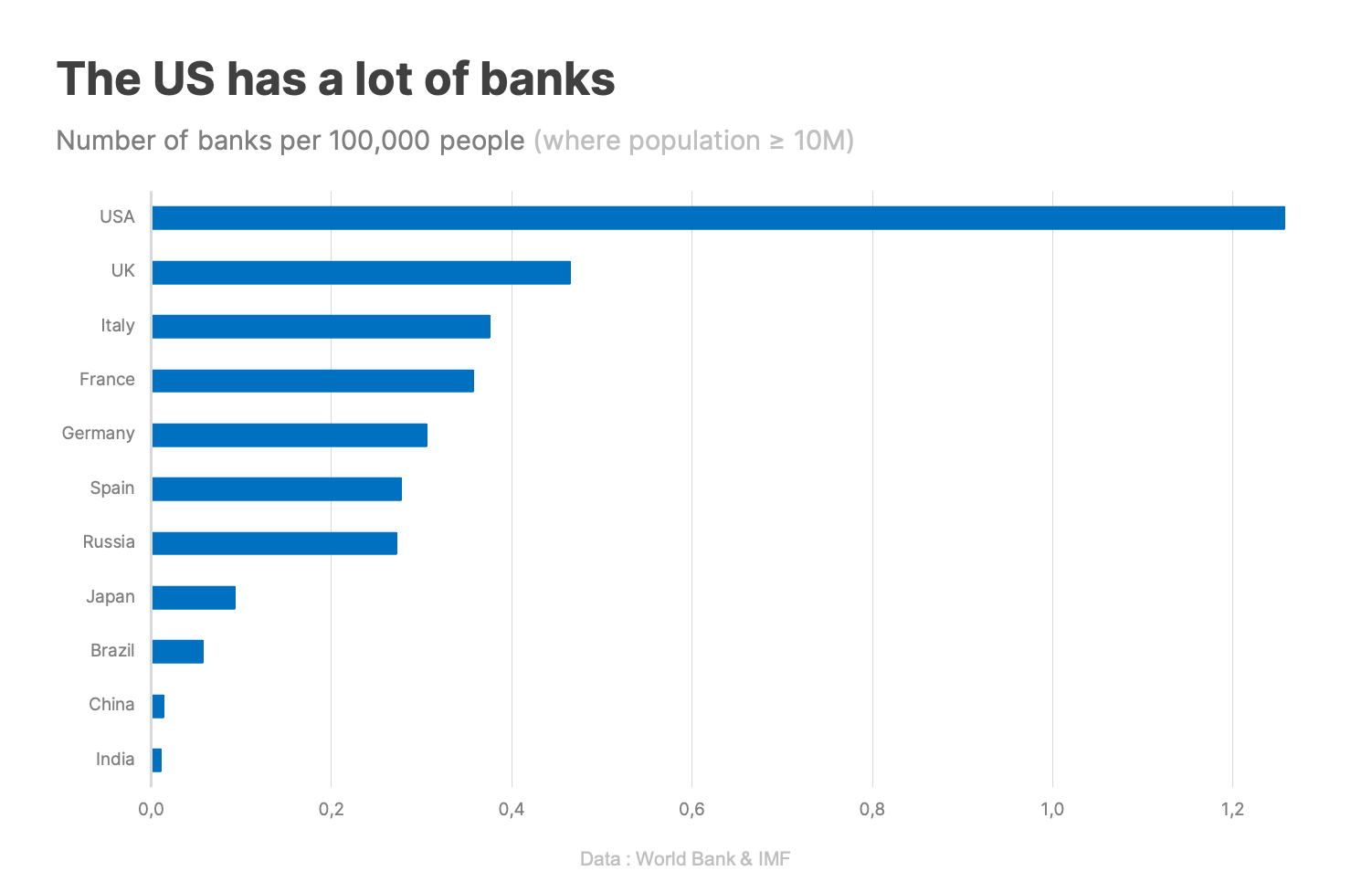
So, you’re wondering: how many banks are there in the US? It sounds like a dry, dusty trivia question, right? But stick with me—because the answer is actually a delightful little window into American weirdness, history, and our love affair with choice. Let’s dive into the numbers, and trust me, it’s more fun than balancing your checkbook.
The Big, Wild Number
Okay, brace yourself: as of early 2024, there are roughly 4,100 commercial banks in the United States. And that’s not even counting credit unions (another 4,800 of those) or savings institutions. So if you lump everything together, you’re looking at around 9,000 distinct financial institutions. That’s nine thousand places where your money can take a nap.
For perspective, Canada—a similarly wealthy, sprawling country—has about 30 big banks. Thirty! We have roughly 300 times more banking choices. Why? Because we Americans love our local flavor. We want a bank on every corner, preferably one that knows our dog’s name.
Must Read
Why So Many? (It’s Not Just Greed)
This abundance is actually a wild legacy of American history. In the 1800s, the federal government mostly let states charter banks willy-nilly. There were thousands of tiny, “wildcat” banks, each printing its own money. It was chaos, sure, but it planted a seed: we never liked the idea of a single, central monolith.
Even after the Great Depression and mergers, we still clung to the community bank model. Today, over 95% of US banks have less than $1 billion in assets. These are the little guys with the smiley tellers and the free lollipops. They’re the ones who actually remember your overdraft was an accident.
The big national ones (Chase, Bank of America, Wells Fargo) get all the headlines, but they are just the shiny tip of a very, very deep iceberg. The real story is in the thousands of tiny names you’ve never heard of: The First State Bank of Smallville, or Prairie Community Bank.
Wait, Isn’t That Number Shrinking?
Here’s the twist: the number of banks is actually falling. In 1980, we had nearly 15,000 banks. We’ve lost about two-thirds of them in four decades! That sounds scary, but it’s mostly smart mergers. Tiny banks join forces to afford better tech and cybersecurity—which is good for your money.
So while the count is dropping, the spirit isn’t dying. New ones are still being born: “de novo” banks open every year, often founded by frustrated locals who say, “Our town needs a bank that actually cares.” It’s a beautiful, stubborn cycle.
Plus, we now have online-only banks and neobanks (like Chime or Ally) that don’t even show up on the old list. So the real number of places you can stash your cash is closer to 10,000 if you squint.
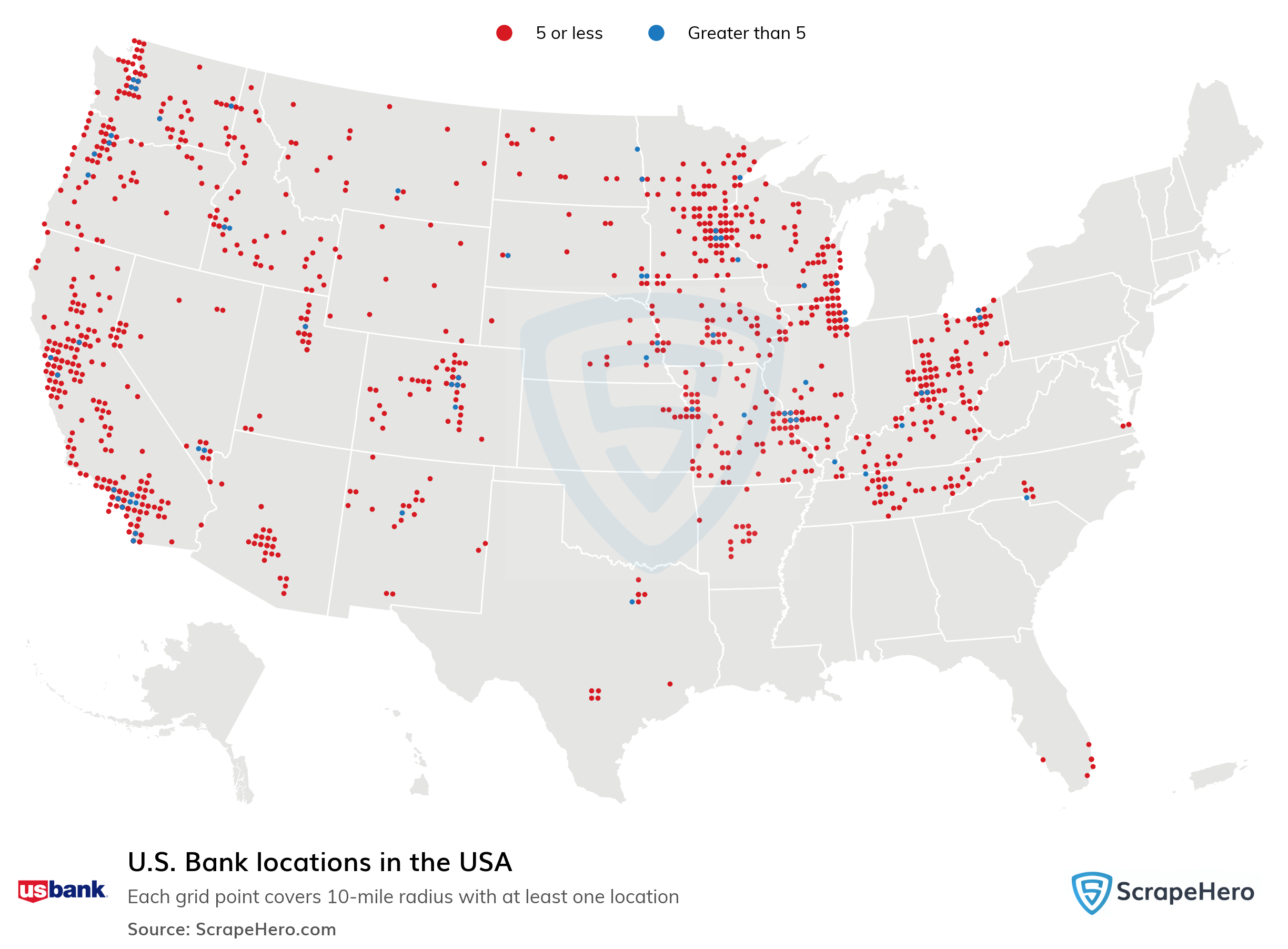 10 Largest banks in the United States in 2026 | ScrapeHero
What This Means for You
This massive number means you have power. You aren’t chained to a mega-bank with a terrible app. You can pick a credit union that gives you a Christmas card. You can choose a small bank that sponsors your kid’s soccer team. You can vote with your dollar, literally.
It also makes personal finance a little adventure. Ever walked into a bank and seen a framed photo of the founder from 1887? That’s history you can touch. Every bank has a story, and you get to be the one who says, “Yes, I want my money in that story.”
So the next time someone asks you, “How many banks are in the US?,” you can smile and say, “Enough to make Monopoly look small—about 4,100 and counting.” And you’ll know it’s not a boring statistic. It’s a living, breathing map of American independence.
The Uplifting Finale
Here’s the inspiring part: every single one of those banks was started by a person who believed in possibility. They saw a community that needed trust, a loan for a bakery, or a safe place for a widow’s savings. Banking isn’t just about numbers—it’s about people betting on people.
So the next time you swipe your card or walk into a lobby, remember: you are part of a wild, messy, beautiful experiment called decentralized finance. You are the customer who gets to choose from nearly ten thousand flavors. And that choice? It’s a little daily act of freedom.
Now go learn something fun about your own bank’s founding story. I bet it involves a loan against a horse or a handshake that started an empire. And if it doesn’t? Maybe you just found a reason to find a new one—because in the land of 4,100 banks, there’s always a better story waiting for you.
