How Many Apples Are In A Bushel

Welcome to the wonderfully crunchy world of apple measurements, where bushels aren't just a term from dusty farming manuals, but a secret key to smarter shopping, better bakin...

Welcome to the wonderfully crunchy world of apple measurements, where bushels aren't just a term from dusty farming manuals, but a secret key to smarter shopping, better baking, and even impressing your friends at the farmer’s market. Have you ever stood before a towering pile of apples at an orchard, wondering exactly how many you need for that famous pie recipe that calls for “a bushel”? You’re not alone. Knowing the answer transforms a simple trip to the grocery store into a strategic food adventure. The purpose of understanding bushels is gaining a superpower: the ability to buy in bulk without waste, plan epic canning sessions, and understand the true value of your fruit. The advantages are real—saving money, reducing trips to the store, and always having enough crisp, tart apples for a spontaneous crisp or a batch of homemade applesauce.
So, how many apples actually reside in one of those classic woven baskets? The short, satisfying answer is: about 125 medium-sized apples. But here’s where it gets fun—this number is a living, breathing estimate, not a rigid law. A bushel is a volume measurement, equal to 8 dry gallons or roughly 1.25 cubic feet of space. That means the exact count depends entirely on the size of your apples. Think of it this way: if you’re using tiny, tart Crabapples, you might cram in 300 or more. But if you’re handling gigantic, juicy Honeycrisps or Mutsu apples that are nearly the size of a softball, you’re looking at only about 80 to 90 per bushel. A good rule of thumb for standard grocery store apples like Gala, Fuji, or Granny Smith is 48 to 50 pounds of fruit, which, at a typical 6-ounce average apple, gives you that lovely 125 count. So when a recipe says “a bushel,” you’re really getting a fun little math puzzle!
Let’s take this number out for a spin with some creative, real-world scenarios. Imagine you’ve just declared an “Applepalooza” weekend at your home. You buy a bushel of mixed varieties (about 125 apples). What can you do? First, you can make seven to nine classic 9-inch apple pies, since each pie needs roughly 6 to 8 cups of sliced apples (about 3–4 pounds, or 12–16 apples per pie). That’s a pie for every day of the week, plus two for the freezer! Alternatively, you could press them into a glorious fall-harvest cider. A bushel of apples yields about 2 to 3 gallons of fresh, unpasteurized cider. Picture the delight: inviting friends over for a cider-pressing party, where everyone takes turns cranking the press and sipping the sweet, nectar-like result. Or, use half the bushel to dehydrate apple rings for chewy, healthy snacks that last for months, and the other half to make a massive batch of chunky applesauce—perfect for gifting in jars during the holidays. The bushel isn’t just a number; it’s a party starter.
Must Read
For those who love precision, here’s a practical breakdown to visualize your bushel. A standard half-bushel basket easily fits in one arm, while a full bushel requires a good two-handled basket or a sturdy, large box. When shopping at a farm stand, don’t be shy—ask the farmer, “Are these apples mostly large or small today?” because it directly impacts your count and cost per apple. A pro tip: a bushel of smaller apples might be a better deal for baking (since you get more individual pieces), while larger apples are best for eating whole or making impressive caramel apples. Also, remember that weight is your most reliable friend. Since water content varies, a bushel of juicy, fresh-picked apples might weigh up to 52 pounds, while a drier variety from storage could be 48 pounds. Use a scale if you can, and always estimate on the high side if you’re planning a large canning project.
If you want to try this bushel-life for yourself, start with a simple taste test and plan. Buy a half-bushel first (about 60 apples). Immediately sort them: set aside the blemished ones for immediate sauce or baking; use the perfect specimens for eating; and store the rest in a cool, dark basement, garage, or root cellar. Don’t wash them until you use them—moisture invites mold. Wrap each apple loosely in newspaper if you’re storing them together; this prevents the dreaded “one bad apple” chain reaction. For a creative twist, organize a bushel-exchange party with neighbors—each person buys a bushel of a different variety (say, one of tart Granny Smiths, one of sweet Gala, and one of spicy Jonagolds), then you all swap half your bushels. Suddenly, you have a three-variety tasting assortment for the same price as one bushel. It’s a low-cost, high-flavor approach to culinary exploration.
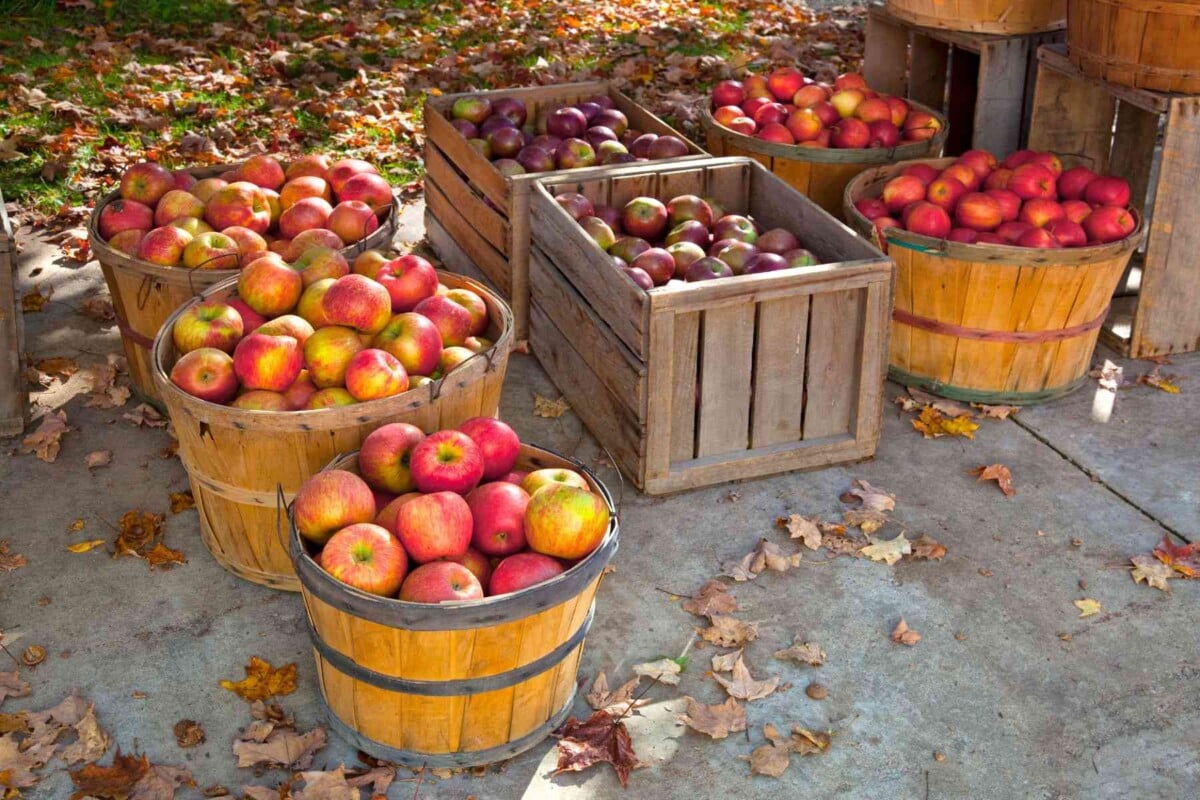 How Many Pounds In A Bushel Apples | Detroit Chinatown
Embracing the bushel is also about learning to work with seasonal abundance. Instead of feeling overwhelmed by 125 apples, break it down into daily micro-projects. Day one: bake an apple crisp (uses 6–8 apples). Day two: make a batch of slow-cooker apple butter (uses 20 apples). Day three: slice and freeze 30 apples for future smoothies or pies. Day four: core and dry apple rings for a week of healthy lunches (uses 25 apples). See? In just four small sessions, you’ve used 80+ apples, and you’ve still got a basket of perfect eaters left. The key is to never let the bushel intimidate you. Think of it as your personal apple library—you don’t have to read (or eat) every book at once. Instead, you check out a few chapters at a time, savoring the season’s best without waste or panic.
In the end, the humble bushel teaches us a delicious lesson: big numbers can be fun, not frightening. Whether you’re an ambitious baker, a cider enthusiast, or just someone who loves the taste of a perfect, crisp apple straight from the tree, knowing your bushel count arms you with confidence. The next time you see a sign that says “Apples: $28 per bushel,” you’ll smile, knowing you’re getting roughly 125 chances to create something wonderful. So go ahead—buy that bushel. Make the pies, share the cider, dry the rings, and savor the alchemy of turning a simple number into a season of unforgettable, apple-filled moments. The math is easy, the rewards are sweet, and the adventure is yours to take a big, crunchy bite out of.
:max_bytes(150000):strip_icc()/how-much-is-a-bushel-1389308-FINAL-5c5c913646e0fb0001849c38.png)
