How Long Should A Lasagna Rest

Let’s be honest—lasagna is the undisputed king of comfort food. That glorious stack of pasta, rich sauce, creamy béchamel, and melty cheese is what we dream about after a long...

Let’s be honest—lasagna is the undisputed king of comfort food. That glorious stack of pasta, rich sauce, creamy béchamel, and melty cheese is what we dream about after a long week. But here’s the dirty little secret no one tells you: pulling it straight out of the oven is a total betrayal of everything that makes it great. That’s right, the hardest part isn’t the layering—it’s the waiting. So, how long should a lasagna rest? The sweet spot is 15 to 20 minutes, minimum. This isn’t a suggestion; it’s a rule carved into the stone tablet of Italian-American cooking. Skipping this step is like walking out of a movie before the final scene—you miss the whole point.
Why does this matter for your family dinner? Simple—resting is a structural miracle. When lasagna comes out of the oven, it’s a chaotic, boiling-hot lava flow of liquid. The cheese is sliding off, the sauce is pooling, and trying to cut a clean square is like performing surgery on a slip-and-slide. By letting it sit, you allow the starches in the pasta and the proteins in the cheese to relax and set. This means that when you slice into it, you get a perfect, tidy piece that holds its shape. For a stressed parent cooking for a crowd, that single, beautiful square means less mess, less cleanup, and more family high-fives at the table instead of frustrated sighs over a sloppy plate.
But it’s not just about looks—it’s about flavor and safety. Think about it: a molten-hot lasagna burns your mouth immediately. You can’t taste the garlic, the basil, or the slow-cooked tomatoes. By resting, the heat distributes evenly throughout the dish, bringing the internal temperature down from “lava” to “perfectly warm and comforting.” Your taste buds actually get to register the layers of flavor. For community potlucks or church suppers, this is a game-changer. No one wants to be the person who serves a dish that scalds the roof of the mouth. A rested lasagna is a community-friendly lasagna—it invites conversation, not frantic gulps of water.
Must Read
Let’s paint a real-life picture. Imagine it’s Saturday night. Your family is gathered, the kids are starving, and the smell is intoxicating. You pull the pan out, and everyone is grabbing forks. Resist the urge. I once watched my friend Jenna serve her lasagna immediately because her husband was impatient. The result? A sad, soupy mess that looked like a cheese tsunami hit a pasta village. The next weekend, she let it rest for exactly 18 minutes (she timed it on her phone). The slices were crisp-edged, tall, and glorious. Her kids actually took pictures of their plates. That’s the power of patience—it turns a chaotic meal into a core memory.
Another example: local sports team dinners. You know the drill—everyone brings a dish, and it’s chaos. My neighbor, a coach, always brings lasagna. But he’s smart: he makes it the night before, rests it, then refrigerates it. On game day, he rewarms it and lets it rest again before serving. His lasagna is legendary because it’s never runny, never burnt, and always feeds a hungry team with zero drama. That rest time transforms a simple casserole into a community anchor—a dish that bonds tired players and proud parents.
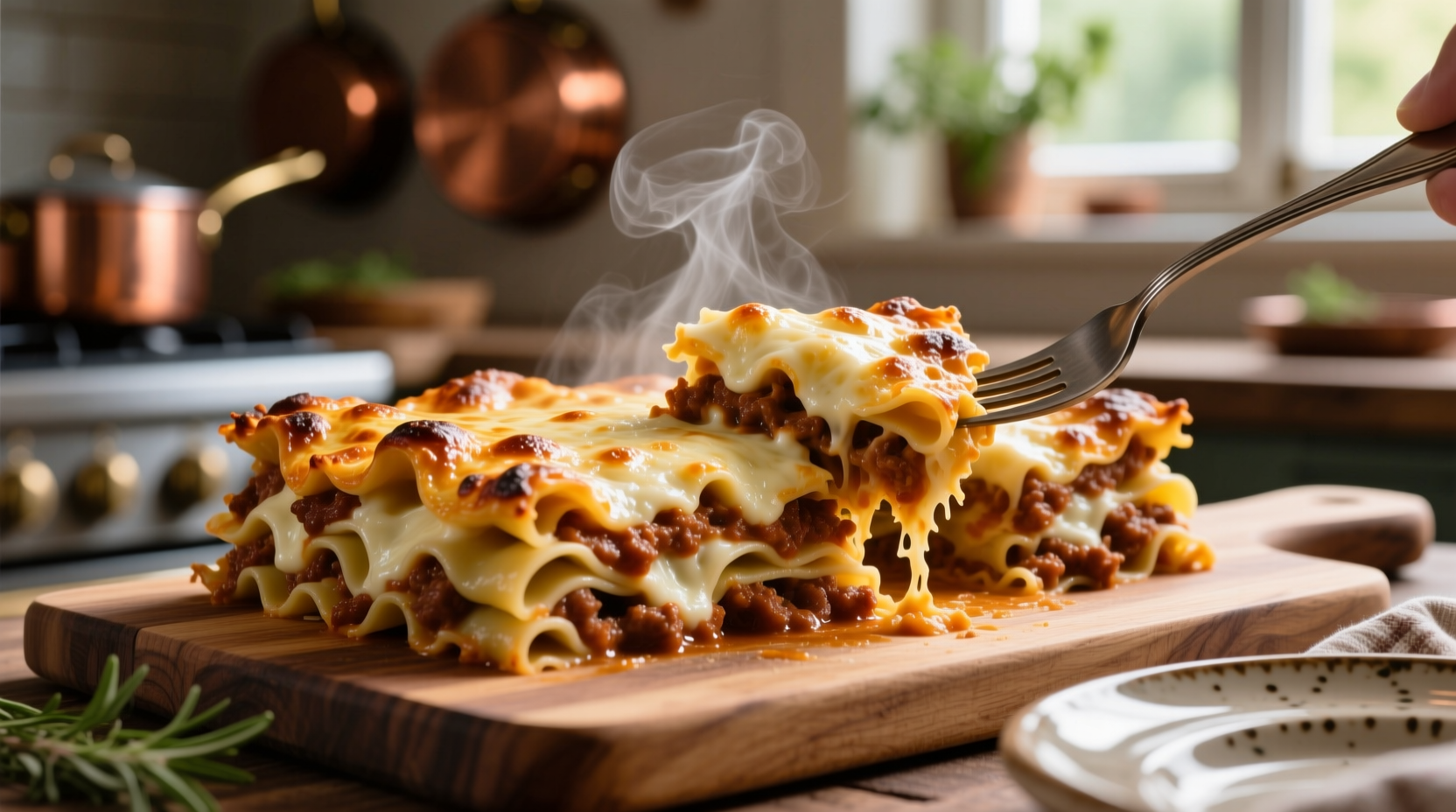 Lasagna Cooking Time: 45 Min Bake + 15 Rest (Total 90 Min)
So, how do you actually do this without going crazy? First, set a timer on your phone for 15 minutes the moment the lasagna comes out of the oven. Do not touch the pan. Let it sit on the counter, loosely tented with foil to keep the top from drying out. If you’re serving a family, use that time to set the table, pour drinks, and calm the hungry kids. For a crowd, give it a full 20-25 minutes if it’s a deep dish. Pro tip: cover the pan with a clean kitchen towel instead of foil—it absorbs steam and keeps the top crust intact. And if you bake it ahead of time, let it cool completely, refrigerate, then reheat at 350°F for 20 minutes with a fresh rest of 10 minutes. Your future self will thank you.
And let’s talk about those precious first forks. When you finally dig into a rested lasagna, you’ll notice something magical: the layers cling to each other. The ricotta doesn’t slide off, the meat sauce stays put, and the cheese pulls in long, beautiful strings. This isn’t just dinner—it’s a celebration of physics and love. For a family on a hectic Tuesday, that moment of unity around a clean, hearty slice is like a reset button. For a community gathering, it’s the dish that gets the most “Can I get the recipe?” whispers. Resting isn’t a delay—it’s an act of care for the people you’re feeding.
In the end, letting your lasagna rest is the cheapest upgrade you can make. It costs nothing, takes no extra ingredients, and only requires a little willpower. The reward? A dish that serves with grace, tastes more complex, and makes you look like a kitchen wizard. Whether you’re feeding your own small clan or a whole block party, that 15-minute pause is what separates a good lasagna from an unforgettable one. So next time you slide that hot pan onto the counter, take a breath, tell everyone to chill, and watch the magic happen. Your lasagna—and the people who love it—will be better for it. Because at the end of the day, great food isn’t just about the recipe; it’s about the timing.
