How Long Does Flu Virus Take To Incubate

Welcome to the fascinating world of the “flu incubation period”—a sneaky, silent countdown that happens inside your body before you even feel a sniffle. Think of it as the vir...
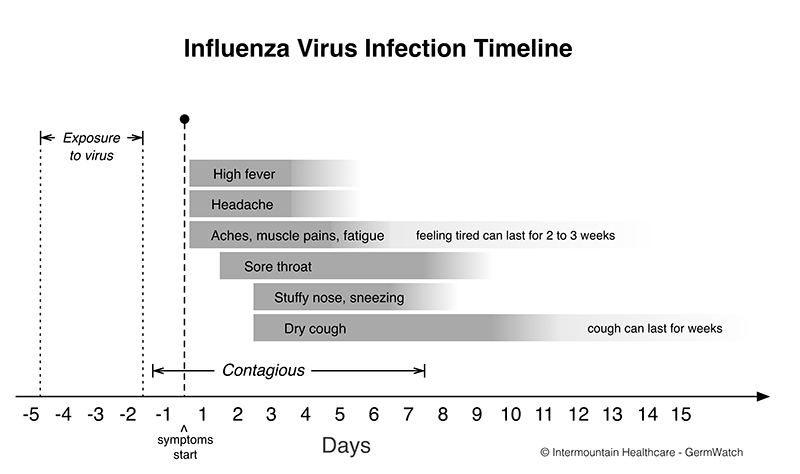
Welcome to the fascinating world of the “flu incubation period”—a sneaky, silent countdown that happens inside your body before you even feel a sniffle. Think of it as the virus’s secret preparation phase, where it’s quietly setting up its camp before launching a full-scale assault on your immune system. Understanding this incubation period isn’t just fun trivia; it’s your superpower for avoiding infection, protecting your family, and knowing exactly when to cancel that dinner party. By learning this timeline, you gain a predictive edge—you’ll know why you might have felt fine yesterday but woke up feeling like a truck hit you today. So, let’s turn the clock on this microscopic intruder and see how long it takes to go from “just exposed” to “full-blown misery.”
The flu incubation period—the time between when the virus enters your body and when symptoms first appear—is remarkably short and sneaky. On average, it takes about 1 to 4 days, with the most common sweet spot being 2 days after exposure. Imagine this: you shake hands with a friend who’s unknowingly contagious, then rub your eyes an hour later. That night, the virus is already hijacking your cells, replicating like a photocopier running wild. But here’s the tricky part—you feel perfectly normal during this entire incubation. You’re a walking time bomb, but a silent one. This is why the flu can spread so fast in offices or schools: people have no idea they’ve been “primed” until their throat starts to tickle. The incubation period is the virus’s stealth mode, and knowing its length helps you connect the dots: “Ah, I was exposed on Monday, so Wednesday is my danger day.”
Let’s get creative with a fun mental exercise. Imagine you’re a detective, and your body is a crime scene. The flu virus is the culprit, and the incubation period is its alibi window. For example, you wake up with fever and chills on a Friday morning. Your job is to backtrack to the “crime” (exposure). Count backward 2 days—that’s Wednesday. Who did you see? Where did you go? Maybe you shared a drink at a Wednesday night trivia night, or your coworker coughed near your desk. That’s your golden hour of exposure. Now, here’s a wild example: if you’re exposed to a particularly aggressive flu strain, the incubation can be as short as 18 hours—like a fast-food version of illness. On the flip side, some strains (or your own super-immune system) can stretch it to a full 4 days, leaving you guessing. This flexibility is why the flu feels so unpredictable; your body’s unique chemistry and the virus’s “mood” interact like a secret handshake.
Must Read
Here’s where it gets even more practical: the contagious timeline overlaps with the incubation period in a maddening way. You are actually contagious 24 hours before you show any symptoms. Picture this—you’re in the “incubation zone,” feeling fine, but you’re already shedding virus particles into the air when you talk or sneeze near someone. This is called presymptomatic spread, and it’s why the flu is so efficient. If your incubation period is 2 days, you’ve been contagious since day 1.5 without knowing it! This means that the person who gave you the flu probably didn’t look sick at all—they were in their own incubation period. So, if you feel the tiniest twinge of a sore throat or a vague sense of fatigue, assume you’re already contagious and start masking up at home. Don’t wait for the fever to strike—the virus is already high-fiving your cells.
Now, let’s talk about your action plan to hack this incubation window. First, count the days after any high-risk event (like visiting a crowded mall or sitting next to a sniffling passenger on the bus). Mark day 1 as exposure day. On days 2 and 3, become a hygiene ninja: wash your hands obsessively, avoid touching your face, and boost your immune system with sleep and vitamin C. Second, consider the “48-hour rule” for taking antiviral drugs like Tamiflu. If you know you were exposed (e.g., your kid tested positive for flu), talk to your doctor within 48 hours of that exposure—not after symptoms start. Antivirals work best during the incubation period because they interrupt the virus’s replication party before it crashes your immune system. Third, keep a symptom log. For instance, if you feel a scratchy throat exactly 36 hours after a party, you can calculate that the incubation was short, meaning the virus was super potent. This information helps you warn others: “Hey, I got it fast—everyone I was near should monitor themselves for the next 48 hours.”
 Understanding The Incubation Period Of A Cold Or Flu | MedShun
Let’s explore a real-world creative scenario. Imagine you’re hosting a holiday gathering. If someone with a mild cough shows up, they might be in the late incubation phase—contagious but not yet sick. To protect your guests, open windows for ventilation, set up hand sanitizer stations, and avoid sharing serving spoons. You can even play a fun game of “spot the symptom” without being rude: offer everyone a squirt of nasal saline spray as a joke (it actually helps reduce viral load!). If you later learn that someone at the party tested positive for flu the next day, you now know that their incubation ended about 2 days after the party. You and your other guests should then monitor for symptoms starting 24 hours after the party and continuing for up to 5 days. This is like a flu detective kit: your calendar and a thermometer become your best friends.
Finally, here’s the top practical tip that ties it all together: assume you’re in the incubation period between November and March. Yes, every single day during flu season, treat yourself as potentially in that silent window. Why? Because the incubation period is invisible, and you can’t always know when you were exposed. This mindset shifts your behavior from reactive (“I feel sick, so now I’ll stay home”) to proactive (“I might be brewing the flu, so I’ll wear a mask in public and skip the gym”). It also makes you a community champion—by avoiding close contact when you feel fine, you break the chain of spread. Remember, the incubation period is the flu’s secret weapon, but knowledge is your shield. Next time you hear someone say, “I was fine yesterday!” you’ll smile, knowing that yesterday’s fine was just the virus’s opening act. Stay curious, stay cautious, and let the timeline be your guide.
