How Long Do Plums Take To Ripen At Home

So, you’ve brought home a bag of rock-hard plums. Now what? You stare at them, wondering if you’ve accidentally bought decorative fruit. Will they ever soften up? Don’t worry...

So, you’ve brought home a bag of rock-hard plums. Now what?
You stare at them, wondering if you’ve accidentally bought decorative fruit. Will they ever soften up? Don’t worry—it’s totally normal. Plums taken home from the store are almost always picked firm for travel. The good news? They will ripen, and you get to be the fruit wizard who makes it happen.
The short answer, for the impatient among us
At room temperature, most plums take 2 to 5 days to ripen. Yes, that’s a window wide enough to drive a truck through. Why the range? It depends on how hard they were when you bought them and the variety of plum you’re dealing with. A rock-solid green plum might need the full five days, while a slightly yielding one could be ready in 48 hours.
Think of it like waiting for a package to arrive. You check it every day, and then—bam—it’s there. Except this package is delicious and you get to eat it.
Must Read
What’s actually happening inside that little purple globe?
Ripening is basically a fruit’s sweet, juicy version of a makeover. The starches turn into sugars, the acids mellow out, and the flesh goes from crunchy to buttery. Plums are climacteric fruits, which means they keep changing after they’re picked. They won’t get any sweeter, though—sugar content is locked at harvest. So ripening is about texture and flavor softening, not getting dessert-level sugary.
Here’s the cool part: you can speed this up with a bag. A paper bag traps the ethylene gas the plum naturally releases, and that gas is like a friendly nudge saying, “Hey, let’s get soft.” Add an apple or a banana to the bag—those guys are ethylene factories. Suddenly, your plums are ready in 1 to 2 days. It’s like giving them a VIP fast pass.
How to know when they’ve hit the ripening sweet spot
You want your plum to be yielding but not mushy. Gently press the skin near the stem end with your thumb. If it gives a little, like a memory foam pillow, it’s go-time. If it’s squishy and leaves a dent? You’ve overshot—that’s now jam material (not a bad thing!). The best test? Smell it. A ripe plum has a sweet, floral scent near the stem that’s unmistakable. Your nose knows.
Color is a liar, by the way. Some red plums look ripe when they’re still sour as a lemon. Others go dark purple while still being crunchy. Trust the squeeze and the sniff, not the shade.
What about that stubborn old trick with a warm spot?
Some folks swear by putting plums on a sunny windowsill. Does it work? Kind of. Heat speeds up the chemical reactions, but direct sun can bake the skin and create a mushy inside while the skin stays tough. Best to keep them in a cool, dark place like a countertop or pantry. Patience, young grasshopper. Unless you’re using the paper bag method, then you’re basically a fruit speed-runner.
Plums ripen in stages, like a good playlist
You don’t have to eat them all at once, which is great if you bought a whole bag on impulse. Pick the ones that are softest first. The harder ones can hang out a few more days. But once they’re ripe, they ripen fast, like a ticking clock. After day three or four at room temp, they start to turn into wrinkled, sad, overripe plums. So plan your snacking strategy.
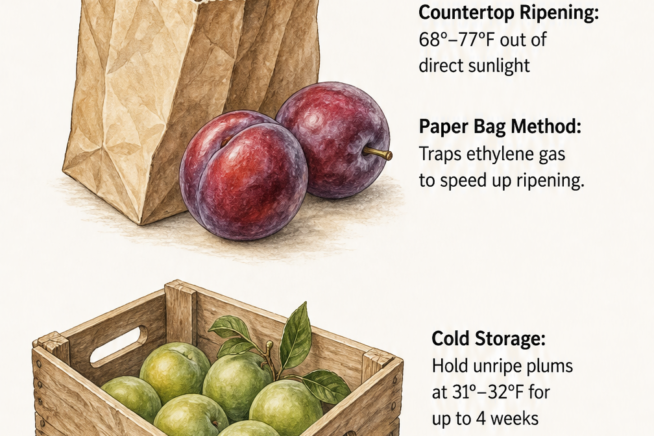 Harvesting and Ripening Plums from a Backyard Tree - Infografik Teil 2
If you need to pause the ripening process, just pop them in the fridge. Cold slows the whole show down. Will they get sweeter in the fridge? No—the cold stops the starch-to-sugar conversion. Texture stays firm. So only refrigerate after they’re perfectly ripe.
Fun comparison time: Plums vs. avocados vs. tomatoes
If you’ve ever waited for an avocado to ripen, you know the pain. Plums are easier. They don’t go from rock to rotten in a day like an avocado. Instead, they’re more like tomatoes—slow and steady, with a clear window of peak deliciousness. But plums have a secret advantage: you can eat them slightly under-ripe and still enjoy the sour tang. Try that with an avocado and you’ll be sad.
Another comparison: a mango ripens in about the same window (3–5 days), but mangoes are divas that bruise easily. Plums are tougher. They can handle a tumble in your bag or a side-eye from your toddler. They’re the reliable friend of the fruit bowl.
What if you want to eat a plum tomorrow, not in a week?
You can microwave them? Please don’t. Microwaving makes them weepy and mealy—a sad little pile of boiled plum. Instead, if you’re desperate, slice them and sprinkle with a tiny pinch of sugar and a squeeze of lemon. The acid and sugar trick your taste buds into thinking it’s ripe. It’s a cheat code, but it works.
Or just buy them already ripe from a farmers’ market or a store that keeps them at room temp. Those plums were picked later in the season and have higher sugar content already. You’ll skip the wait entirely.
The ultimate takeaway?
Plums ripen at home in 2 to 5 days, with a little help from a paper bag or a banana roommate. You don’t need a green thumb—just a counter and some patience. Check them every day, give them a gentle squeeze, and trust your nose. When they’re ready, they’ll reward you with that juicy, honeyed burst that makes summer worth remembering.
So next time you bring home a bag of hard little orbs, don’t panic. You’re not a failure—you’re a fruit curator. Enjoy the process. And maybe buy an extra banana for the bag.
