How Long Do Overnight Oats Last In The Fridge

There is something quietly transformative about waking up to a meal that is already prepared, waiting patiently in the refrigerator. Overnight oats have secured a beloved spot...
There is something quietly transformative about waking up to a meal that is already prepared, waiting patiently in the refrigerator. Overnight oats have secured a beloved spot in modern breakfast routines precisely because they offer this effortless convenience. By simply combining rolled oats with milk or yogurt the night before, you unlock a creamy, satisfying meal that requires no cooking and minimal morning effort. This small act of preparation fits seamlessly into busy schedules, whether you are a parent juggling school runs, a professional racing to a meeting, or a student craving a nutritious start without sacrificing sleep. The real question, however, is how long this magic can last before it turns from a triumph of meal prep into a source of worry.
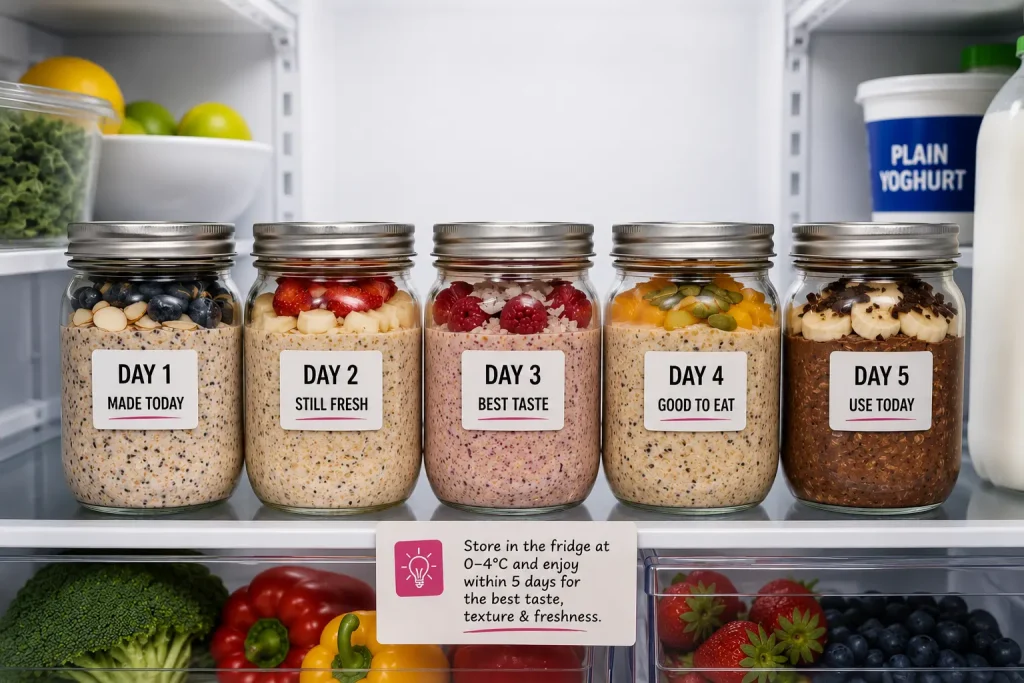
In general, properly stored overnight oats will remain safe and delicious for 3 to 5 days in the refrigerator. This window applies to the most common base recipes: rolled oats combined with milk, yogurt, chia seeds, and a touch of sweetener. The key variable is the refrigerator’s temperature, which should consistently stay below 40°F (4°C). Most home refrigerators are cold enough, but a warm door shelf or a crowded unit can accelerate spoilage. For example, if you make a large batch on Sunday evening for the entire workweek, you can safely enjoy portions on Monday through Thursday evening—but Friday might push the limit. Day three is typically the sweet spot for texture, as the oats have fully softened without becoming overly mushy.
It is crucial to understand that not all overnight oat recipes age equally. Those containing fresh fruit, such as sliced bananas, berries, or diced mango, will have a significantly shorter fridge life—often just 2 to 3 days. Fresh fruit introduces natural sugars and moisture that accelerate microbial growth and enzyme activity, leading to browning, sliminess, or fermentation. In contrast, recipes using dried fruits like raisins, dried cranberries, or unsweetened coconut chips, or those relying on shelf-stable extracts like vanilla or cinnamon, can often last the full 5 days. A practical example: a jar of oats with strawberries might taste perfect on day two but be borderline sour on day four, whereas a simple maple-cinnamon oat base will still taste fresh on day five.
Must Read
To maximize the lifespan, airtight storage is non-negotiable. Use glass jars with tight-fitting lids or plastic containers that seal completely. This prevents the oats from absorbing odors from other foods in the fridge—like leftover garlic or fish—which can compromise the delicate flavor. Equally important is choosing the right oats. Old-fashioned rolled oats are the gold standard; they retain their structure and absorb liquid evenly over several days. Instant oats turn into an unappealing paste within 24 hours, and steel-cut oats remain too chewy unless soaked longer, which can cause the mixture to separate. A simple tip: stir the oats once after the first 4 hours of refrigeration to ensure even hydration and prevent a hard layer from forming at the bottom.
Beyond safety, texture is the true telltale sign. On day one, overnight oats are pleasantly thick but still slightly crunchy. By day two, they are tender and cohesive. On day three and four, they become creamy and pudding-like—many people consider this the ideal texture. By day five, the oats may start to exude liquid from the bottom (separation) and feel slightly grainy or watery. If you notice a sour smell, a pinkish or grey discoloration, or a slippery film, discard them immediately—these are signs of bacterial growth. Always trust your senses: if something tastes “off” even one day early, it is better to err on the side of caution than risk foodborne illness.
 Overnight Oats Shelf Life: How Long Do They Last In The Fridge? | CyCookery
For those looking to extend the life of their overnight oats, freezing is an excellent option. Portion the base oats (without fresh fruit or dairy) into freezer-safe jars, leaving an inch of headspace. They can be frozen for up to 3 months without quality loss. To use, simply thaw a jar overnight in the refrigerator and stir in fresh toppings the next morning. Another pro tip: add fresh fruit only on the morning of serving, not during the initial prep. This one simple habit can stretch the fridge life of your overall batch from 3 days to a full 5 days. Also, consider using unsweetened almond milk or oat milk instead of dairy milk, as plant-based milks sometimes hold up better over 4–5 days without souring.
In summary, the journey of overnight oats in your fridge is a brief but valuable window of 3 to 5 days, with texture and ingredients dictating the precise endpoint. By preparing ahead, using airtight jars, and wisely timing your fresh additions, you can enjoy a rotating breakfast solution that feels both fresh and effortless. Whether you are a weekend meal-prepper or a weekday improviser, understanding that day three is the sweet spot and fresh fruit shortens the clock empowers you to avoid waste and savor every spoonful. So go ahead, fill those jars on Sunday, and let the refrigerator do the work—just remember to check the calendar before you scoop.