How Long Can Pizza Be In The Fridge

Welcome to the great pizza fridge debate—a question that has sparked midnight cravings, saved countless leftovers, and occasionally led to a questionable science experiment in...

Welcome to the great pizza fridge debate—a question that has sparked midnight cravings, saved countless leftovers, and occasionally led to a questionable science experiment in the back of your fridge. We’re here to answer the deliciously simple question: How long can pizza really live in the fridge? This isn’t just about food safety; it’s about maximizing joy, minimizing waste, and ensuring that every slice you pull out tastes like a victory, not a gamble. Think of this as your personal pizza preservation guide—fun, practical, and packed with tips to turn leftover 'za into a culinary asset. Ready to rescue that pepperoni masterpiece? Let’s dig in.
The golden rule you need to remember is this: pizza is safe in the fridge for three to four days. That’s the official word from food safety experts, and it’s your trusty baseline. Why? Because pizza is a composite food—it has cheese (dairy), sauce (acidic, but perishable), and toppings like meat or veggies, all sitting on a bread base. After 72 to 96 hours, bacteria like Listeria or Staphylococcus can start to party, even in the cold. But here’s the good news: that four-day window is plenty of time to eat, repurpose, or even freeze your slices. So mark your calendar: Monday’s delivery is prime until Thursday night. After that, it’s time for a freezer adventure or a respectful farewell.
Now, let’s get creative with those leftover slices! Instead of just reheating a sad, chewy piece, try this: breakfast pizza scramble. Chop up day-old pizza (any style works) into bite-sized cubes, then sauté them in a pan with a little olive oil until crispy. Crack an egg or two over the top, scramble it all together, and you’ve got a savory, carb-loaded breakfast that feels like a diner dream. Or, for a fun twist, pizza croutons—cut cold slices into small squares, toast them in the oven at 375°F for 8 minutes, and toss them onto a Caesar salad. The garlic and cheese become crunchy flavor bombs. And if you’re feeling fancy, pizza bread pudding: layer sliced old pizza with beaten eggs, milk, and extra cheese in a baking dish, bake until puffy, and serve with marinara on the side. Each idea saves the pizza from its sad, dry fate and turns it into something you’ll actually crave again.
Must Read
But what about the telltale signs of danger? Even within that four-day window, you need to use your eyes and nose. A pizza that has slimy spots on the cheese, a sour or off smell, or visible mold (especially green or fuzzy patches) has crossed the line—do not eat it, no matter how much you paid for delivery. Also, beware of soggy, weeping crust: that means moisture has broken down the structure, and bacteria love that environment. When in doubt, remember the rule: if it smells funky, it’s junkie. Trust your senses; they evolved to keep you from eating bad leftovers.
Want to stretch that pizza life even longer? Freezing is your superhero move. A whole pizza can freeze for up to two months without significant quality loss. Here’s how to do it like a pro: first, pre-slice the pizza (because frozen pizza is hard to cut). Then wrap each slice tightly in plastic wrap, followed by a layer of aluminum foil or a zip-top freezer bag. This double layer prevents freezer burn and locks in flavor. To reheat, skip the microwave (it makes crust rubbery) and use a cast-iron skillet or oven: preheat the skillet on medium, place the frozen slice directly in, cover with a lid for 2 minutes, then uncover for 1 minute to crisp the bottom. Or bake at 400°F for 8–10 minutes. The result? A slice nearly as good as the day it was made.
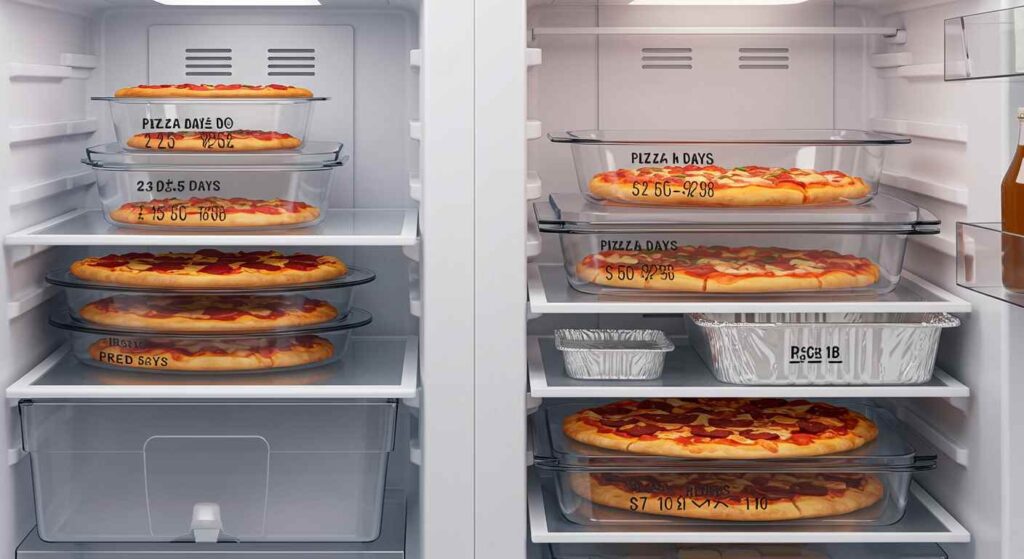 How Long Is Pizza Good for in the Fridge? - Pizza World
Let’s talk about the art of proper fridge storage, because how you store pizza matters almost as much as how long you store it. Never leave pizza in the delivery box—it’s too tall, lets air circulate, and speeds up drying. Instead, transfer slices to an airtight container or wrap them tightly in aluminum foil. Pro tip: place a paper towel under the pizza in the container to absorb excess moisture, then change it after a day. This keeps the crust from turning into cardboard. Also, store your pizza on the bottom shelf of the fridge, where temperatures are most consistent and cold air sinks. Avoid the fridge door—it’s the warmest spot and will shorten your pizza’s lifespan by a day or more.
Finally, here’s a fun decision tree for your next leftover mission: If you’re eating within 3 days, keep it in the fridge (wrap it tight). If you’re not sure, freeze it immediately after day 1 for maximum freshness. If you see mold or smell something funky, toss it without guilt—your future self will thank you. And if you’re feeling adventurous on day 4, try the pizza crouton or bread pudding ideas above. Remember, the goal isn’t to eat pizza that’s been hibernating for a week; it’s to enjoy every tasty, safe slice within its prime. So go forth, eat your leftovers with confidence, and never let a good slice go to waste. Your fridge—and your belly—will be happy you did.
