How Long Can Cut Strawberries Sit Out

So you’ve done a beautiful thing: you’ve sliced some strawberries for a snack. They sit there, glistening like tiny, edible rubies, whispering “eat me.” Then your phone buzzes...

So you’ve done a beautiful thing: you’ve sliced some strawberries for a snack. They sit there, glistening like tiny, edible rubies, whispering “eat me.” Then your phone buzzes, the dog needs walking, and suddenly it’s two hours later. The question hits you like a lukewarm slap: how long can these cut strawberries sit out before they become a biohazard?
Here’s the short, soul-crushing answer: you have about two hours at room temperature. After that, the clock starts ticking on a science experiment you don’t want to conduct. The USDA is very clear on this, and they don’t care about your busy schedule.
Why the Two-Hour Rule is Law (Not a Suggestion)
Remember that satisfying pop when you bite into a fresh strawberry? That’s nature’s pressure chamber. Once you cut it open, you’ve invited the entire microbial kingdom to a rave. Bacteria like Staphylococcus aureus and Salmonella are uninvited guests who RSVP “yes.”
Must Read
Think of cut fruit as a room-temperature paradise for bacteria. It’s wet, sugary, and acidic in a way that makes microbes feel like they’re on a tropical vacation. They can double in number every twenty minutes. In two hours, one lone bacterium can turn into a family of sixty-four thousand. That’s not just science; that’s an invasion.
If the room is above 90°F (like a hot summer day or your car after the sun has baked it like a pizza stone), that safe window shrinks to one hour. At that point, your strawberries are in the bacterial equivalent of a mosh pit.
The Telltale Signs You Did It Wrong
You don’t need a lab coat to diagnose bad strawberries. Your eyes and nose are your first line of defense. If they’ve turned mushy, leaked a pinkish puddle, or smell like a fermented gym sock, do not test them with a taste.
But here’s the scary part: bad bacteria doesn’t always make food look or smell bad. The stuff that causes food poisoning is often invisible, odorless, and tasteless. That perfectly glossy strawberry left out for three hours could still stab you with food poisoning guilt.
If you see any mold—especially fuzzy white, green, or black patches—that’s a hard no. Cutting off the moldy part is like cutting off the roof of a haunted house. The microscopic roots (mycelium) have already spread deeper than your knife can reach. Toss the whole batch.
The Surprising Villain: Your Cutting Board
Here’s a fact that will make you stare at your kitchen counter with suspicion: cut strawberries are more vulnerable than whole ones because of cross-contamination. If you sliced them on a board that previously held raw chicken (and was only given a quick rinse), you’ve just painted your fruit with a bacterial glaze.
Even clean-looking cutting boards can harbor biofilms—slime layers where bacteria party like it’s 1999. Always use a separate, very clean board for fruit, or better yet, wash it with hot soapy water for twenty seconds. Your strawberries will thank you by not giving you a night on the toilet.
And please, for the love of all things berry, don’t leave them in a metal bowl. Metal reacts with the acid in strawberries faster than you can say “copper penny taste.” Glass or ceramic is your friend here.
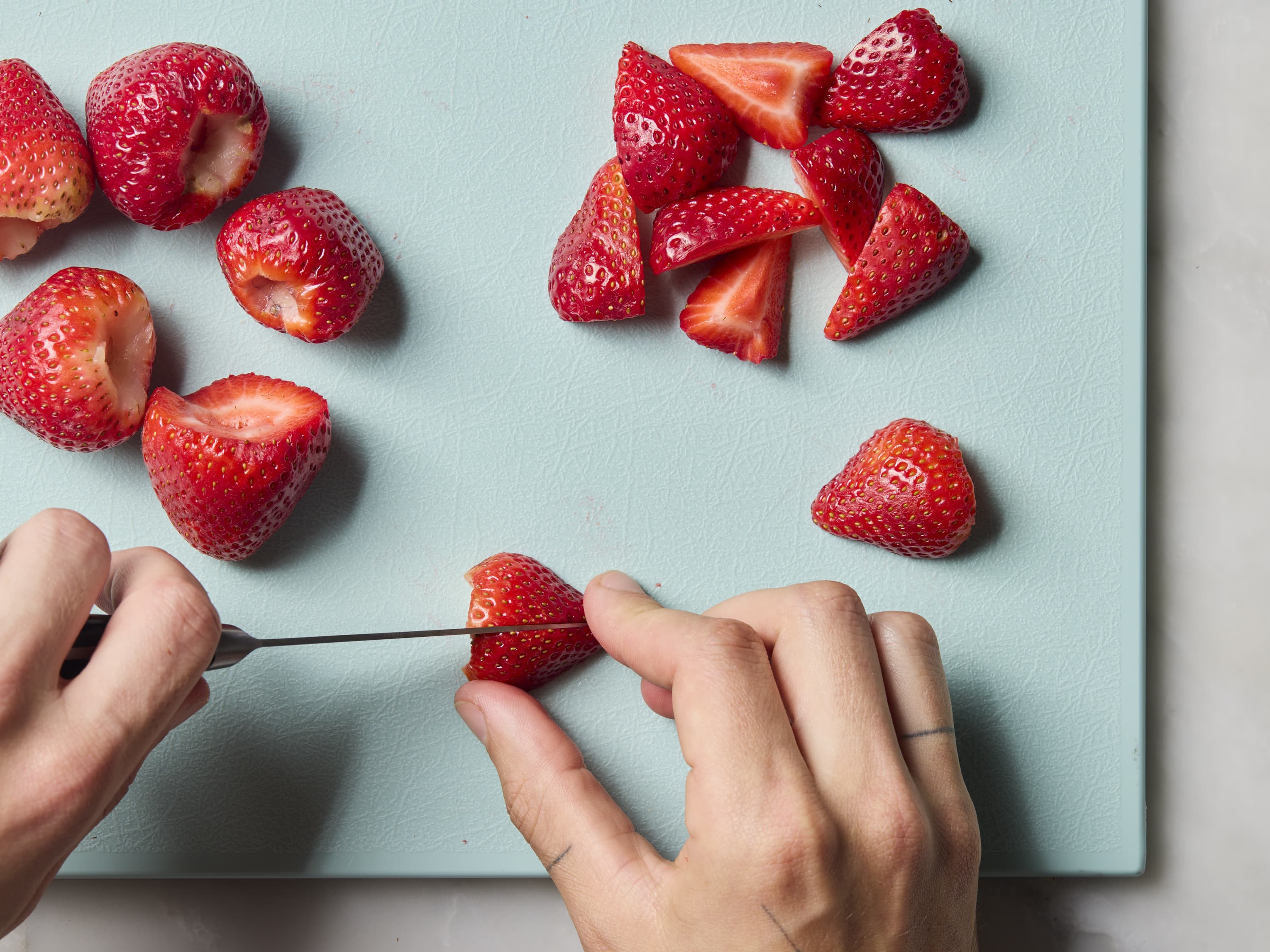 Cool Way To Cut Strawberries
How to Save Your Strawberry Soul
The best move? Don’t cut them until you’re ready to eat them. Whole strawberries can sit out for hours without issue because their skin is a natural force field. But once you cut, you’re on the clock.
If you prepped a huge fruit salad for a party, put it on ice. Nestle the bowl in a larger bowl full of ice cubes. This keeps the temperature below 40°F, which buys you up to four hours (but don’t push it). Alternatively, serve small portions and keep the rest in the fridge.
The fridge is a strawberry’s superhero hideout. Stored in a sealed container (with a paper towel to absorb moisture), cut strawberries can last one to two days. Beyond that, they turn into sadness in a Tupperware.
The Only Exception: Fermentation (But You’re Not a Winemaker)
Technically, if you leave cut strawberries out for days, they will ferment into a boozy, fizzy mess. People do this on purpose to make strawberry wine or vinegar. But let’s be real: you’re not an artisanal fermenter. You’re a person who wanted a healthy snack. The alcohol content in fermented fruit is too low to kill the bad bacteria anyway.
So unless you enjoy the taste of vinegar with a side of regret, do not try to salvage week-old counter strawbs. The risk is not worth the Instagram story.
The Bottom Line (So You Don’t Bottom Out)
Here’s the takeaway for your next snack attack: two hours, max, at room temp. One hour if it’s hot. Refrigerate leftovers within that window. If you forget, throw them away and buy new ones. It’s the price of ignoring a perfectly good snack.
And if you’re ever in doubt, remember this golden rule: you can always buy more strawberries, but you can’t buy back a lost day to food poisoning. Trust your nose, respect the clock, and for goodness’ sake, clean your cutting board.
Now go forth and eat your berries while they’re still your friends. Your gut will thank you, and your taste buds won’t file a complaint.
