How Far Is To The Moon And Back

So, you’ve heard the phrase “to the moon and back” a million times. It’s used in love letters, pop songs, and cheesy greeting cards. But have you ever actually stopped to wond...

So, you’ve heard the phrase “to the moon and back” a million times. It’s used in love letters, pop songs, and cheesy greeting cards. But have you ever actually stopped to wonder—how far is that, really?
We’re not talking about some romantic metaphor here. We’re talking real, measurable distance. The kind that makes your head spin if you think about it too long. Let’s break it down together, nice and easy.
The short, honest answer
The moon is, on average, about 238,855 miles away from Earth. That’s roughly 384,400 kilometers for you metric fans. And “to the moon and back”? That’s a round trip—so double it to about 477,710 miles (768,800 km).
Must Read
But here’s the kicker: that number isn’t fixed. The moon’s orbit isn’t a perfect circle; it’s slightly oval-shaped. So the distance can vary by about 30,000 miles depending on where it is in its orbit.
That means “to the moon and back” isn’t a steady number. It’s more like a friendly range—a cosmic “it depends.” Pretty wild for such a famous phrase, right?
Let’s make it feel real
Numbers are boring unless we stack them up against things you actually know. So, imagine driving a car. If you hopped in your sedan and drove straight up to the moon, it would take you about 135 days non-stop at 70 mph.
That’s like driving from New York to Los Angeles... and back... and back again... over 180 times. No bathroom breaks, no coffee stops—just you, the highway, and a whole lot of nothing.
Now, for the round trip? Buckle up for 270 days of driving. That’s basically a school year glued to your steering wheel. Suddenly, that love song lyric feels a lot more committed, doesn’t it?
How about a walk?
If you’d rather stretch your legs, a brisk walk would take you roughly 9 years one way. To make it to the moon and back on foot? Pack a snack for an 18-year expedition.
You could start walking today, and by the time you got back, your toddler would be old enough to vote. That’s a serious level of dedication—more than most of us have for a gym membership.
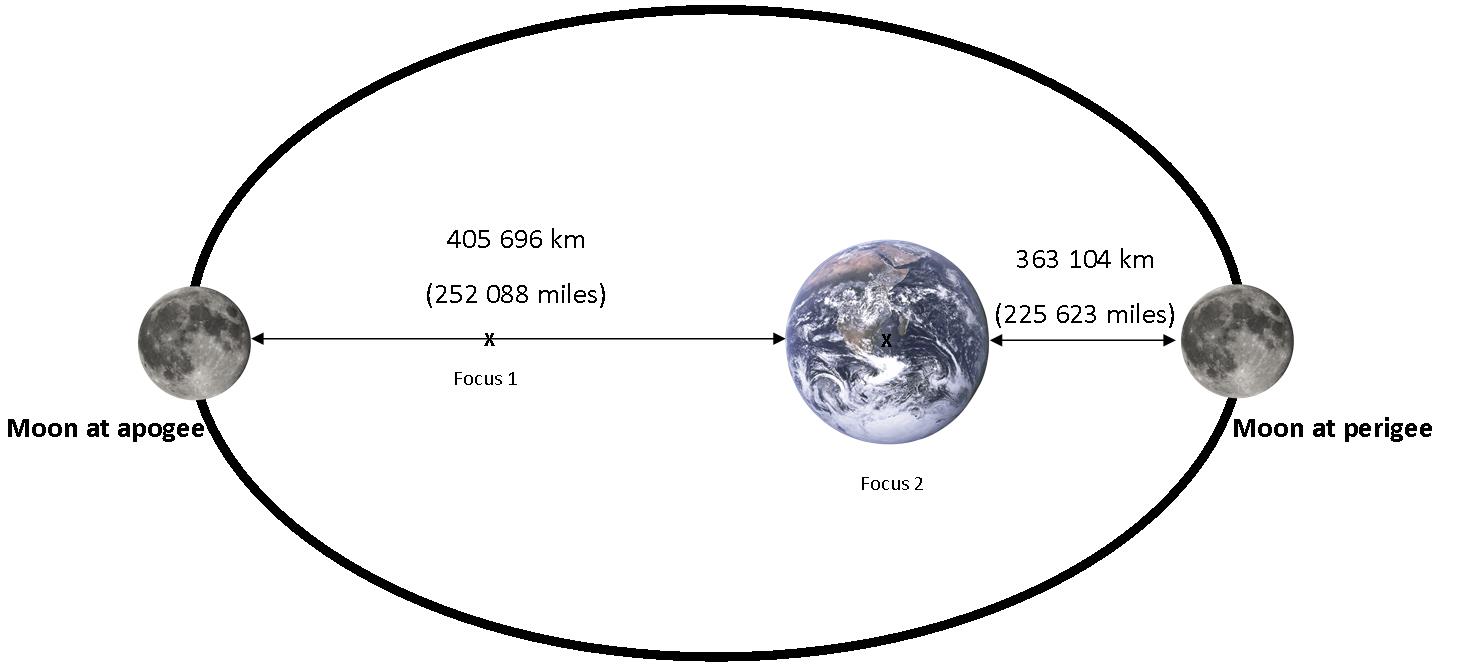 How far away is the Moon? Distance between Earth and Moon explained
What about light?
Here’s the really cool part: light travels at a speed of about 186,282 miles per second. A beam of light from Earth reaches the moon in just 1.3 seconds. So, “to the moon and back” for light is a zippy 2.6 seconds.
Next time you talk to an astronaut on the space station or the moon, remember that delay. You say “hello,” and they hear it over two seconds later. It’s like a really slow, cosmic game of tag.
That tiny time warp is why mission control sounds so tense during moon landings. Every command takes a full 1.3 seconds to arrive. Talk about pressure.
The astronauts who actually did it
Only 24 humans have ever seen the moon up close, and only 12 have walked on its surface. The Apollo missions of the 1960s and 70s were basically humanity’s greatest road trip—only with more rocket fuel and fewer gas station snacks.
The Apollo 11 crew famously traveled 240,000 miles in just three days. That’s like covering the entire circumference of Earth 10 times in a single weekend. For context, that’s faster than a speeding bullet—literally.
And when they came back, they splashed down in the Pacific Ocean. So yeah, “to the moon and back” was a real, sweaty, risky adventure for those guys. Not just a cute Valentine’s Day card.
Why this actually matters
Knowing the distance isn’t just trivia for pub quizzes. It helps us understand how vast space really is. The moon is our closest neighbor, yet it’s still far enough to feel impossibly remote.
 Moon Distance From Earth Earth Moon Dynamics
If the moon were the size of a tennis ball, Earth would be a basketball about 23 feet away. That tiny gap between them—that’s the distance we’re talking about. And yet, that gap is 30 times the diameter of Earth.
So when someone says “I love you to the moon and back,” they’re saying they’d travel roughly half a million miles for you. That’s either deeply romantic or slightly insane—maybe both.
The funny thing about perspective
Here’s a thought: that light from the moon you see at night? It’s actually sunlight bouncing off the lunar surface. The moon itself doesn’t glow; it’s just a giant rock reflecting our nearest star.
So every time you look up at that bright, familiar face, you’re seeing sunlight that traveled 93 million miles from the sun, bounced off a dusty, crater-covered ball, and then traveled another 239,000 miles to your eyeball. That’s a round trip of nearly 187 million miles in total.
Makes your commute to work feel a bit less dramatic, doesn’t it? Next time you’re stuck in traffic, just remember: you’re not traveling to the moon. You’re just going to the grocery store. And that’s okay.
So, how far is it really?
It depends on who you ask. A poet might say it’s immeasurable. A physicist would give you a number. But for most of us, “to the moon and back” is a fun, mind-bending way to grasp just how small our daily world is.
It’s far enough to make you feel tiny, but close enough that we’ve actually done it. And that’s the coolest part—we can measure it, we have traveled it, and we still can’t quite wrap our heads around it.
So next time you hear that phrase, smile. You now know the secret: it’s a huge distance, a tiny delay, and a very human story all wrapped in one. Now go tell someone you’d drive 477,710 miles for them—see if they laugh or run away.
