How Does Heat Pump Water Heater Work

Imagine stepping into a warm, soothing shower on a cold morning, knowing that the hot water you’re enjoying costs significantly less than it would with a traditional electric...
Imagine stepping into a warm, soothing shower on a cold morning, knowing that the hot water you’re enjoying costs significantly less than it would with a traditional electric heater. This isn’t a futuristic fantasy—it’s the everyday reality for homeowners who have switched to a heat pump water heater. Unlike conventional models that generate heat directly, these innovative devices move heat from the surrounding air into your water tank, offering a quiet revolution in energy efficiency. For an average family, this can translate into savings of up to 60% on water heating costs, all while reducing their carbon footprint—a win for both the wallet and the planet.
The key purpose of a heat pump water heater is to transfer thermal energy rather than create it from scratch. Think of it as a refrigerator working in reverse: a refrigerator pulls heat from inside its cabinet and dumps it outside, cooling your food. A heat pump water heater does the opposite—it captures heat from the air in your basement, garage, or utility closet and compresses it to a higher temperature before releasing it into your water tank. This process is so efficient that for every unit of electricity it consumes, it can deliver three to four units of heat into your water, making it vastly superior to standard resistance heaters that waste energy.
Its benefits for everyday life extend well beyond the monthly utility bill. Consider a busy family of four: after back-to-back showers, a load of laundry, and a dishwasher cycle, a standard 50-gallon tank might struggle to keep up. A heat pump water heater, however, can recover more quickly because it boosts its capacity using ambient air. In warmer climates, it doubles as a dehumidifier, pulling moisture from your basement and keeping the space cooler and less musty. For example, during a humid summer, you might notice your basement feels less sticky and smells fresher—a welcome side effect that many owners discover only after installation.
Must Read
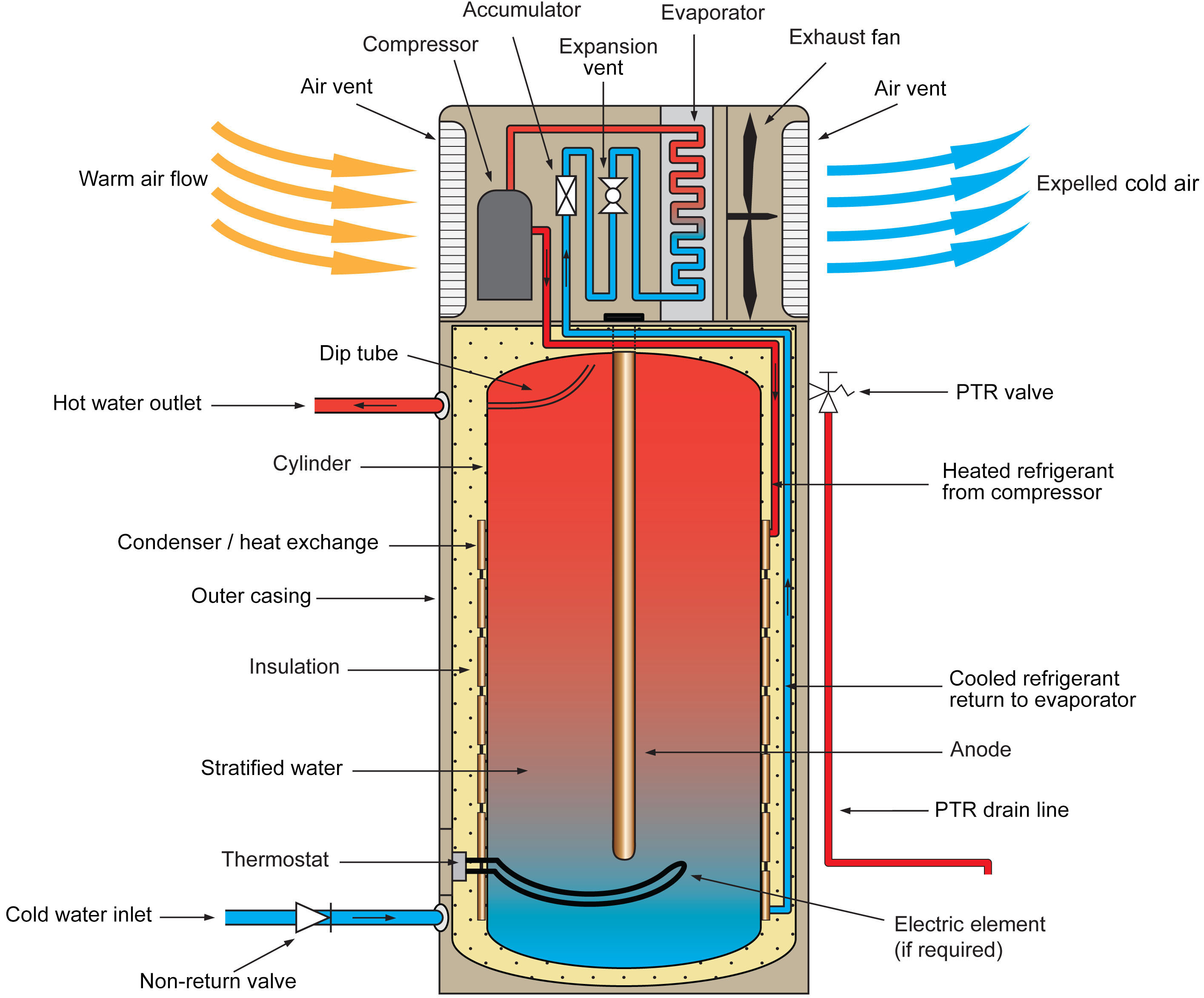
To grasp how this technology works in a real scenario, picture your utility room on a mild day. The unit pulls in air through a fan, passes it over evaporator coils filled with a refrigerant that boils at a very low temperature. As the refrigerant absorbs heat from the air, it turns into a gas. Then, an electric compressor squeezes that gas, raising its temperature dramatically. Finally, the hot gas passes through condenser coils wrapped around or inside the water tank, transferring its heat to the water. The refrigerant then cools, turns back into liquid, and the cycle repeats. This continuous loop means your water stays hot without the need for a constant, high-power draw—just gentle, efficient operation.
One common question is where a heat pump water heater works best. It thrives in spaces that stay between 40°F and 90°F year-round, such as an attached garage in a temperate region or a heated basement. If your utility area dips below freezing, the unit may switch to resistive backup heating (which is less efficient) to prevent damage. For instance, a homeowner in Minnesota might place it in a conditioned basement, while someone in Florida could put it in a laundry room and enjoy the dehumidifying bonus. The installation usually requires at least 1,000 cubic feet of air space around it—roughly the size of a small room—to ensure a steady supply of warm air.
:max_bytes(150000):strip_icc()/Treehugger_Whatisaheatpumpwaterheater_colorv13-bc563d723e6c448cb9d11337ce99afc3.png) Heat Pump Water Heater How Does It Work | Gas Furnace
Heat Pump Water Heater How Does It Work | Gas Furnace
If you’re curious about trying this technology, start with a few simple steps. First, check your current water heater’s energy factor (a tag on the side often shows it). Compare that to the 3.0–4.0 range of modern heat pump models—the difference is striking. Second, consider your climate: if you live in a hot South or a mild coastal area, the efficiency gains are most dramatic. Third, look for rebates from your utility company; many offer $500–1,500 off the cost, making the upfront price tag (typically $1,500–$3,000) far more palatable. Finally, talk to a local installer about your space: they can measure airflow and recommend the right tank size—usually 50 or 80 gallons—to match your household’s needs.
In an era where energy costs and environmental concerns matter more than ever, the heat pump water heater stands out as a practical, future-focused solution. It doesn’t just heat water; it reworks the physics of your home to do more with less. From boosting your comfort in the shower to drying out a damp basement, its quiet intelligence transforms an ordinary utility into a smart, economical asset. So, next time you turn the hot tap, consider the invisible efficiency of a heat pump—and how it might soon make your mornings a little brighter, and your energy bills a little lighter.

