How Do You Tell From A Label Or Tasting Note Whether A Vodka Will Be Smooth?

Let’s talk about vodka. The “smooth” kind. You know, the one that doesn’t taste like paint thinner mixed with regret. But how do you know from the label if it’s going to be s...
Let’s talk about vodka. The “smooth” kind. You know, the one that doesn’t taste like paint thinner mixed with regret.
But how do you know from the label if it’s going to be silky or savage? It’s a mystery wrapped in a glass bottle.
The First Clue: The Number Game
Look for the number of distillations. A label might scream “Distilled 5 Times!” or “Triple Distilled!”
Must Read
More distillations mean more impurities are stripped away. Think of it like a washing machine for booze.
But here’s the kicker: five times doesn’t always guarantee smoothness. Some brands use cheap tricks to reach that number.
The Filter Factor
Now, check for filtration. Words like “charcoal filtered” or “snow filtered” are your friends.
Filtration removes congeners—the nasty compounds that cause hangovers and harsh flavors. It’s like a spa treatment for alcohol.
Fun fact: Some vodkas are filtered through diamond dust or lava rock. Fancy, right? It’s booze with a geology degree.
The Ingredient Secret
What’s in the bottle matters more than the bottle itself. Grain vodka (wheat, rye) is generally smoother than potato vodka.
Wheat gives a creamy, neutral taste. Potato can be oily and earthy—think of a baked potato that went to a party it wasn’t invited to.
Rye vodka adds a little spice. It’s not harsh, just playful. Like a polite whisper with a kick.
The Water Whisper
Vodka is mostly water. Seriously, up to 60% of that bottle is H2O. So the water matters.
Labels that brag about “glacial spring water” or “Arctic aquifer” are hinting at a soft, pure base. No metallic aftertaste.
If the label mentions demineralized water, they’re nerding out on chemistry. That’s a good sign for smoothness.
The Price Tag Lie
Don’t be fooled by a high price. Expensive doesn’t always mean smooth.
Some luxury vodkas actually keep more flavor on purpose, which can taste “peppery” or “botanical.” That’s not harsh—it’s character.
The cheapest plastic-bottle vodka? That’s probably gasoline in disguise. Avoid unless you’re painting a fence.
The Tasting Note Decoder
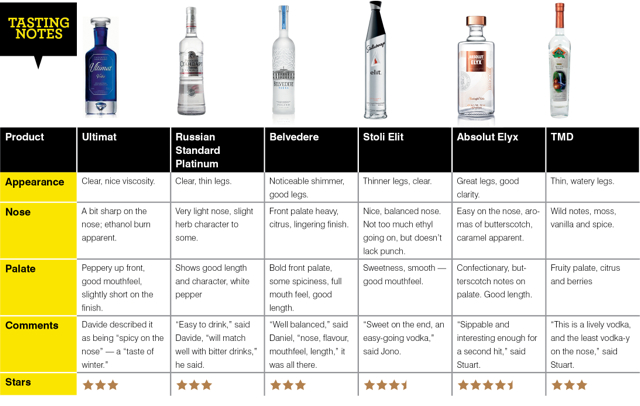
Reading tasting notes is like fortune-telling with alcohol. Look for words like “creamy,” “silky,” “velvety,” or “round.”
Avoid notes that say “sharp,” “burning,” “solvent,” or “acrid.” Those are red flags—like a clown with a chainsaw.
 Belvedere Vodka Tasting Notes! - YouTube
If they describe “wet stone” or “mineral,” it’s probably crisp, not harsh. Think mountain stream, not drain cleaner.
The Proof in the Pudding
Check the proof. Standard vodka is 80 proof (40% ABV). That’s the sweet spot for smoothness.
Higher proof (like 100 or 120) is for fire shots and cocktails. It will burn like a dragon’s sneeze.
Lower proof is weak and watery. You want balance, not a chemistry experiment.
The Regional Trick
Where it’s made matters. Poland and Russia are the old masters. They’ve been perfecting smoothness for centuries.
Swedish and Finnish vodkas are also famously clean. They use clean water and precise methods.
American craft vodkas can be wildcards—sometimes amazing, sometimes experimental (like pickle-flavored chaos).
The SilliBut True Fact
Some high-end vodkas are actually frozen before bottling. This is called “cold stabilization.”
It lets any remaining impurities crystallize and get filtered out. Ice science for your mouth.
There’s also vodka aged in oak barrels. It turns golden and gets a vanilla note—but that’s more like whiskey’s cousin who wears leather jackets.
The Ultimate Test
Forget labels for a second. The real test? Smell it first. Smooth vodka smells like bread, neutral, or almost nothing.
Take a tiny sip. If it coats your tongue like a gentle hug, you’ve won. If it stings like a bad decision, you’ve found a mixer for juice.
Trust your nose. It’s smarter than any label’s marketing poem.
The Final Sip
So, next time you’re in the liquor aisle, become a detective. Scan for distillations, filtration, and the magic word “wheat.”
Ignore the fancy bottle shaped like a unicorn. Look at the back label—that’s where the truth lives in tiny font.
And remember: Smooth is a feeling, not a promise. But with these clues, you’ll never get burned again. Cheers, you clever sipper.
