How Do Crown Families Impact Politics?

For centuries, the pageantry of crowns and the whisper of royal titles have captivated the public imagination. From the wedding of a prince to the christening of a future mona...
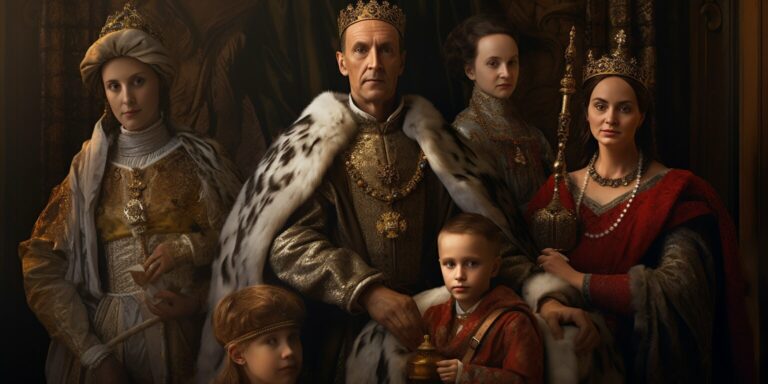
For centuries, the pageantry of crowns and the whisper of royal titles have captivated the public imagination. From the wedding of a prince to the christening of a future monarch, these events draw global audiences, offering a blend of tradition, glamour, and historical continuity. Yet beyond the fairy-tale allure lies a more profound and often debated reality: the political influence of royal families, or "crown families." Understanding this impact is valuable not just for history buffs, but for anyone who wants to grasp how power, legitimacy, and public funds are balanced in modern democracies. The key purpose of a constitutional monarchy is to provide a non-partisan symbol of national unity, a figurehead who stands above the daily fray of politics. For everyday life, this means a stable anchor during times of crisis, a ceremonial head of state who can represent the nation without the baggage of a political party, and a cultural ambassador who softens international diplomacy.
At their most benign, crown families act as a living constitution, embodying centuries of tradition and providing a sense of continuity that elected leaders, who come and go, cannot. In countries like the United Kingdom, Japan, or Sweden, the monarch’s role is largely ceremonial: they formally open parliament, appoint prime ministers (on the advice of elected officials), and serve as a focal point for national celebrations and mourning. The benefit for citizens is a depoliticized head of state—someone who can praise a charity or comfort a disaster victim without being accused of advancing a political agenda. For example, when a royal visited a hospital during the COVID-19 pandemic, their presence was seen as a unifying gesture of compassion, not a campaign stop. This non-political authority can also strengthen democratic institutions by providing a check on executive overreach, even if only in a symbolic capacity—the monarch retains the "right to be consulted, the right to encourage, and the right to warn."
However, the impact of crown families is rarely purely symbolic. Their soft power is immense and can be wielded to shape international relations and domestic policy priorities. When a royal family undertakes a state visit, they can boost trade deals, highlight national industries, and foster cultural ties in ways that career diplomats find harder. For instance, the "Prince of Wales" or "Crown Princess" often champion specific causes—such as climate change, youth mental health, or sustainable farming. Prince Charles (now King Charles III) used his platform for decades to promote environmental awareness long before it became mainstream. This advocacy elevates important issues into the public eye and can influence government spending and legislative attention. Yet this same soft power raises concerns: unelected royalty can shape national debates without democratic accountability. Their personal opinions may align with or contradict government policy, creating a subtle but real pressure on elected officials.
Must Read
The most direct political impact often comes through constitutional prerogatives, which in some nations remain surprisingly potent. In countries like Thailand or Cambodia, the monarchy holds significant constitutional power, including the ability to veto laws or approve judicial appointments. Even in constitutional monarchies like the United Kingdom, the monarch technically appoints the prime minister and must give royal assent to legislation. While this is nearly always a formality, the potential for a constitutional crisis exists if a monarch were to refuse. A well-known scenario occurred in 1975 in Australia, when the Queen’s representative, the Governor-General (acting in her name), dismissed the prime minister during a budget deadlock—a decision that remains highly controversial. For everyday citizens, these powers highlight a tension between tradition and democracy: the system relies on the monarch’s self-restraint, which is not guaranteed by law but by custom.
Another underappreciated influence is economic and social influence. Crown families often control vast wealth, landholdings, and charitable foundations. In the UK, the Crown Estate generates billions for the Treasury, but the monarch also receives a public stipend (the Sovereign Grant) tied to this estate. This creates a unique political dynamic where the royal family's financial interests are intertwined with state finances. Their support for charities—such as The Prince’s Trust—can crowd out or complement government social programs. Critics argue this perpetuates a class system where inherited privilege shapes public policy. Conversely, supporters point out that royal patronage can mobilize volunteerism and private funding for causes like homelessness or veterans’ welfare, often reaching places government bureaucracy cannot. For example, the Duke of Edinburgh’s Award program has positively impacted millions of young people, fostering skills that might otherwise be left to state education.
 Families at the Center: Building a Chicago without Homelessness | Crown
To explore this topic yourself, start by observing the difference between "reigning" and "ruling." Research your own country or a monarchy you admire. Look at the monarch’s public statements: do they advocate for a specific policy? If so, is that considered appropriate? A simple tip is to track budget figures—compare the cost of maintaining the crown family to public spending on health or education. Another practical step is to read the speeches of a reigning monarch, especially during a national crisis like a war or pandemic. Notice how they frame unity without endorsing a party. Finally, engage with both republican and monarchist arguments. Reading publications from or against the monarchy will reveal the emotional and legal tensions at play. For instance, compare the coverage of royal charity work by a pro-monarchy newspaper to a republican blog, and you will see how the same event can be framed as either benevolent leadership or undemocratic influence.
In conclusion, crown families shape politics not through elections but through symbolism, soft power, and constitutional tradition. Their greatest gift is a unifying figure that transcends partisan divides, offering a sense of national identity that a president can rarely achieve. Yet their greatest risk is the erosion of democratic accountability—the quiet whisper of unelected influence. For ordinary people, the value lies in recognizing that these figures are both a bridge to history and a player in current affairs. Understanding their role allows citizens to appreciate the pageantry while critically examining the power behind the crown. Whether you view them as respected symbols or expensive relics, one truth remains: in nations where they exist, crown families are not merely decorations—they are active, if subtle, shapers of the political landscape.
