Hot Cocoa Vs Hot Chocolate, Which Is Healthier

There's a unique comfort in wrapping your hands around a warm mug on a chilly evening. Whether you’re curling up with a book after a long workday, or watching snow fall throug...
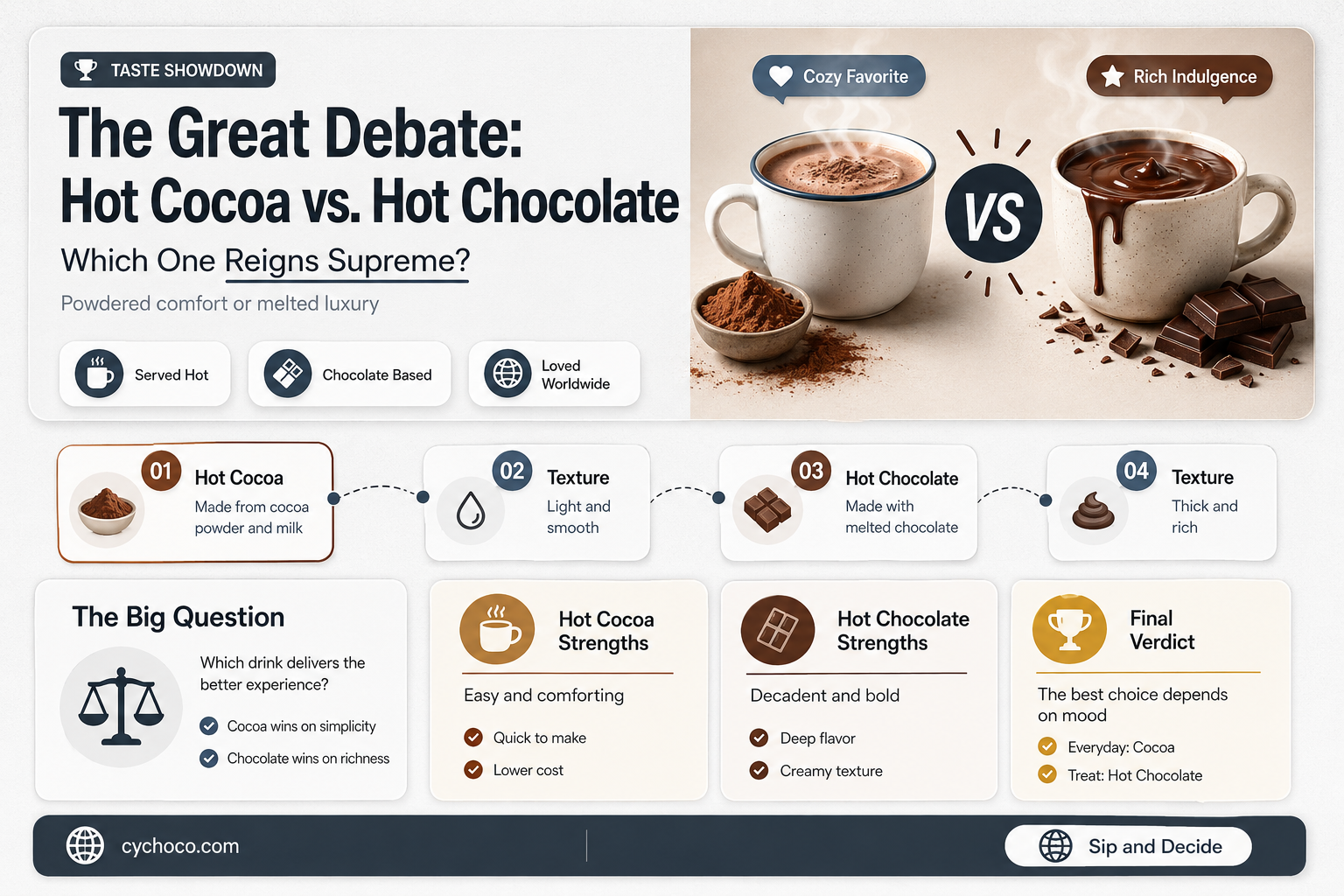
There's a unique comfort in wrapping your hands around a warm mug on a chilly evening. Whether you’re curling up with a book after a long workday, or watching snow fall through the window, the choice between a creamy hot cocoa and a richer hot chocolate often marks a moment of pure, simple indulgence. Both drinks offer a soothing escape from stress and a burst of cozy warmth. Yet, as people become more health-conscious, a pressing question emerges: when you reach for that beloved mug, which one is actually better for your body? Understanding their fundamental differences can help you savor these treats without the guilt.
Many people use the terms hot cocoa and hot chocolate interchangeably, but they are distinctly different beverages. Hot cocoa is traditionally made from cocoa powder, which comes from beans that have had most of their fat, or cocoa butter, removed. Hot chocolate, by contrast, is crafted from solid blocks of chocolate (either dark, milk, or white) that are melted into milk or cream, retaining all the natural cocoa butter. This single difference in base ingredients leads to a surprising divergence in their nutritional profiles.
When it comes to which is healthier, the answer leans heavily toward hot cocoa, provided it is made with minimal added sugar. Because it uses cocoa powder, hot cocoa is naturally lower in fat and calories than its richer counterpart. More importantly, cocoa powder is packed with flavonoids—powerful antioxidants that can improve blood flow, lower blood pressure, and support heart health. Studies have linked regular consumption of unsweetened cocoa to better cognitive function and reduced inflammation. In a typical scenario, a homemade mug of hot cocoa with unsweetened almond milk and a dash of cinnamon offers a guilt-free way to satisfy your sweet tooth while delivering real nutritional benefits.
Must Read
Hot chocolate, on the other hand, is a decadent indulgence first and a health drink second. Because it starts with actual chocolate, it contains significant amounts of cocoa butter, which is high in saturated fat. When made with milk or dark chocolate, it still provides some flavonoids, but the caloric density is much higher. A typical café-style hot chocolate made with whole milk and a rich chocolate bar can easily contain 400 to 600 calories per serving, along with 20 to 30 grams of fat. While it might offer a more luxurious mouthfeel and a deeper chocolate flavor, it is best reserved for an occasional treat rather than an everyday go-to. If you have a particularly stressful day and crave something deeply satisfying, a small serving of hot chocolate can provide psychological comfort, but it won’t offer the same antioxidant punch.
To make the healthiest choice for your everyday life, focus on what you add to your cup. The biggest health hazards in both drinks are added sugar and artificial creamers. A pre-packaged cocoa mix is often loaded with sugar, hydrogenated oils, and preservatives, turning a potentially healthy drink into a sugar bomb. A simple tip is to always check the ingredient list: if sugar is listed first, or if you see “partially hydrogenated oil,” it is best to pass. Instead, buy unsweetened cocoa powder and a high-quality dark chocolate bar (70% cacao or higher). By controlling the sweetness yourself, you can keep added sugar to a single teaspoon or use natural sweeteners like stevia or a mashed banana.
 Hot Cocoa vs Hot Chocolate: Whats The Difference Between These Winter
For those who want to explore healthier versions on their own, a few simple strategies can transform your mug. First, swap the milk. Using unsweetened oat milk or low-fat dairy milk reduces saturated fat while keeping the texture creamy. Second, boost the flavor without extra calories by adding a pinch of cayenne pepper, a dash of vanilla extract, or a sprinkle of nutmeg. These spices not only enhance taste but also offer anti-inflammatory benefits. Third, consider portion control—serving your drink in a small, 6-ounce mug rather than a large 12-ounce cup instantly halves the calorie load. Finally, for a truly antioxidant-rich version, blend your warm cocoa with a teaspoon of macadamia nut oil or a splash of unsweetened coconut milk, which adds healthy fats that help your body absorb the cocoa’s flavonoids.
Ultimately, the healthier choice between hot cocoa and hot chocolate depends on your daily goals. If you want a nutrient-dense, low-calorie comfort drink that supports heart health and can be enjoyed every evening, reach for a responsibly made hot cocoa. If you seek an occasional, rich dessert that satisfies a deeper craving, a small mug of dark hot chocolate can be a wonderful ritual. The key is mindful enjoyment—savoring the warmth, the aroma, and the moment, while being aware of what you’re putting into your body. By making your own version from scratch, you can have the best of both worlds: a delicious, comforting drink that truly cares for your wellness.

