Fun Facts About Flour

Hey there, flour fan! Let's dive into a world of wheat, gluten, and a whole lot of fun. You might think flour's just a boring ingredient, but oh boy, have we got some surprise...

Hey there, flour fan! Let's dive into a world of wheat, gluten, and a whole lot of fun. You might think flour's just a boring ingredient, but oh boy, have we got some surprises for you!
From Wheat to White
Let's start at the beginning, shall we? Flour's journey starts in a field of wheat, where it's busy soaking up the sun and growing tall. Once it's ready, it's harvested, cleaned, and ground into a fine powder. But here's where it gets interesting - did you know there are over 600 types of wheat? From soft and weak to hard and strong, each one makes a different kind of flour. Isn't that just fascinating?
Now, you might be thinking, "What about all those fancy flours I see in the store?" Well, my friend, that's where things get even more fun. From whole wheat to white, rye to rice, each type has its own story. White flour, for instance, isn't just naturally white - it's bleached! Yes, you heard it right. But don't worry, it's not like your laundry. It's just a quick chemical bath to make it extra white and soft.
Must Read
Gluten: Friend or Foe?
You can't talk about flour without mentioning gluten. It's the protein that gives dough its stretchy, elastic quality. But here's where things get tricky - for some people, gluten is a no-no. Celiac disease, wheat allergies, and gluten intolerance make flour a enemy. But don't worry, there are plenty of gluten-free alternatives out there, like almond, coconut, and even chickpea flour!
But let's not forget, gluten has its perks too. It's what makes bread rise and pizza dough stretch. And who doesn't love a good loaf of bread or a chewy pizza crust? So, let's raise a glass (of gluten-free beer, if you must) to gluten - it's not all bad!
Flour Power: The Science Behind the Magic
Ever wondered how flour makes cakes rise and cookies spread? It's all about science, baby! When you mix flour with water, it forms gluten, remember? Well, that gluten is like a tiny, edible rubber band. When you bake, the heat makes the gluten stretch and expand, creating all those delicious textures.
But here's a fun fact - too much flour can make your baked goods dry and tough. That's because flour absorbs water, and if there's too much flour, not enough water gets absorbed, leaving your treats parched. So, measure carefully, folks!
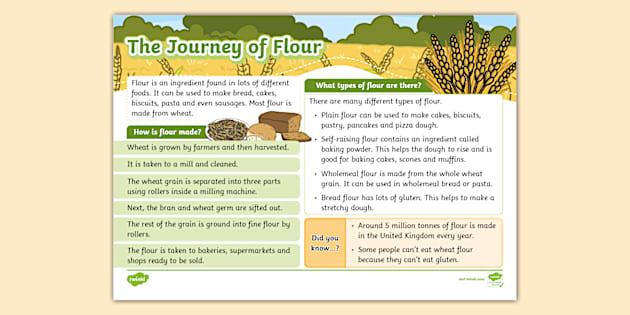 The Journey of Flour Fact File - KS1 - Science - Twinkl
Flour: The Time Traveler
Did you know flour can last for years? Okay, maybe not years, but it sure can hang around for a while. Properly stored, flour can keep for six to eight months. But here's the kicker - the older it gets, the less it rises. So, while your grandma's flour might be fine for thickening a stew, it's not the best choice for your famous chocolate chip cookies.
But here's where flour gets really interesting - it's been around for thousands of years. The ancient Egyptians were grinding grain into flour around 8000 BC. And guess what? They used it to make bread, just like we do today. Isn't that just mind-blowing?
Flour: The Artist
Flour isn't just for eating - it's also a canvas for artists. From Jackson Pollock-inspired splatter paintings to intricate henna designs, flour is a versatile medium. And the best part? No need to worry about toxic fumes or expensive supplies. Just grab a bag of flour and let your creativity flow!
But if you're not feeling artsy, don't worry. Flour has plenty of other uses. You can use it to clean greasy pans, absorb odors in your fridge, or even make homemade playdough. Who knew flour was such a multitasker?
So there you have it, folks - flour might seem boring, but it's anything but. From its humble beginnings in a wheat field to its starring role in our kitchens, flour is a fascinating ingredient. So next time you're measuring out a cup, remember - you're holding a tiny piece of history in your hands. Isn't that just flour-tastic?
