Does Lactose Free Milk Expire

Welcome to the surprisingly thrilling world of dairy science, where we tackle a question that has likely crossed your mind while staring into the fridge: Does lactose-free mil...

Welcome to the surprisingly thrilling world of dairy science, where we tackle a question that has likely crossed your mind while staring into the fridge: Does lactose-free milk expire? This isn’t just a boring technicality—it’s a fun and helpful puzzle that can save you money, prevent a ruined cup of coffee, and even rescue you from a questionable breakfast. Understanding the shelf life of lactose-free milk means you can confidently stock up, avoid waste, and always have a perfect, creamy pour ready for your morning cereal or evening baking. The best part? The answer is delightfully straightforward once you know the secret.
First, let’s clear up a common myth: lactose-free milk is not magic milk that never goes bad. It absolutely does expire, but the timeline is a little different from regular milk. Regular milk spoils because bacteria feast on lactose, a natural sugar. Lactose-free milk has the lactose already broken down into simpler sugars (glucose and galactose) by adding the enzyme lactase. This means bacteria have a quicker, easier meal—so in some cases, it can spoil faster once opened. However, the ultra-pasteurization process used for most lactose-free milk is the real hero. This high-heat treatment kills far more bacteria than standard pasteurization, giving your carton a much longer unopened shelf life—sometimes weeks past the printed date!
Let’s explore a fun example. Imagine you buy a carton of lactose-free milk with a “Best By” date of August 20. You open it on August 1. Thanks to ultra-pasteurization, you can often enjoy it for 7 to 10 days after opening, as long as it stays cold. But here’s the creative part: treat it like a race against your own nose. One day, you might find it smells perfectly fine on day 9, but by day 11, it might have a faint sourness. Another scenario? If you buy a second carton and forget it in the back of the fridge for three weeks unopened—it’s likely still safe to drink if the seal is intact and the carton isn’t bloated. The advantage is less pressure to chug before a trip or a busy week, because that unopened carton is a lot more forgiving.
Must Read
But wait—what about plant-based “lactose-free” alternatives like almond, oat, or soy milk? These often have a different spoilage drama. Most of them are also ultra-pasteurized, but they contain fewer proteins and fats that bacteria love. They can last even longer unopened—sometimes months—but once opened, they typically have a 7-day window before they start tasting weird or separating. A fun tip: shake the carton before each use! Some lactose-free dairy and plant milks separate naturally, and shaking reincorporates the cream, even if it’s perfectly fresh. If you see chunky bits but the milk smells fine, a good shake is usually all you need—no expiration drama.
Now for the practical advice you can use today. Rule #1: Never rely solely on the date on the carton. The “Best By” date is about peak quality, not safety. For lactose-free milk, the real test is the smell test. Open the carton, take a gentle whiff—if it smells sweet and creamy, you’re golden. If it smells sour, funky, or like old cheese, it’s time to say goodbye. Rule #2: Keep it cold, consistently. Lactose-free milk is more sensitive to temperature swings than regular milk. Don’t leave it on the counter for more than two hours, and store it at the back of the fridge (not the door, where it’s warmer). Rule #3: Use a clean pour. Never drink directly from the carton—your mouth’s bacteria can drastically shorten its life. Pour into a glass, and the rest stays happy.
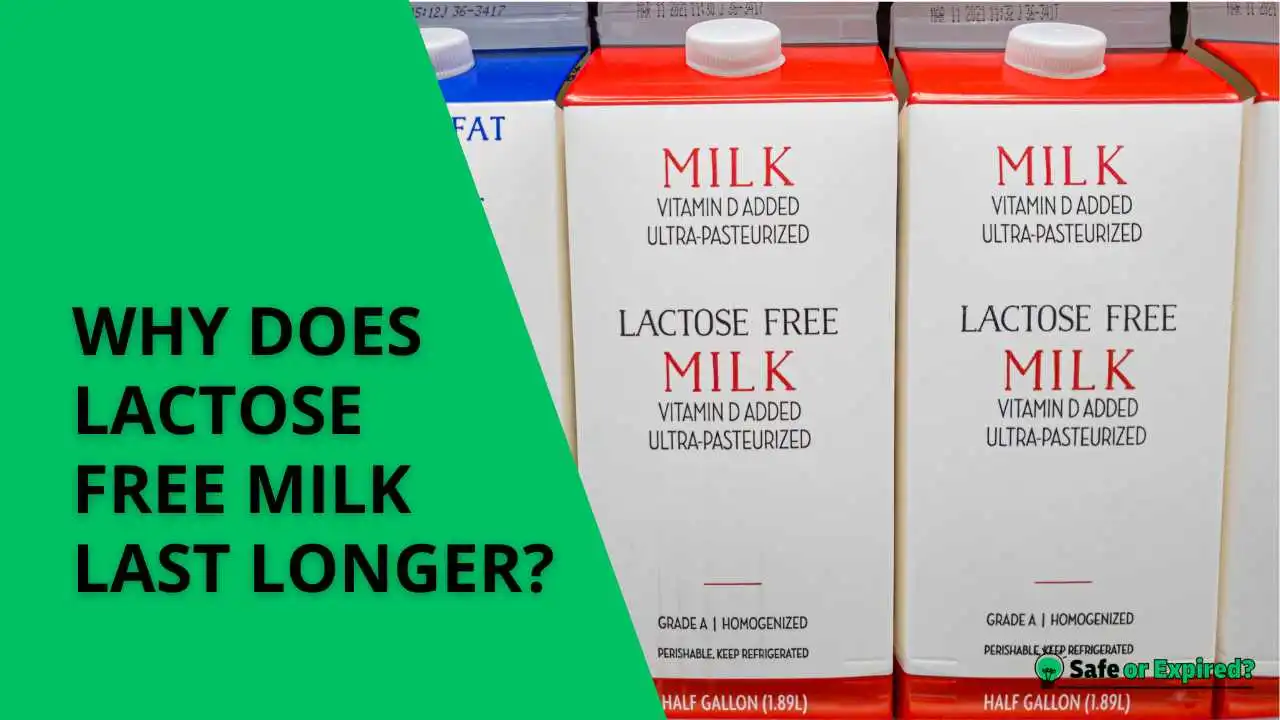 Why Does Lactose Free Milk Last Longer? 3 Amazing Reasons
For those who want to get creative with expiration prevention, try this: freeze your lactose-free milk! Yes, you can absolutely freeze it. Pour it into an ice cube tray or a freezer-safe container, leaving a bit of space for expansion. Frozen lactose-free milk cubes are perfect for smoothies, cooking, or even cooling down a hot coffee without diluting it. This trick extends its life by months. Also, if you notice your milk is nearing the end of its freshness but still smells fine, use it in a recipe that calls for slightly soured milk—like pancakes, muffins, or homemade yogurt. The bacteria are still harmless, and the acidity can actually improve your baked goods!
Finally, here’s a fun pro tip for the brave: try a blind taste test with a friend. Get two cups—one with fresh lactose-free milk, and one with milk that’s three days past its opened “expiration” but smells okay. You might be surprised! Many people cannot tell a difference because the breakdown of lactose into simple sugars doesn’t create the same sour compounds as regular milk spoilage. So next time you worry about your lactose-free milk expiring, remember: your nose is smarter than the date label. With just a little sniff, some consistent fridge love, and a dash of freezing ingenuity, you can enjoy the creamy, guilt-free benefits of lactose-free milk long after the calendar says you shouldn’t. Now go pour yourself a glass—the fridge is your friend, not your foe.

